



Test Special Issue

Game Change

Do elite athletes really make elite employees?

Sports, we tend to assume, offer a sharp-edged reflection of business life in microcosm — leadership under pressure, the winning mentality, valuable lessons drawn from loss. It’s all there. Just kick back with a beer and a pizza and watch your pathway to workplace success unfold on game day. Well, it turns out that the connections are often far more nuanced than we might have presumed. Do elite athletes really make elite employees? What’s the connection between Swedish pragmatics in soccer and a thriving startup culture? Have you factored in the difference between “wicked” and “kind” environments (and what does that even mean)? We investigate all of these pivotal tangents, and much more, in this Big Think special collection of essays, interviews, and curated book excerpts. Forget everything you’ve been told about the synergies between sports and business. It’s time to rewrite the rules.
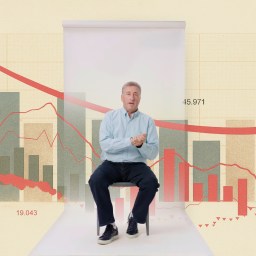
Blue background with the words "Game Change" in white, surrounded by strategic game symbols and graphs in the background.
Presented by
John Templeton Foundation
creation of adam sistine
When it comes to our Universe's origins, scientists discuss the Big Bang, cosmic inflation, and other theories. Why doesn't "God" come up?
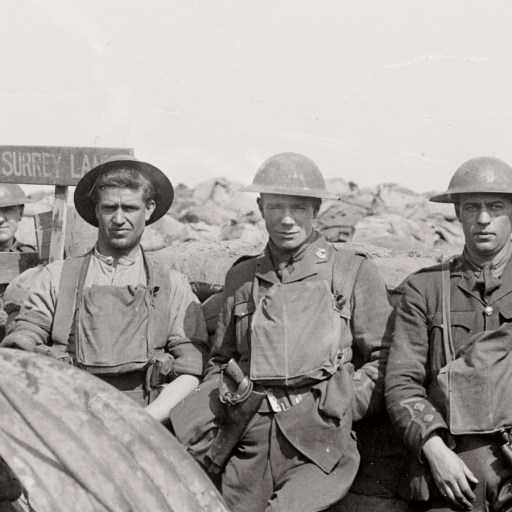
Five World War I soldiers in uniform stand and sit near sandbags in a trench, with a sign reading "Surrey Lane" visible in the background—evoking camaraderie amid the Ring of Fire on the front lines.
Historians Alexandra Churchill and Nicolai Eberholst reexamine the pivotal conflict from a grassroots perspective.
A digital collage with overlapping purple-tinted images, including a traditional building and a sculpture, explores panpsychism under the title "The Nightcrawler" on a black grid background.
Welcome to The Nightcrawler — a weekly newsletter from Eric Markowitz covering tech, innovation, and long-term thinking.
A red flower with a green stem and leaf drawn using overlapping scribbled lines on a black background.
17mins
“Anxiety is focused on things that are important to you in life. That is the key.”
laniakea
On the largest scales, galaxies don't simply clump together, but form superclusters. Too bad they don't remain bound together.
Aerial view of people walking on a paved surface, casting long shadows behind them in bright sunlight.
Our minds crave simple, linear narratives. But society rarely follows a straight line.
A human silhouette filled with birds and insects is overlaid with a circular target, binary code, and abstract shapes against a sky background with clouds.
Duke sociologist Dr. Christopher Bail on the tech’s potential to foster empathy in an age of division.
John Templeton Foundation
Pixelated grayscale close-up of an AI prince's face with strong contrast and visible mosaic-like squares.
Author and geopolitical strategist Paulo Cardoso do Amaral urges us to ask: Will we shape AI with wisdom, or will AI reshape us with strategy?
Abstract digital artwork featuring concentric blue circles, lines, and green geometric shapes over a dark blue and black textured background, evoking a sense of vibe physics within its captivating composition.
The conversation you're having with an LLM about groundbreaking new ideas in theoretical physics is completely meritless. Here's why.
A man with a bald head and gray goatee smiles at the camera. Above his head, a thought bubble filled with red scribbles hints at the inner thoughts of John Amaechi.
The psychologist, educator, and former NBA player discusses the professional volumes and childhood stories that shaped his life and his approach to it.
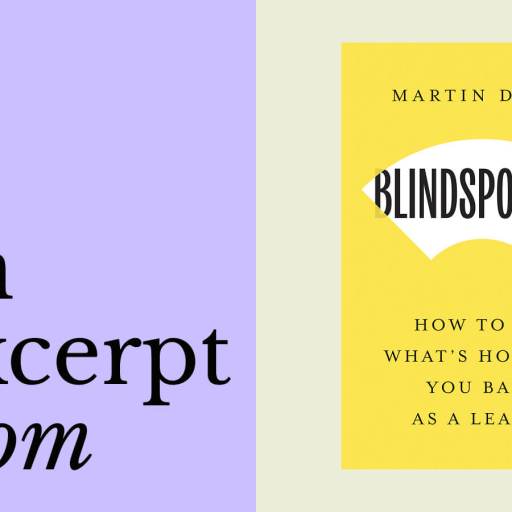
Book cover of "Blindspotting: How to See What's Holding You Back as a Leader" by Martin Dubin, featuring the word "blindspotting" and “an excerpt from” on a purple background.
You might love your leadership role and inspire fierce loyalty — but what if that comes at the expense of a disastrous balance sheet? Here’s a way forward.
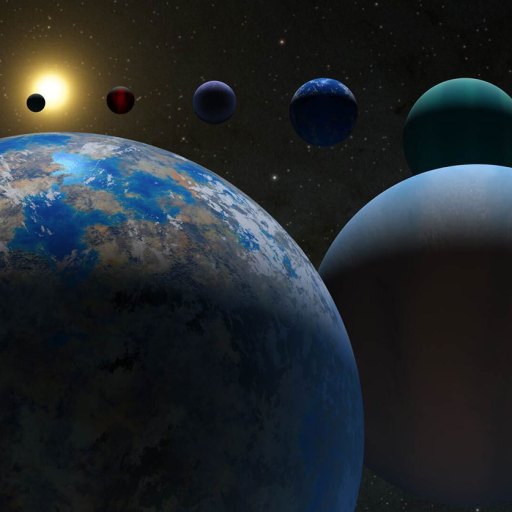
5000 exoplanets
Somewhere, at some point in the history of our Universe, life arose. We're evidence of that here on Earth, but many big puzzles remain.
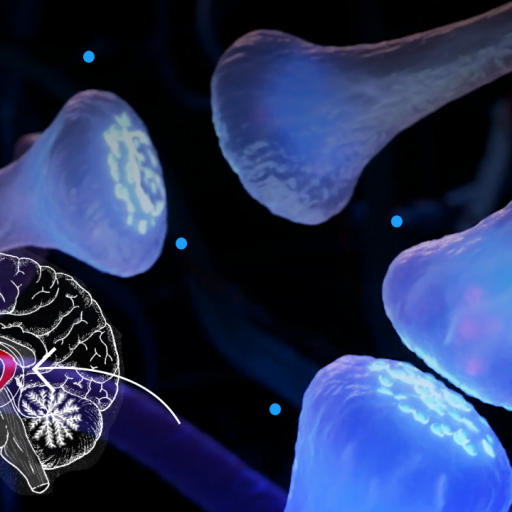
Illustration of a brain with highlighted regions overlaid on a close-up image of blue synapses and neurons, representing neural communication.
2mins
Your brain changes when you experience something, and it changes again when you remember it. Two neuroscientists explain what that means for memory, perception, and identity.
Unlikely Collaborators
A split image showing the left half of a woman's face and the right half as a digital brain with neural connections and data waves.
7mins
Three doctors break down brain function, somatic awareness, and how to recover from bad experiences.
Unlikely Collaborators
Illustration of a silhouetted person inside a circular pattern, with arrows and waves directing from a yellow sphere on a green grid background.
A playbook for L&D leaders who want to drive growth, not just deliver training
A black-and-white portrait of smiling Katie Gatti Tassin with glasses is centered on a collage featuring a close-up of a dollar bill, a checkered pattern, and a vintage microphone.
The host of the Money with Katie Show has some priceless advice for women on how to approach pay-rise negotiations.
Vintage illustration of a human head in profile with labeled sections of the brain, representing different personality traits and mental faculties.
3mins
What if emotional regulation isn’t just a trait, but a skill parents and teachers can help develop? Ethan Kross reveals what science says about shaping young minds.
Full moon over a city skyline at night, high-rise buildings aglow and lights reflecting on the calm water—a scene that inspires 5 science lessons about the moon's impact on our world.
Even just by examining the Moon with the unaided eye, we can learn an incredible amount about the Moon, Earth, and more.
1hr 1mins
“We can make ourselves more likely to be happy by building a life that includes the conditions that make for happiness.”