
Test Special Issue

Game Change

Do elite athletes really make elite employees?

Sports, we tend to assume, offer a sharp-edged reflection of business life in microcosm — leadership under pressure, the winning mentality, valuable lessons drawn from loss. It’s all there. Just kick back with a beer and a pizza and watch your pathway to workplace success unfold on game day. Well, it turns out that the connections are often far more nuanced than we might have presumed. Do elite athletes really make elite employees? What’s the connection between Swedish pragmatics in soccer and a thriving startup culture? Have you factored in the difference between “wicked” and “kind” environments (and what does that even mean)? We investigate all of these pivotal tangents, and much more, in this Big Think special collection of essays, interviews, and curated book excerpts. Forget everything you’ve been told about the synergies between sports and business. It’s time to rewrite the rules.

Blue background with the words "Game Change" in white, surrounded by strategic game symbols and graphs in the background.
Presented by
John Templeton Foundation
A woman with long blonde hair, wearing a black top and blazer, stands outdoors in front of modern buildings on a sunny day.
Investment in quantum is growing. Anastasia Marchenkova wants to make sure funders still ask the tough questions.
3mins
Philosophy asks if free will is real. Neuroscience reveals why the answer is more complicated than we expected.
Unlikely Collaborators
A dense cluster of differently sized red, blue, and green spheres overlaps against a black background, evoking the biggest mysteries surrounding the origin of the universe.
We've long known we can't go back to infinite temperatures and densities. But the hottest part of the hot Big Bang remains a cosmic mystery.
A close-up of a spotted nudibranch with translucent, pointed cerata on a brown underwater branch against a black background, inviting reflection on the intricate nature of consciousness in marine life.
In this excerpt from "One Hand Clapping," Nikolay Kukushkin makes the case that neurons reveal how memory, meaning, and even consciousness emerge from the same biological roots in humans, sea slugs, and beyond.
Book cover of "Delivering the WOW" by Richard Fain next to a text graphic that says "an excerpt from Richard Fain" on a purple background.
Richard Fain — Chairman and former CEO of Royal Caribbean Group — explains how a tongue-twister helped boost his company’s fortunes.
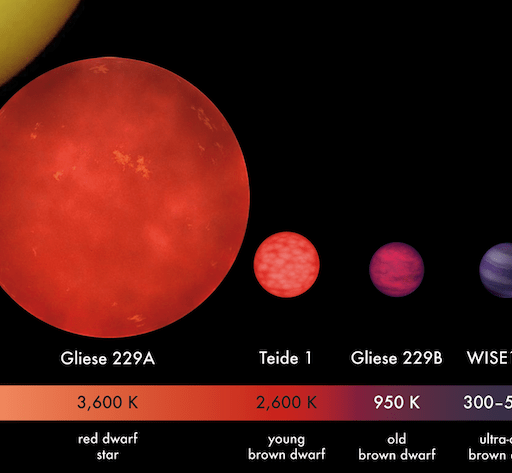
star vs planet vs brown dwarf
Red dwarfs are the Universe's most common star type. Their flaring now makes potentially Earth-like worlds uninhabitable, but just you wait.
Illustration of a hand holding a pen, drawing a DNA double helix made of colored dots on a dark background.
It's time to write the human genome, argues microbiologist Andrew Hessel.
Two people face each other closely, each sipping from their own straw. The blue-tinted image, echoing the 37% rule of making choices, reveals only part of their faces, hinting at a moment of decision or connection.
When making any tough decision, the key is not to be overly exploratory or exploitative.
A silhouette of a person walks among three large abstract sculptures—one orange, one green, one blue—on a textured gray and white ground, creating a scene of art immersion.
Marine Tanguy — author and founder/CEO of MTArt Agency — argues that viewing and creating art has profound benefits.
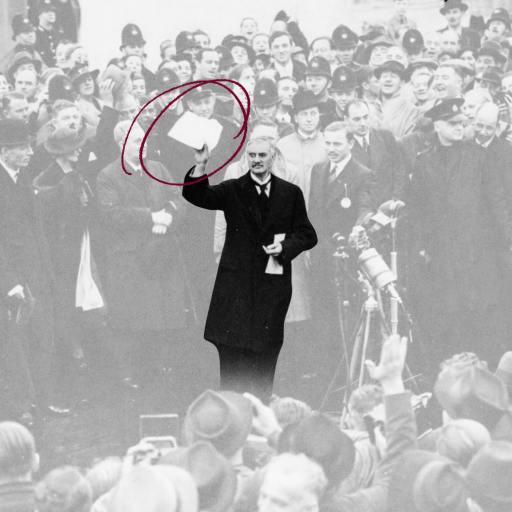
A man in a dark coat holds up a signed document in front of a crowd; the document is circled in red.
From Hitler to Hamas, Western powers have repeatedly dismissed open threats as bluffs — with catastrophic results.
A black background with white text and red lines.
15mins
"We're living in an extraordinary moment in history. We are at a moment here in 2025 where we have world historic game-changing technologies now starting to scale."
A detailed black and white illustration of a toad on a green background, with the word "Car" written below it.
3mins
If the people controlling AI are biased, the output will also be. Free speech scholar Jacob Mchangama makes the case for completely open-source AI.
quasar-galaxy hybrid
Found by Hubble before JWST's launch, GNz7q looked like a mix of a galaxy and a quasar. Was it actually our first known "little red dot"?
Two figures in military gear salute, rendered in white and red with visible brain scans over their heads, set against a black background—a striking nod to the neuroscience of war.
In “Warhead,” neuroscientist and national security adviser Nicholas Wright explains how the brain navigates warfare and why it is our ultimate weapon (and instrument for peace).
24mins
“Deep down the natural endpoint of this whole goal of looking for planets is to answer the question: are we alone?”
A coastal landscape with rugged cliffs shaped by seaflooding and calm water at sunset, with mountains in the background and soft orange and purple hues in the sky.
Bold megaprojects could turn dry depressions into thriving new hubs of life.
Black and white cutout of a smiling man's face with red heart shapes drawn over his eyes on a black background.
16mins
“No matter what their gods were, what they did for a living, what they wore, the songs they sang, everything varies except love, and everybody loves.”
Illustration of the universe's large-scale structure with colorful concentric circles, representing cosmic structure distribution, against a black background.
Observations with the Hubble space telescope helped cement dark energy and reveal the Hubble tension. How are these two things so different?
The whole isn't greater than the sum of its parts; that's a flaw in our thinking. Non-reductionism requires magic, not merely science.
Collage with "The Nightcrawler" text, an image of a tree, two photos of elderly hands working with clay—reminiscent of Warren Buffett’s wisdom—and partial faces of an older person, all highlighted by orange accents.
Welcome to The Nightcrawler — a weekly newsletter from Eric Markowitz covering tech, innovation, and long-term thinking.