
Test Special Issue

Game Change

Do elite athletes really make elite employees?

Sports, we tend to assume, offer a sharp-edged reflection of business life in microcosm — leadership under pressure, the winning mentality, valuable lessons drawn from loss. It’s all there. Just kick back with a beer and a pizza and watch your pathway to workplace success unfold on game day. Well, it turns out that the connections are often far more nuanced than we might have presumed. Do elite athletes really make elite employees? What’s the connection between Swedish pragmatics in soccer and a thriving startup culture? Have you factored in the difference between “wicked” and “kind” environments (and what does that even mean)? We investigate all of these pivotal tangents, and much more, in this Big Think special collection of essays, interviews, and curated book excerpts. Forget everything you’ve been told about the synergies between sports and business. It’s time to rewrite the rules.
Blue background with the words "Game Change" in white, surrounded by strategic game symbols and graphs in the background.
Presented by
John Templeton Foundation
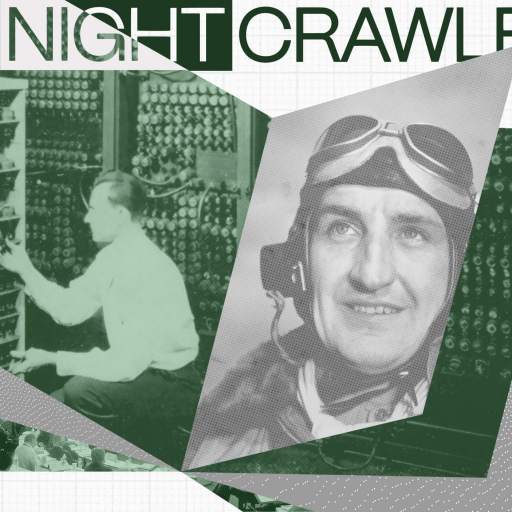
Collage featuring a man operating early computer equipment and a man in aviator goggles, with the text "THE NIGHTCRAWLER" above them—capturing the creative sparks of innovation and adventure.
Welcome to The Nightcrawler — a weekly newsletter from Eric Markowitz covering tech, innovation, and long-term thinking.
A digitally rendered black hole with a dark center and a glowing, distorted ring of light surrounding it.
23mins
"Could black holes be the key to a quantum theory of gravity, a deeper theory of how reality, of how space and time works? Well, I think so."
From here on Earth, looking farther away in space means looking farther back in time. So what are distant Earth-watchers seeing right now?
A digital illustration of a human brain next to a crescent moon on a dark background.
3mins
Sleeping better helps you think better, which helps you live better. Three experts explain why quality sleep is imperative to brain function, problem solving, communication, and more.
Unlikely Collaborators
An astronaut stands proudly on the moon's surface near scientific equipment and a lunar lander, as the American flag waves in the background, symbolizing a pioneering USA nation.
As October begins, thousands of longtime NASA employees are leaving the agency. 4000+ will exit by January 9, 2026, changing NASA forever.
An orange arrow looping to the right is overlaid on a collage of black-and-white portraits of philosophers.
Philosophers rarely change their minds. These thinkers did — often at social and professional cost.
Book cover for "In Praise of the Office: The Limits to Hybrid and Remote Work" featuring a red chair with a laptop, highlighting how meaningful work flourishes, next to "an excerpt from" on an orange background.
How to foster a workplace environment where employees want to be present, rather than feel forced to be there.
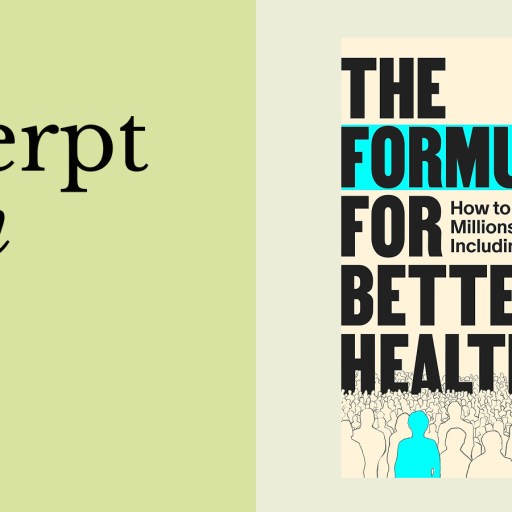
Book cover with the title "The Formula for Better Health" by Tom Frieden, MD, MPH, shown next to the text "an excerpt from" on a split green and beige background—a nod to Alice Hamilton’s legacy in public health.
In this excerpt from "The Formula for Better Health," Tom Frieden explores how Alice Hamilton transformed public health in her fight against lead poisoning.
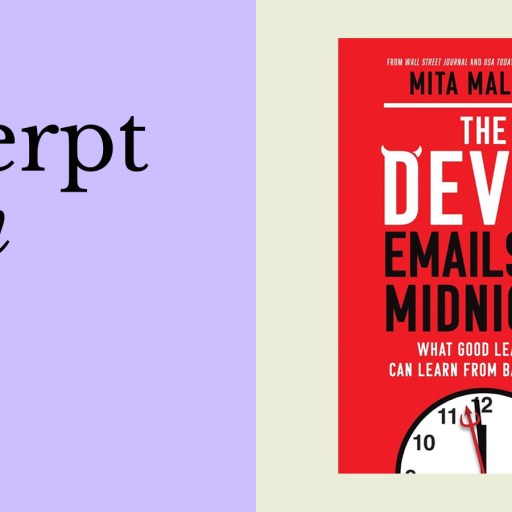
The image features the book cover of "The Devil Emails at Midnight" by Mita Mallick alongside text reading "an excerpt from" on a purple and beige background, hinting at themes like toxic positivity within its pages.
What happens when your boss decides to weaponize positivity in the workplace?
A collage titled "The Nightcrawler," featuring a hand planting a seed, a distressed woman holding her head, and repetitive office cubicles in purple tones, explores trust amid cycles of anxiety and routine.
Welcome to The Nightcrawler — a weekly newsletter from Eric Markowitz covering tech, innovation, and long-term thinking.
a black background with circles and a star in the center.
Proposed over 2000 years ago by Democritus, the word atom literally means uncuttable. Revived in 1803, today's "atoms" can indeed be split.
Three figures in hats walk across rippled sand dunes, leaving footprints behind them under soft, diffused light.
Life's "in-between" stages pack unique cognitive benefits — if you know how to tap into them.
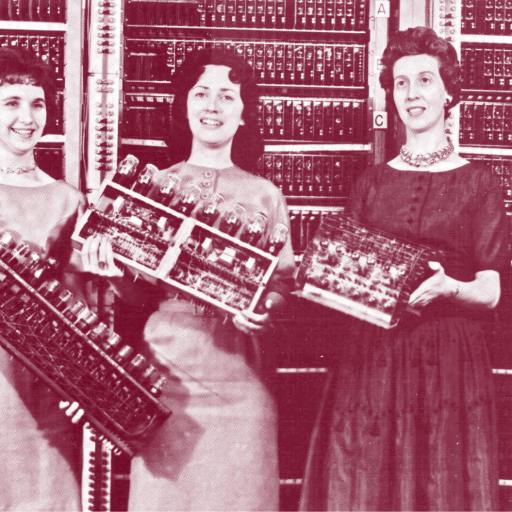
Four women stand in front of a vintage computer, each holding different components of its hardware, with the computer's panel visible in the background—an image reminiscent of historical innovation studied by Angus Fletcher.
The incredible story of how the US Army began the march toward generative AI in 1943 — and what it means for your business today.
The word "ALONE" in large white letters on a purple background, with a sad person's face visible inside the letter "O.
2mins
“The media is 10x more likely to describe experiences of being alone as negative, as compared to positive.” Psychologist Ethan Kross shares how reframing the idea of loneliness can help us feel more peace when we’re on our own.
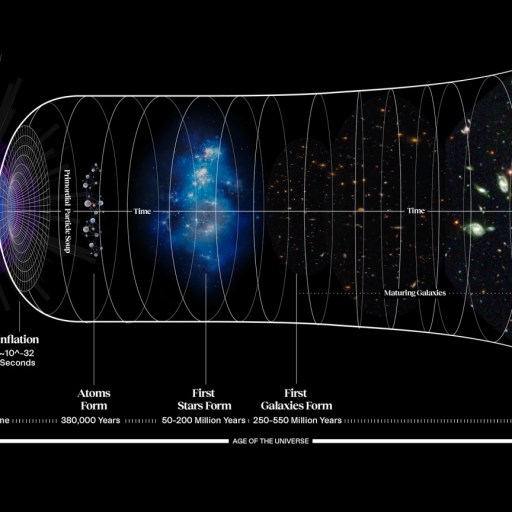
A diagram illustrating one of the biggest mysteries: the origin of the universe, from the Big Bang and inflation to today, showing the formation of atoms, stars, galaxies, and the ongoing expansion of space.
From the Big Bang to a prior period of cosmic inflation, our cosmic origins are clearer than ever. Yet these 5 big mysteries still remain.
15mins
“This is a world in which we've essentially given ourselves the tools to stop the construction of the most important product in American lives in the places where Americans often most want to move.”
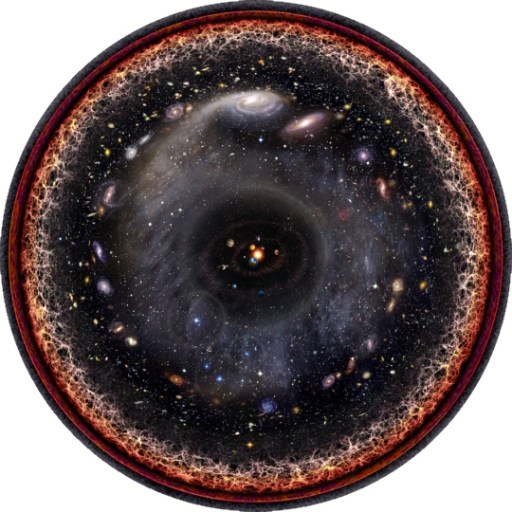
A circular diagram illustrating the observable universe, showing planets, stars, galaxies, and cosmic background radiation layers—revealing where Big Bang echoes still linger.
If you think of the Big Bang as an explosion, we can trace it back to a single point-of-origin. But what if it happened everywhere at once?
A man in a suit walks on grass beside a long-haired dog, with faded images of a magic wand, a hat, and white doves in the blue-toned background.
A childhood spent under the spell of sleight-of-hand taught me skepticism, curiosity, and the habit of looking beneath appearances.
A smiling man with short dark hair wears a button-up shirt, standing in front of a purple, splattered-texture background.
Big Think spoke with astronomer David Kipping about technosignatures, "extragalactic SETI," and being a popular science communicator in the YouTube age.