









Test Special Issue

Game Change

Do elite athletes really make elite employees?

Sports, we tend to assume, offer a sharp-edged reflection of business life in microcosm — leadership under pressure, the winning mentality, valuable lessons drawn from loss. It’s all there. Just kick back with a beer and a pizza and watch your pathway to workplace success unfold on game day. Well, it turns out that the connections are often far more nuanced than we might have presumed. Do elite athletes really make elite employees? What’s the connection between Swedish pragmatics in soccer and a thriving startup culture? Have you factored in the difference between “wicked” and “kind” environments (and what does that even mean)? We investigate all of these pivotal tangents, and much more, in this Big Think special collection of essays, interviews, and curated book excerpts. Forget everything you’ve been told about the synergies between sports and business. It’s time to rewrite the rules.

Blue background with the words "Game Change" in white, surrounded by strategic game symbols and graphs in the background.
Presented by
John Templeton Foundation
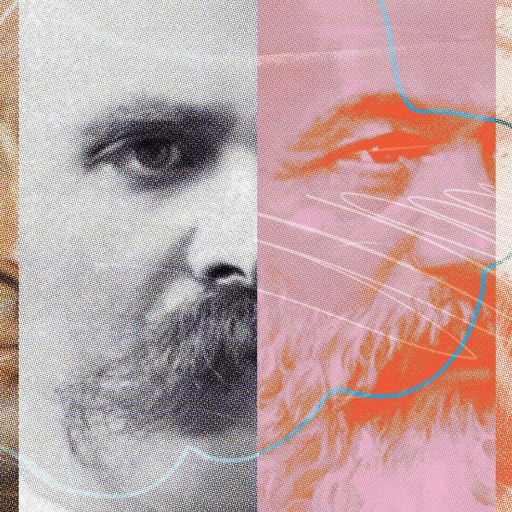
Split-panel collage of illustrations with partial faces of four historical figures, featuring diverse expressions and art styles, separated by colored lines. Each face reveals a hint of misunderstood philosophy, inviting viewers to ponder the unseen depths behind their enigmatic gazes.
That Nietzsche quote might not mean what you think it does.
A glowing orange planet casts a shadow in space amid a backdrop of stars.
Exoplanets can exist anywhere around their parent stars, even so close that they evaporate or disintegrate. Even the rocky ones.
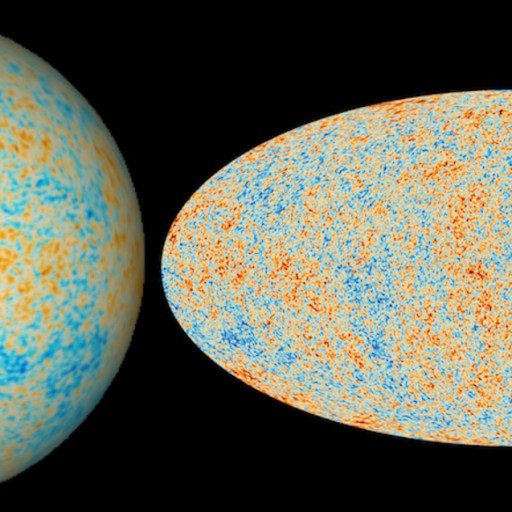
Two visualizations map the cosmos, displaying color-coded cosmic microwave background radiation. Blue and orange patches indicate temperature variations across a spherical and an oval projection.
It's difficult to project a sphere onto a flat, two-dimensional surface. All maps of the Earth have flaws; the same is true for the cosmos.
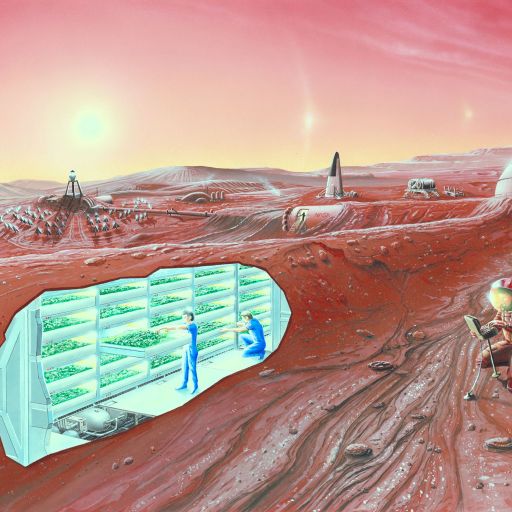
An illustration of a Martian Revolution showcases a colony with astronauts tending to plants in a greenhouse embedded in the surface, under a red sky with two suns.
The latest season of the "Revolutions" podcast blends history with science fiction to tell the story of the Red Planet's rise.
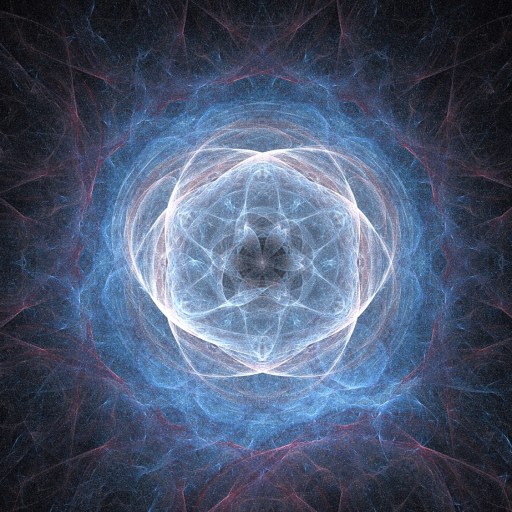
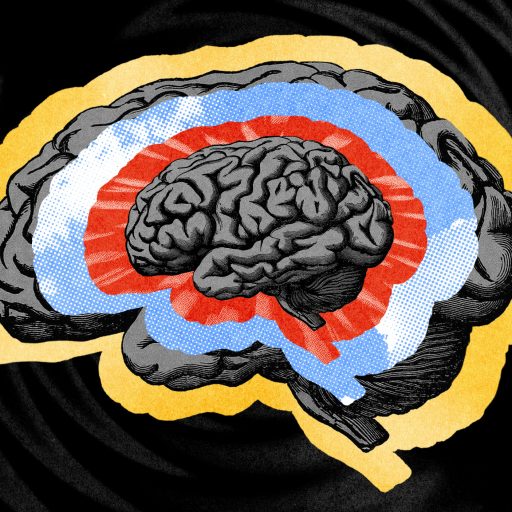
Abstract image featuring a luminous, symmetrical pattern of blue and white swirling lines against a dark background, resembling a cosmic or nebula-like formation.
A look inside Mindstate Design Labs' effort to design drugs that reliably produce specific states of mind.
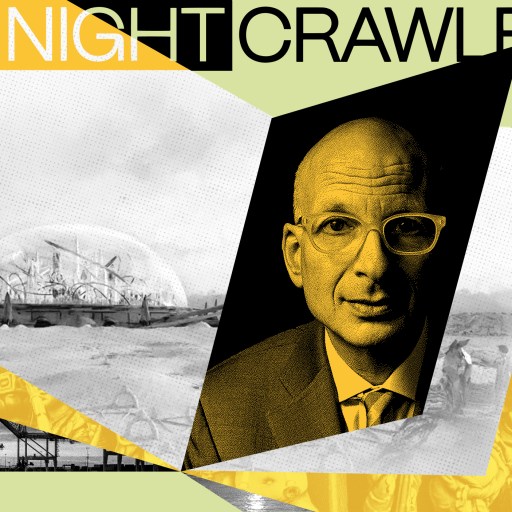
Collage featuring a man with glasses, reminiscent of Seth Godin, on a black and yellow background. Overlaid with images of architecture and industrial elements, this piece is titled "The Night Crawler.
Welcome to The Nightcrawler — a weekly newsletter from Eric Markowitz covering tech, innovation, and long-term thinking.
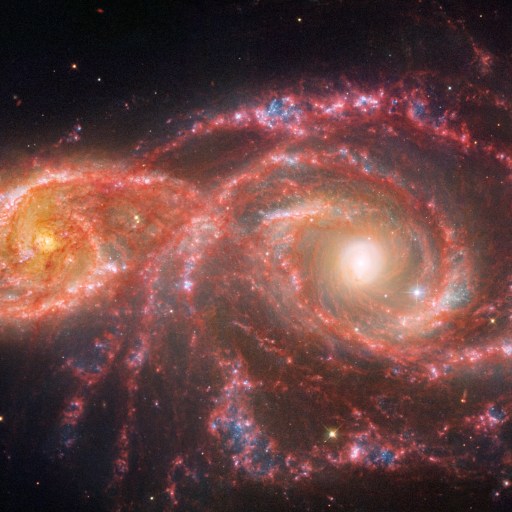
Two colorful spiral galaxies interacting in space, with bright centers and swirling arms of red, blue, and white hues, set against a backdrop of stars.
The Kalam cosmological argument asserts that everything that exists must have a cause, and the "first" cause must be God. Is that valid?
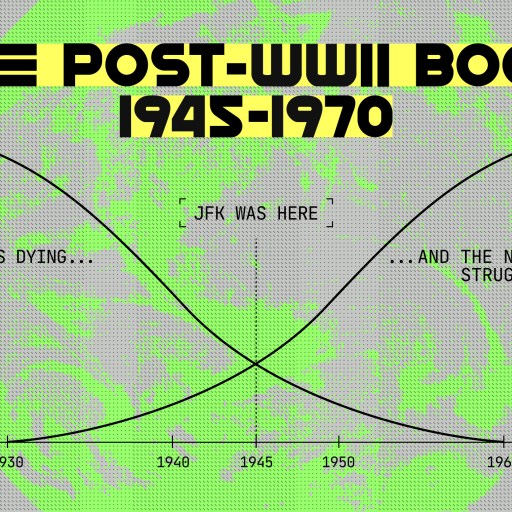
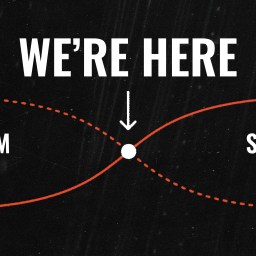
Graph titled "The Post-WWII Boom 1945-1970" shows intersecting curves labeled "The Old World Is Dying" and "The New One Struggles To Be Born," with "JFK Was Here" marked at 1960.
Americans have gone through three historic junctures like what we're witnessing today — and they happen on an uncanny 80-year cycle.
We understand many things about our Universe, and our home within it, extremely well. The number of stars in the Milky Way isn't among them.
Map highlighting an area in Europe, centered on the Netherlands and surrounding countries, with a red overlay labeled "PDF.
Common knowledge says the maximum size of a PDF is as big as 40% of Germany — but that’s a gross underestimate.
A person sits on a stool against a blue background with black and white geometric diagrams, including lines, circles, squares, and triangles.
Honing your skills as a strategic thinker does more than solve problems as they appear; it can be a fast track to the top.
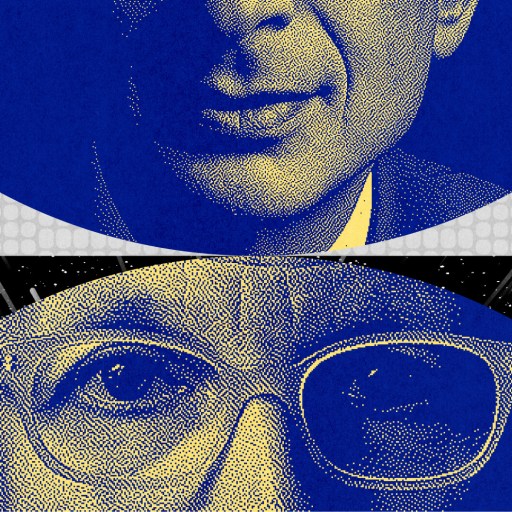
Stylized graphic featuring two separate, partial illustrations of faces in blue and yellow tones against textured backgrounds, subtly capturing a nod to Seth Godin's bold and thought-provoking style.
Bestselling author Seth Godin urges us to rethink our definition of longevity — and to step back and measure what matters.
A smiling woman graces the left page, embodying the optimism of job-seeking. On the right, a silhouette of three people celebrates atop a mountain peak against an orange backdrop, capturing a moment as precious as gold.
Networking — not zombie-crunching your job applications — gives you a better chance of getting sourced or referred for a role.
branching parallel universes
The Multiverse isn't just a staple of science fiction; there's real-life science behind it, too. Here are 10 facts to expand your mind.
Stylized illustration of a person holding a chess piece, with a digital glitch effect and horizontal lines creating a blue-toned, distorted appearance.
How the cult hit sci-fi show imagines a “techno-realist” future.
A retro computer displays a ghost on the screen as pixelated chains drift across the foreground, reminiscent of a scene from a Ken Liu short story. This digital haunt unfolds against a vivid orange background.
The first in a series of short stories by the Hugo- and Nebula-winning author that inspired the cult hit "Pantheon."
Intricate 3D red maze with vertical walls, viewed from an angle, showing complex pathways and geometric design.
Those who know who they are — and what they truly value — refuse to compromise their authentic direction to placate others.
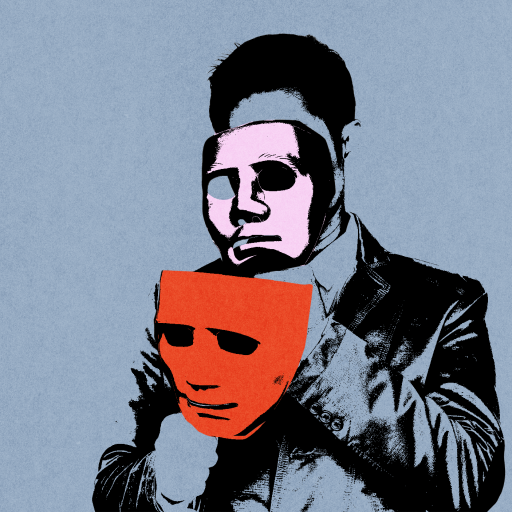
A person in a suit holds a red mask boldly in front of their face, symbolizing the leap to leader, while another mask partially conceals their true identity.
Adam Bryant makes a key observation about rising to the challenges of leadership — and your change-resistant former self won’t like it.
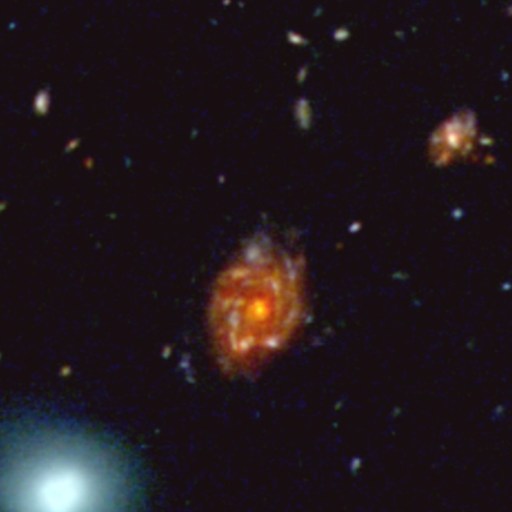
A colorful, spinning galaxy with a bright orange core, existing for 12 billion years, is surrounded by smaller galaxies and star clusters against a black space background.
Large, massive, rotating galaxies like the Milky Way are common today. So how could one form a mere ~2 billion years after the Big Bang?