


Test Special Issue

Game Change

Do elite athletes really make elite employees?

Sports, we tend to assume, offer a sharp-edged reflection of business life in microcosm — leadership under pressure, the winning mentality, valuable lessons drawn from loss. It’s all there. Just kick back with a beer and a pizza and watch your pathway to workplace success unfold on game day. Well, it turns out that the connections are often far more nuanced than we might have presumed. Do elite athletes really make elite employees? What’s the connection between Swedish pragmatics in soccer and a thriving startup culture? Have you factored in the difference between “wicked” and “kind” environments (and what does that even mean)? We investigate all of these pivotal tangents, and much more, in this Big Think special collection of essays, interviews, and curated book excerpts. Forget everything you’ve been told about the synergies between sports and business. It’s time to rewrite the rules.
Blue background with the words "Game Change" in white, surrounded by strategic game symbols and graphs in the background.
Presented by
John Templeton Foundation
Over a century after we first unlocked the secrets of the quantum universe, people find it more puzzling than ever. Can we make sense of it?
A person sits in darkness, frowning, partially obscured by a large yellow smiley face sticker covering part of their face.
Our brains cling to the bad. This method could help balance the scales.
A close-up of an oiled muscular arm flexing on the left and a vibrant peacock feather with blue and green hues, symbolizing sexual selection, on the right, both set against a stark black background.
Science writer Matt Ridley joins us to discuss how “Darwin’s strangest idea” makes us all a bit feather-brained (in a good way).
Abstract design featuring the words "The Nightcrawler," red palm trees, a stylized map, and a large apple symbol—all compelling you to rethink modern aesthetics.
Welcome to The Nightcrawler — a weekly newsletter from Eric Markowitz covering tech, innovation, and long-term thinking.
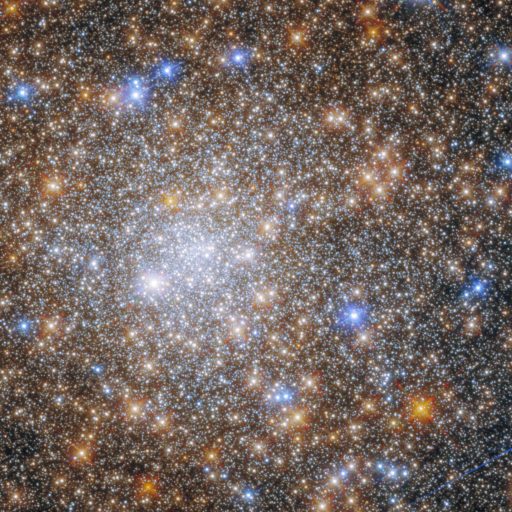
globular cluster terzan 5
For centuries, even after we knew the Sun was a star like any other, we still didn't know what it was made of. Cecilia Payne changed that.
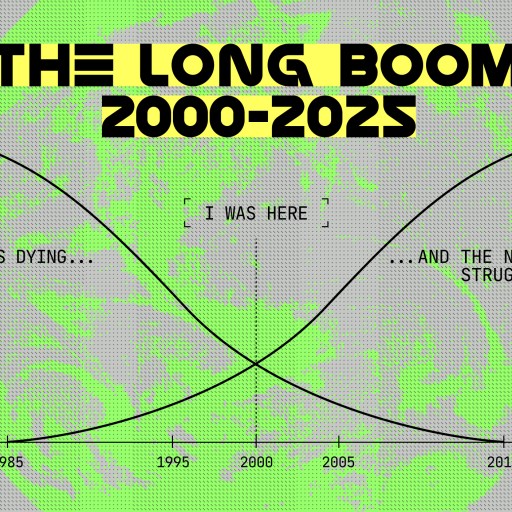
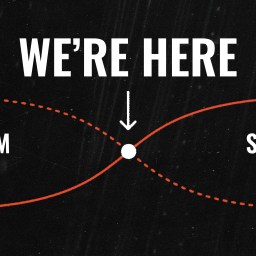
A graph titled "The Long Boom 2000-2025" shows intersecting curves from 1975 to 2025, depicting a transition from an old to a new world. Text reads "I was here" at the intersection around 2005.
The latest from Peter Leyden's "The Great Progression: 2025 to 2050", an essay series published by Freethink.
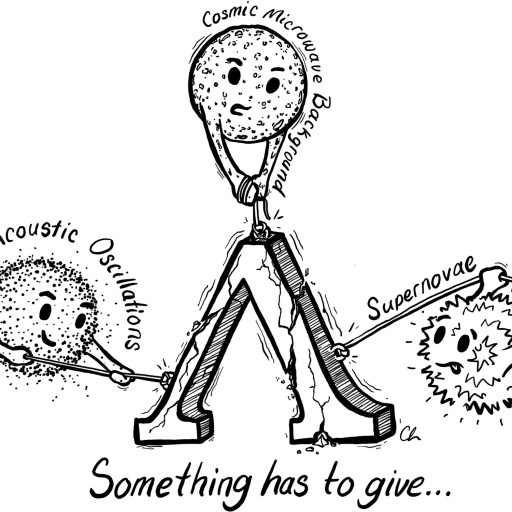
A cartoon of three cosmic phenomena (CMB, Baryon Acoustic Oscillations, Supernovae) pulling on a triangle. Text below reads: "Something has to give...
DESI, by mapping galaxies, has claimed they see evidence for dark energy evolving by getting weaker. But that's only one interpretation.
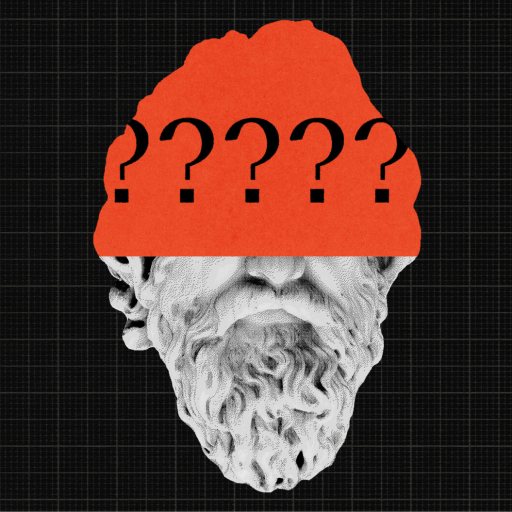
A stone bust of a bearded figure with an orange band across its forehead displaying several question marks.
“It’s much more interesting to live not knowing than to have answers that might be wrong.”
An open book reveals the art of smart manipulation: on the left page, a marionette illustration dances gracefully, while on the right, a flock of sheep grazes peacefully in a sunlit field.
We manipulate constantly — but few of us want to be called “manipulative.” Here, ex-Google executive Jenny Wood redefines an unfairly maligned trait.
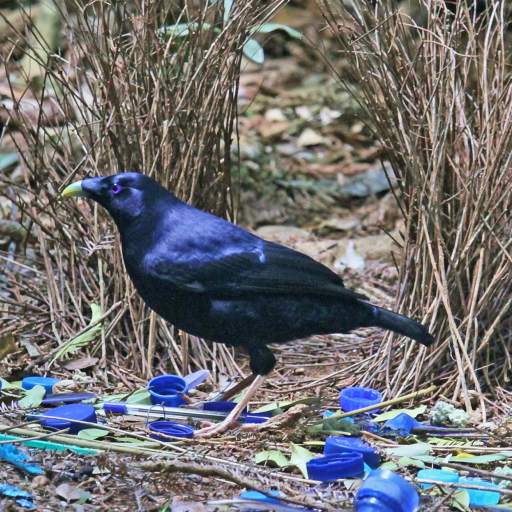
A satin bowerbird stands on the ground, artfully surrounded by blue objects like an artist's palette, with dried twigs in the background, a testament to nature's evolution.
In his book, "Birds, Sex and Beauty," Matt Ridley explores why learning isn't always nature versus nurture.
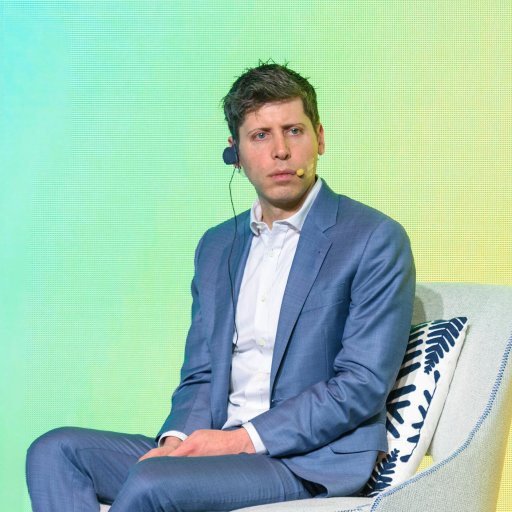
A man in a suit sits on a stage chair with a headset, set against a vibrant green background, ready to discuss the latest advancements at OpenAI.
OpenAI has become a household name in artificial intelligence — but back in 2018 things looked very rocky. Here’s what happened.
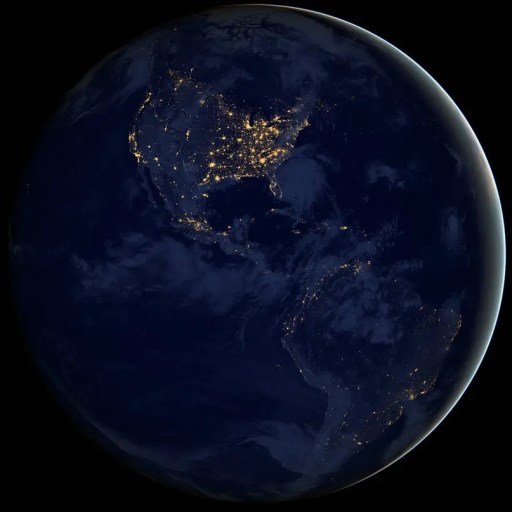
From the vastness of space, Earth at night reveals its exo-earth beauty, with illuminated continents showcasing a tapestry of lights across North and South America. Major cities and regions emerge from the glowing darkness, painting a vivid picture against the backdrop of oceans.
Even from a single pixel, multiwavelength data taken over time can reveal clouds, icecaps, oceans, continents, and even signs of life.
An orange fruit hangs from a branch, accompanied by a small white flower with pink details, set against a background of green leaves.
A powerful psychedelic long used in African rituals shows surprising promise for treating traumatic brain injury and PTSD.
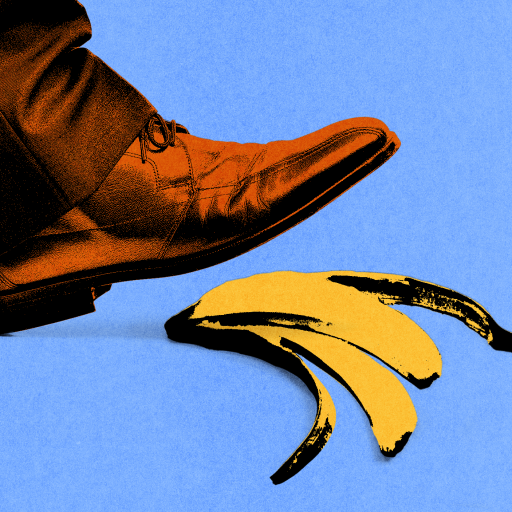
A foot in a brown shoe stepping on a banana peel against a blue background, illustrating one of the humorous fixes for success.
Professor of leadership Michael D. Watkins identifies ways high-performing teams can be sabotaged — and offers simple fixes for each.
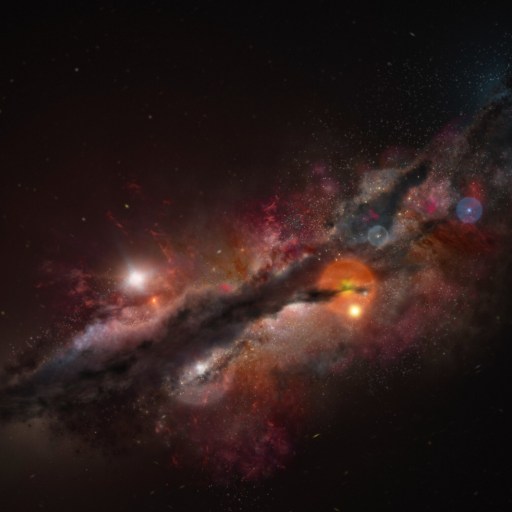
Colorful galaxy with dark dust lanes and bright stars, set against a deep space background.
Someday, we'll look back and see a young galaxy forming stars for the first time. JADES-GS-z14-0, the farthest ever, isn't early enough.
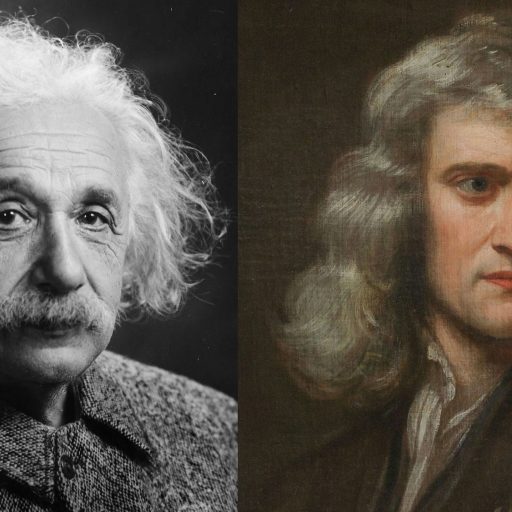
Einstein's general relativity has reigned supreme as our theory of gravity for over a century. Could we reduce it back down to Newton's law?
Illustration of two connected neurons with green and orange bodies, featuring detailed blue nuclei, against a black grid background.
A fresh view of intelligence — spanning living systems from bacteria to human civilization — challenges the idea that it’s merely problem-solving.