









Test Special Issue

Game Change

Do elite athletes really make elite employees?

Sports, we tend to assume, offer a sharp-edged reflection of business life in microcosm — leadership under pressure, the winning mentality, valuable lessons drawn from loss. It’s all there. Just kick back with a beer and a pizza and watch your pathway to workplace success unfold on game day. Well, it turns out that the connections are often far more nuanced than we might have presumed. Do elite athletes really make elite employees? What’s the connection between Swedish pragmatics in soccer and a thriving startup culture? Have you factored in the difference between “wicked” and “kind” environments (and what does that even mean)? We investigate all of these pivotal tangents, and much more, in this Big Think special collection of essays, interviews, and curated book excerpts. Forget everything you’ve been told about the synergies between sports and business. It’s time to rewrite the rules.


Blue background with the words "Game Change" in white, surrounded by strategic game symbols and graphs in the background.
Presented by
John Templeton Foundation
From a vantage point reminiscent of Carl Zimmer's explorations, an aerial view captures a massive swirling cloud formation over Earth, resembling a hurricane or cyclone against the infinite darkness of space.
In his new book, the popular science writer tells the story of how scientists discovered the “gaseous ocean” we all swim in — and the trillions of invisible life forms we share it with.
Collage featuring a power plant, Alpha School text and logo, graphs, and "The Night Crawler" title on a geometric blue and white background, seamlessly incorporating AI education elements.
Welcome to The Nightcrawler — a weekly newsletter from Eric Markowitz covering tech, innovation, and long-term thinking.
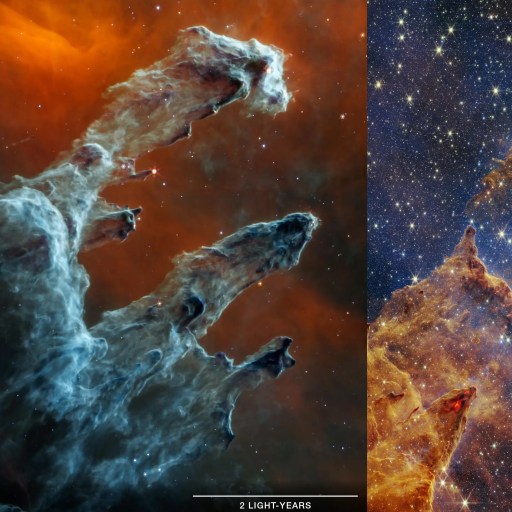
Two side-by-side images of the Pillars of Creation in the Eagle Nebula showcase different views with vibrant colors and star-filled backgrounds, embodying the great paradox of beauty within science.
Our scientific instruments are constantly improving, revealing nature's workings as never before. Without them, we'll remain in the dark.
Yellow background with halftone globe and bold text: "The Great Progression 2025-2050.
Tech expert Peter Leyden argues that we have a historic opportunity to harness AI and other transformative technologies in order to make a much better world over the next 25 years.
An open book with text artfully arranged to form a house and tree shape, set against a blue sky dotted with white swirls, celebrates the magic of books.
When you enter someone's home, you learn how life is lived elsewhere.
round Earth messenger
All scientific theories are limited in scope, power, and application, being mere approximations of reality. That's why consensus is vital.
Collage featuring a historical emergency hospital photo, a palm tree silhouette, and an L.A. County fire helicopter soaring above the cityscape—a testament to build better, resilient urban landscapes.
The history of catastrophe shows that true resilience comes not from restoration, but from reinvention.
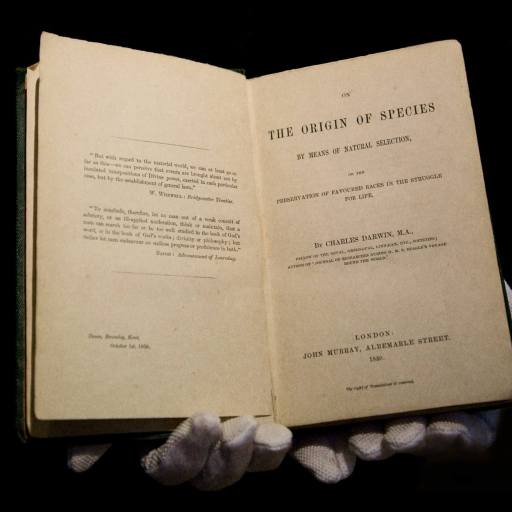
Gloved hands hold an open book titled "The Origin of Species by Means of Natural Selection" by Charles Darwin, a seminal work exploring the origin of life, published in London by John Murray, 1859.
These books helped build the empirical case that life's origins differ from those described in myths and legends.
A man in business attire lies relaxed on a cloud against a clear blue sky, embodying inner stillness.
The nature of “the mind” is always vast and clear no matter how swamped by information we feel — and leaders can learn to embrace this space.
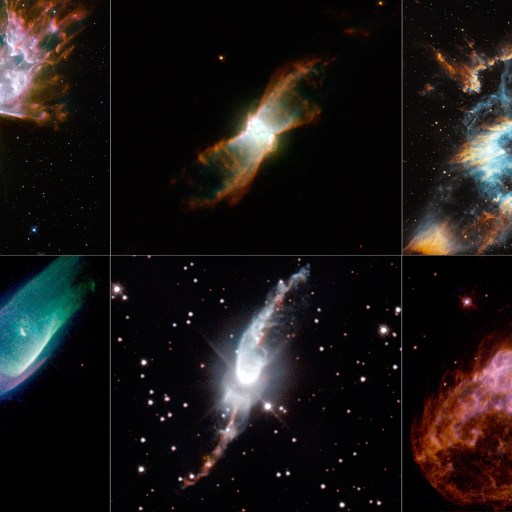
A grid of six Hubble Space Telescope images showcases different types of colorful nebulae with intricate shapes against a starry backdrop.
Some nebulae emit their own light, some reflect the light from stars around them, and some only absorb light. But that's just the beginning.
A grayscale portrait of a smiling person wearing glasses, exuding Warren Buffett wisdom, is centered within graphic elements featuring blue stripes and charts.
Investor Guy Spier joins Big Think for a chat about the “Oracle of Omaha,” generative AI, what confuses him, and more.
A tilted spiral galaxy gracefully tipped towards the viewer reveals a bright core and dark, dusty rings, set against the infinity of deep blue space.
When we see spiral galaxies, some are face-on, others are edge-on, but most are tipped at an angle. But which side is closest to us?
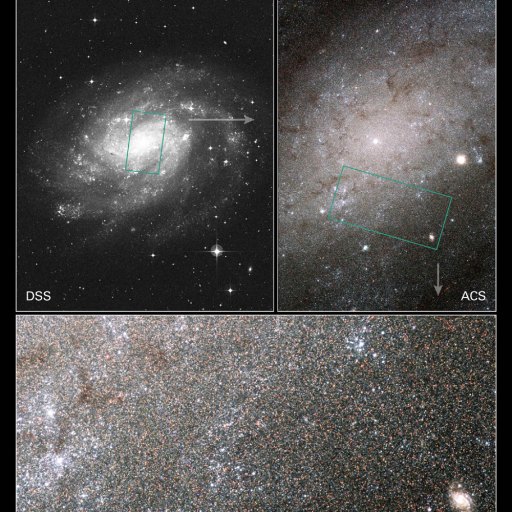
Composite image of spiral galaxy NGC 300. Left: wide view with area highlighted. Right: close-up of highlighted area. Bottom: magnified star field view. NASA and the Hubble Heritage Team.
The tiniest galaxies of all are the most susceptible to violence by their larger, bullying siblings. That's why we need them in isolation.
Silhouette of a human head with an outlined brain, set against a background of abstract swirling white lines on black.
When your life’s truth and the reality you live become out of sync, you risk falling into an "anxiety spiral."
A vivid image of a bright, colorful galaxy with swirling red, blue, and white clouds of gas and dust, where galaxies collide amid distant stars in the dark, expanding universe.
The Universe is expanding, and individual, bound structures are all receding away from one another. How, then, are galaxies still colliding?
Collage featuring a hand filing papers, an airplane, and numerical data on a grid background. Text reads "The Night Crawler: A Journey for Investigative Investors.
Welcome to The Nightcrawler — a weekly newsletter from Eric Markowitz covering tech, innovation, and long-term thinking.
A red star is at the center, with five orbiting paths marked by yellow dots, resembling exoplanets around the nearest single star, set against a starry night backdrop that illustrates a planetary system.
Barnard's star, the closest singlet star system to ours, has long been a target for planet-hunters. We've finally confirmed it: they exist!
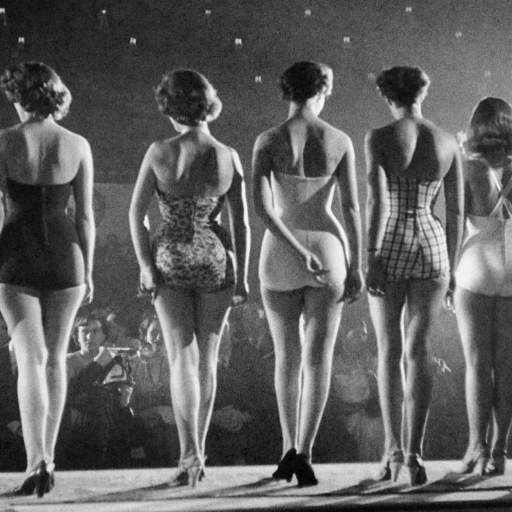
A lineup of eight women in swimsuits stands on stage, embodying beauty as they face away from the camera, with an audience in the background.
"Lookism" is prevalent and harmful. So why do so few take it seriously?
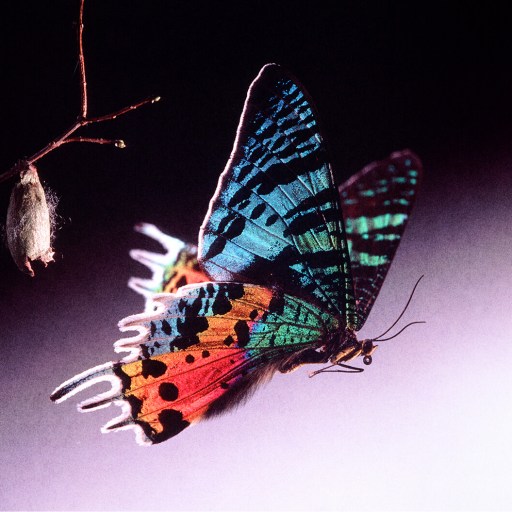
A colorful butterfly with vivid patterns hangs near an empty cocoon on a twig against a soft, gradient background.
"Personality isn't based on what we say we'll do. It's rooted in what we actually do, which becomes what we think about."
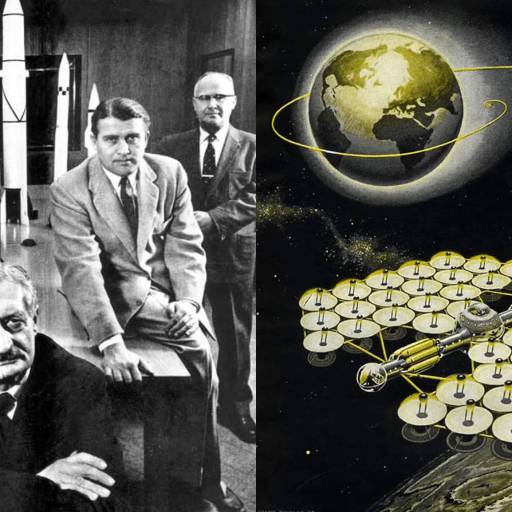
A group of five men in suits pose with model rockets, showcasing their commitment to fundamental research. Beside them, an illustration depicts a space station orbiting Earth and the Moon, highlighting their visionary investment in space exploration.
Back in 1970, Sister Mary Jucunda wrote NASA, decrying large investments in science. A former Nazi's legendary response is still relevant.