
Test Special Issue

Game Change

Do elite athletes really make elite employees?

Sports, we tend to assume, offer a sharp-edged reflection of business life in microcosm — leadership under pressure, the winning mentality, valuable lessons drawn from loss. It’s all there. Just kick back with a beer and a pizza and watch your pathway to workplace success unfold on game day. Well, it turns out that the connections are often far more nuanced than we might have presumed. Do elite athletes really make elite employees? What’s the connection between Swedish pragmatics in soccer and a thriving startup culture? Have you factored in the difference between “wicked” and “kind” environments (and what does that even mean)? We investigate all of these pivotal tangents, and much more, in this Big Think special collection of essays, interviews, and curated book excerpts. Forget everything you’ve been told about the synergies between sports and business. It’s time to rewrite the rules.
Blue background with the words "Game Change" in white, surrounded by strategic game symbols and graphs in the background.
Presented by
John Templeton Foundation
A grand, ornate setting with three figures in flowing attire standing before a large, luminous circular window overlooking a vibrant cityscape.
With no reliable way to discern the author of an artwork, we may eventually abandon the question of whether something was made by humans or not.
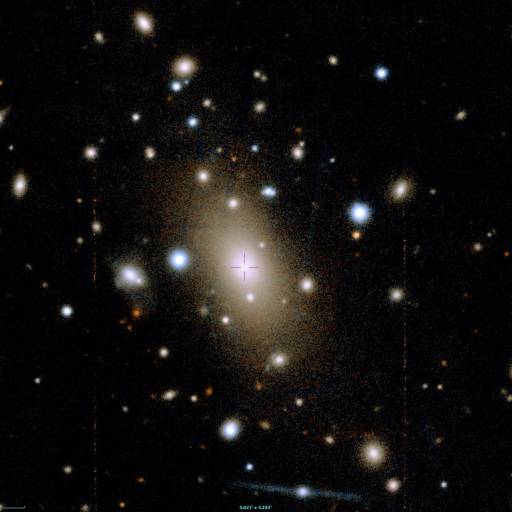
A sky full of stars with a large central galaxy, surrounded by smaller galaxies and bright spots on a dark background.
It was barely a century ago that we thought the Milky Way encompassed the entirety of the Universe. Now? We're not even a special galaxy.
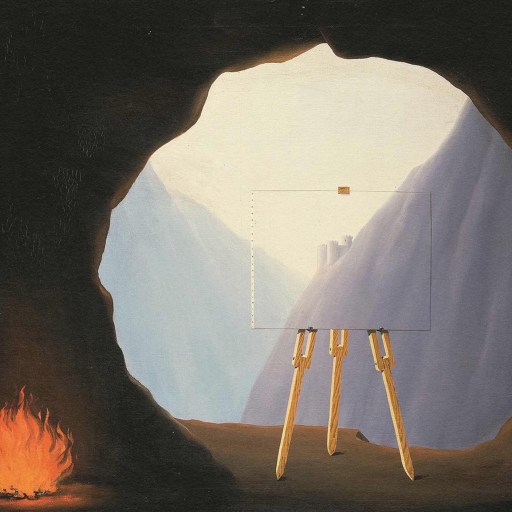
A painting on an easel at the entrance of Plato's cave overlooks misty mountains, with a small fire flickering nearby.
Plato's cave metaphor illustrates the cognitive trap of ignorance, where we may be unaware of the limitations of our understanding.
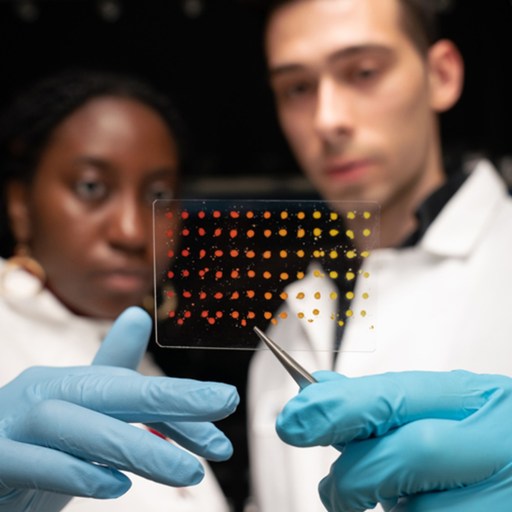
Two scientists in lab coats and gloves examine a small transparent plate with colorful dots, held by tweezers, in a laboratory setting.
It’s been 65 years since Richard Feynman saw “plenty of room” in the nano-world. Are we finally getting down there?
Illustration of a galactic collision, showing one galaxy colliding with the Milky Way, creating a loop of stars and cosmic material against a black background.
Even with just a momentary view of our galaxy right now, the data we collect enables us to reconstruct so much of our past history.
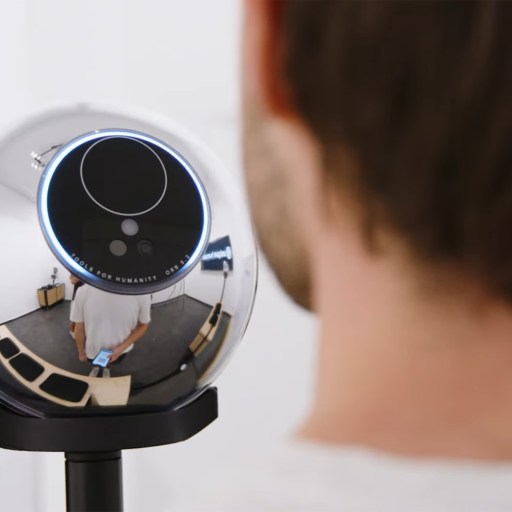
A man looking at a mirror.
"Personhood" credentials could cleanse the internet of bots — but are the costs worth it?
black hole
50 years ago, Stephen Hawking showed that black holes emit radiation and eventually decay away. That fate may now apply to everything.
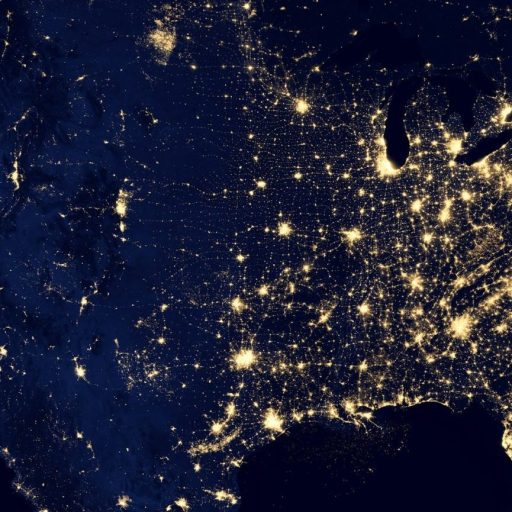
Satellite view of the United States at night reveals illuminated cities and areas, with dense clusters of lights in the eastern region, highlighting vibrant economic hubs reminiscent of workforce data concentrations, contrasted by the sparser illumination in the western regions.
A National Center for Data and Evidence could supplement our archaic and expensive system and more accurately measure AI's impact on jobs.
A sepia-toned illustration of a man with wavy hair, reminiscent of Keats, resting his chin on his hand and gazing thoughtfully into the distance, embodying the contemplative patience of playing the long game.
Welcome to The Nightcrawler — a weekly newsletter from Eric Markowitz covering tech, innovation, and long-term thinking.
Betelgeuse visualization
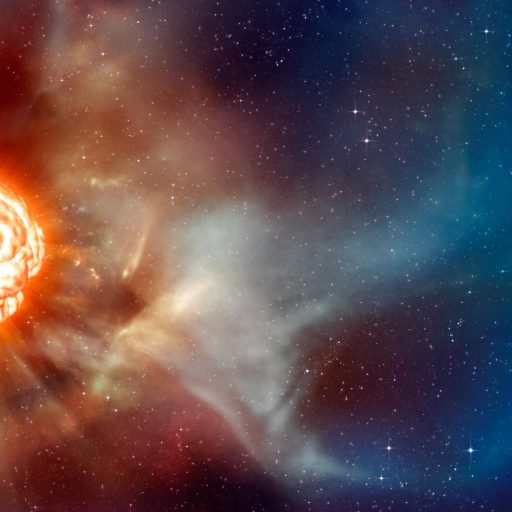
The closest known star that will soon undergo a core-collapse supernova is Betelgeuse, just 640 light-years away. Here's what we'll observe.
Abstract image of blue and pink particles on a black background, creating swirling patterns reminiscent of leading with AI innovations.
The Wharton School professor — and author of Co-Intelligence — outlines ways we can tap into the AI advantage safely and effectively.
A stylized image of the Statue of Liberty with a red overlay subtly symbolizes resilience and freedom, evoking thoughts on life expectancy.
In 2021, residents of the top America could expect to live 20.4 years longer than residents of the bottom America.
A digital visualization displays particle collision results with colored tracks and trails diverging from a central point against a black background, hinting at how B-mesons might break the standard model.
We have very specific predictions for how particles ought to decay. When we look at B-mesons all together, something vital doesn't add up.
A smartphone with a red case displays a world map on the screen, set against a vibrant orange background.
The integration of artificial intelligence into public health could have revolutionary implications for the global south—if only it can get online.
Map displaying a rail route from Helsinki to Bruxelles, passing through cities like Tallinn, Riga, Warsaw, Berlin, and Hamburg. Northern and Central Europe countries are labeled.
A new railway will switch the Baltic region's train gauge from Soviet to standard European — a megaproject with political, economic, and military dimensions.
Poster for the 1939 New York World's Fair, featuring a stylized skyline, ocean liner, and the slogan "The World of Tomorrow," encapsulating future visions that captivate imaginations and inspire exploration.
By looking back at future dreams we can see our current hopes and visions in a whole new light.
einstein general relativity curved spacetime
Most waves need a medium to travel through. But the way that light and gravitational waves travel shows that space can't be a medium at all.
A drawing of a dragon on a pile of gold, symbolizing hope.
For J.R.R. Tolkien, the single most important element of a fairy tale was the dramatic reversal of misfortune in the story's ending.
Silhouette of a selfish boss wearing a crown, relaxing on an office chair with feet propped up on another person's back against a cloudy sky backdrop.
Leaders ideally intertwine their own success with that of their teams — if that’s not the case at your workplace, here’s what to do.