







Test Special Issue

Game Change

Do elite athletes really make elite employees?

Sports, we tend to assume, offer a sharp-edged reflection of business life in microcosm — leadership under pressure, the winning mentality, valuable lessons drawn from loss. It’s all there. Just kick back with a beer and a pizza and watch your pathway to workplace success unfold on game day. Well, it turns out that the connections are often far more nuanced than we might have presumed. Do elite athletes really make elite employees? What’s the connection between Swedish pragmatics in soccer and a thriving startup culture? Have you factored in the difference between “wicked” and “kind” environments (and what does that even mean)? We investigate all of these pivotal tangents, and much more, in this Big Think special collection of essays, interviews, and curated book excerpts. Forget everything you’ve been told about the synergies between sports and business. It’s time to rewrite the rules.


Blue background with the words "Game Change" in white, surrounded by strategic game symbols and graphs in the background.
Presented by
John Templeton Foundation
A colorful, irregular galaxy with bright clusters of stars, some possibly from a generation stars before sun, and nebulae against a dark background scattered with distant stars.
Our Sun only arose after 9.2 billion years of cosmic history: with many stars living and dying first. How many prior generations were there?
A raised hand with bracelets is shown in focus against a blurred background of people indoors.
Nearly 30 would be "nones" — an amorphous group that spans from zealous atheists to the vaguely spiritual.
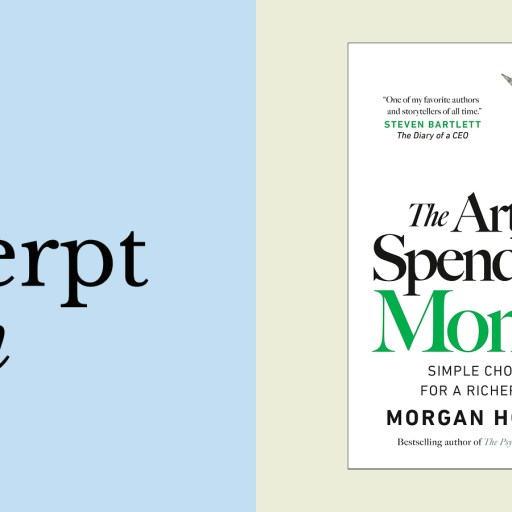
A book cover of "The Art of Spending Money" by Morgan Housel, with the text "an excerpt from" on a blue background to the left—exploring how to be miserable spending money.
In this excerpt from "The Art of Spending Money," Morgan Housel lays out the spending and financial habits guaranteed to end in regret.
Collage with hands shaping dough, overlapping U.S. flags, circular architectural elements, and "THE NIGHTCRAWLER" at the top—reflecting on the AI divide woven into the fabric of American life.
Welcome to The Nightcrawler — a weekly newsletter from Eric Markowitz covering tech, innovation, and long-term thinking.
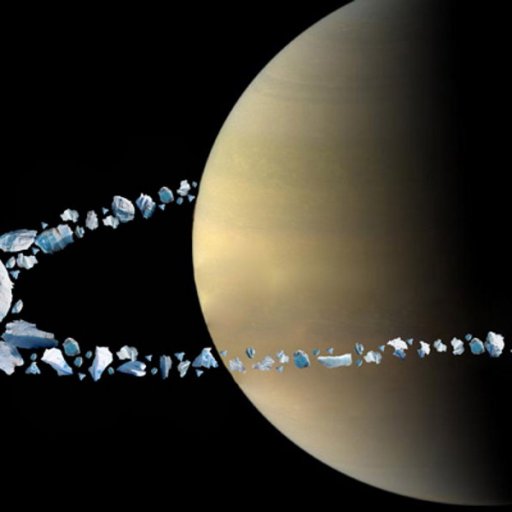
Since the time of Galileo, Saturn's rings have remained an unexplained mystery. A new idea may have finally solved the longstanding puzzle.
A person holds an oval mirror in front of their face against a blue background, with their reflection appearing abstract and distorted, evoking the surreal influence of ai on self-perception.
If AI is modeled only on human intelligence, will it inherit only human ways of seeing the world?
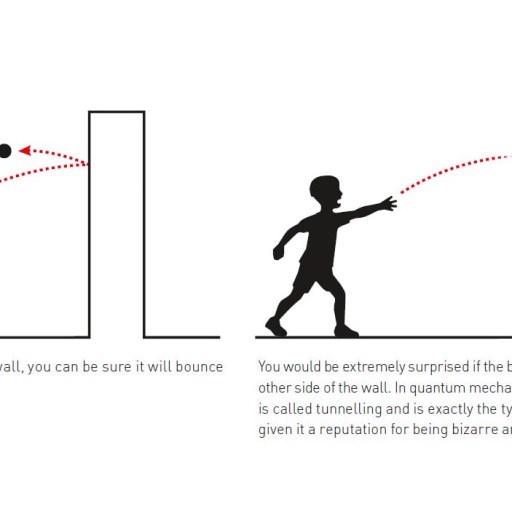
Two illustrations: on the left, a ball bounces back after hitting a wall; on the right, inspired by quantum advances, the ball passes through—echoing breakthroughs honored with the Nobel Prize in Physics. A child throws the ball in both scenarios.
Quantum mechanics was first discovered on small, microscopic scales. 2025's Nobel Prize brings the quantum and large-scale worlds together.
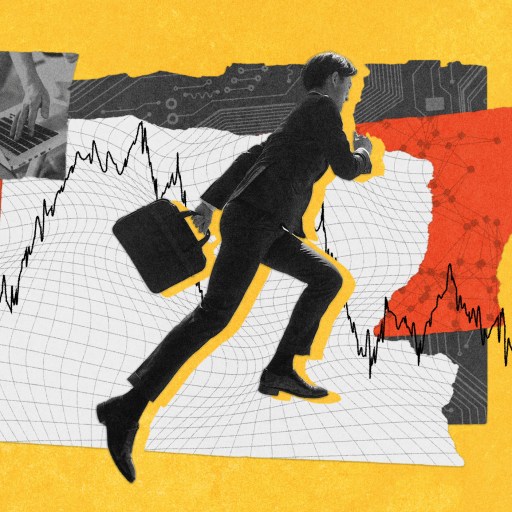
A person in business attire running with a briefcase against a backdrop of fluctuating stock charts and abstract geometric shapes.
Companies are pouring resources into AI, yet capability gaps hold employees back from using it effectively.
A man in a dark polo shirt sits and smiles in front of a background with graph lines and stock charts, evoking the analytical style of Buffett and Munger.
A conversation with investor and author Alex Morris on what Warren Buffett and Charlie Munger can teach us about focus, discipline, and building a life that lasts.
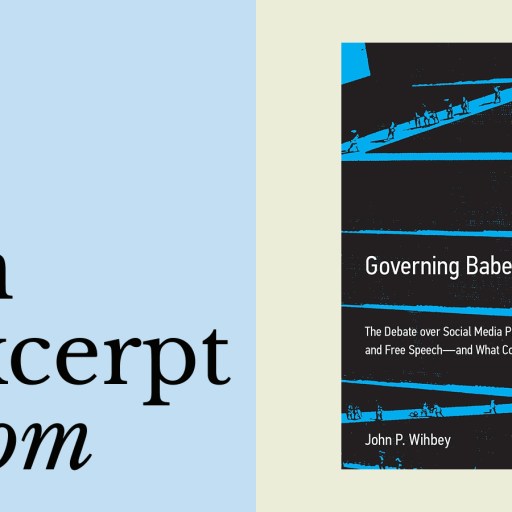
The image shows the cover of the book "Governing Babel" by John P. Wihbey, featuring the text "an excerpt from" on a light blue background, hinting at themes like online speech moderation.
In this excerpt from "Governing Babel," John Wihbey explores how AI is reshaping online moderation by offering tools that can help human moderators, but also raises the risk of disinformation and digital chaos.
Large white letters spelling "AGI" are displayed on a platform in front of steps, with additional bilingual signs reading "REASONERS" and "CHATBOTS" in English and Chinese.
A firsthand look at China’s material progress and clean-tech revolution — and what could happen if we let an authoritarian state steer AI's future.
Book cover of "A CEO for All Seasons: Mastering the Cycles of Leadership" by Carolyn Dewar, Scott Keller, Vikram Malhotra, and Kurt Strovink is displayed next to the text "an excerpt from," highlighting insights on CEO success.
Why the best CEOs make their first year both a personal transition and a profound moment of institutional renewal — with this quartet of skills.
From the vastness of space, Earth at night reveals its exo-earth beauty, with illuminated continents showcasing a tapestry of lights across North and South America. Major cities and regions emerge from the glowing darkness, painting a vivid picture against the backdrop of oceans.
In 2025, Earth remains the only planet where life is known to exist. Without a second example, "The Stand" has a vital lesson to teach us.
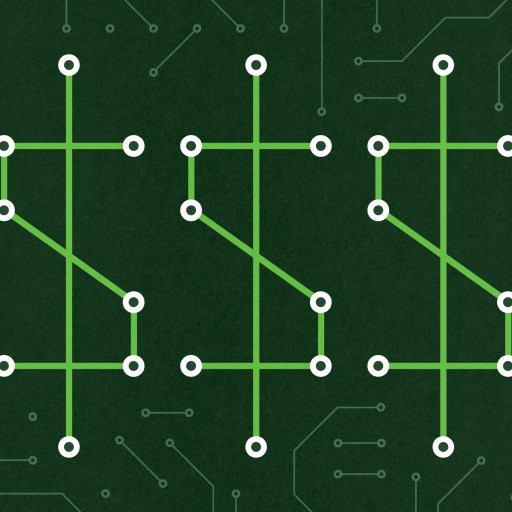
Green circuit board lines form three dollar signs on a dark background with faint circuitry patterns.
Behind the plateau in corporate AI lies a surge in personal and agentic use.
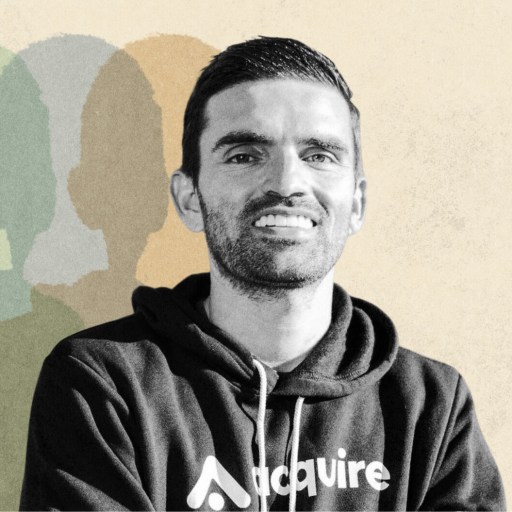
A man, identified as Andrew Gazdecki, wears a dark hoodie with “Acquire” printed on it, standing against a beige background with multi-colored shadows behind him.
Andrew Gazdecki — the founder and CEO of Acquire.com — explores the skillsets and pitfalls of selling a business. And why it’s often crucial to start all over again.
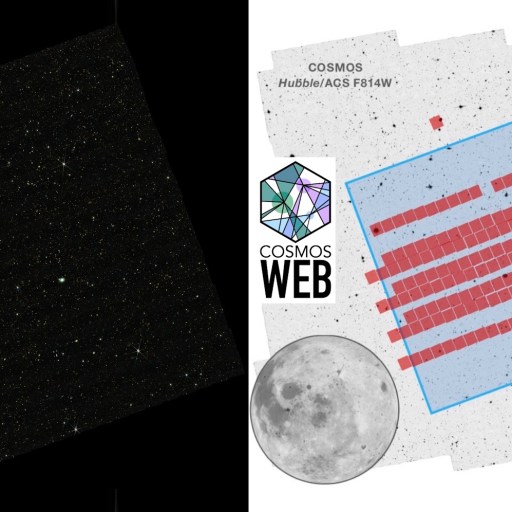
A split image shows a star field on the left and a COSMOS-Web survey area diagram on the right, with labeled NIRCam and MIRI footprints alongside the moon for scale, highlighting galaxies explored by JWST science.
By deeply imaging a large volume of space, COSMOS-Web provides JWST's widest cosmic views. Its gravitational lenses reveal a big surprise.
As the Universe ages, it continues to gravitate, form stars, and expand. And yet, all this will someday end. Do we finally understand how?
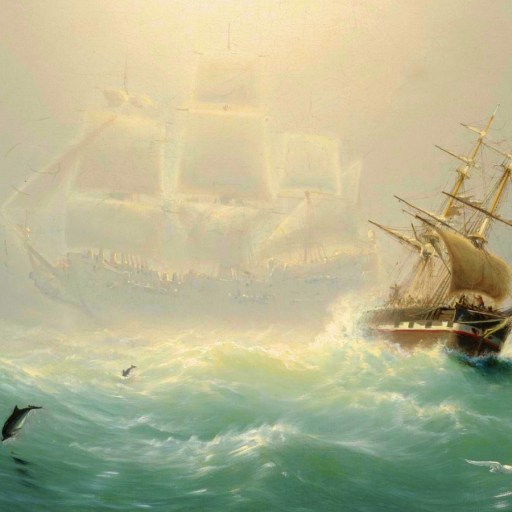
A wooden sailing ship faces rough seas, with waves and dolphins in the foreground; a Dash ghost ship appears mysteriously in the mist behind.
In this excerpt from "America's Most Gothic," Leanna Hieber and Andrea Janes examine the history and folklore of Maine's vanished schooner.
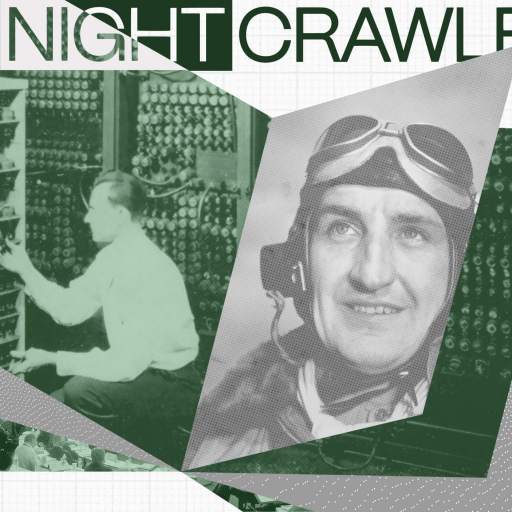
Collage featuring a man operating early computer equipment and a man in aviator goggles, with the text "THE NIGHTCRAWLER" above them—capturing the creative sparks of innovation and adventure.
Welcome to The Nightcrawler — a weekly newsletter from Eric Markowitz covering tech, innovation, and long-term thinking.
From here on Earth, looking farther away in space means looking farther back in time. So what are distant Earth-watchers seeing right now?