





Test Special Issue

Game Change

Do elite athletes really make elite employees?

Sports, we tend to assume, offer a sharp-edged reflection of business life in microcosm — leadership under pressure, the winning mentality, valuable lessons drawn from loss. It’s all there. Just kick back with a beer and a pizza and watch your pathway to workplace success unfold on game day. Well, it turns out that the connections are often far more nuanced than we might have presumed. Do elite athletes really make elite employees? What’s the connection between Swedish pragmatics in soccer and a thriving startup culture? Have you factored in the difference between “wicked” and “kind” environments (and what does that even mean)? We investigate all of these pivotal tangents, and much more, in this Big Think special collection of essays, interviews, and curated book excerpts. Forget everything you’ve been told about the synergies between sports and business. It’s time to rewrite the rules.

Blue background with the words "Game Change" in white, surrounded by strategic game symbols and graphs in the background.
Presented by
John Templeton Foundation
Ancient headless stone Buddha statue with one arm missing, seated cross-legged against a solid dark purple background.
9mins
Spirituality declines, depression rises. Is there a link?
Black and white abstract drawing of a bull with geometric shapes and bold outlines, standing on a plain background.
5mins
Evolution doesn’t fix things — it reinvents them. A biologist explains.
John Templeton Foundation
An image of a face with a blurred background.
1hr 13mins
This two-time debate world champion gives three tips for constructing the perfect argument.
Black and white illustration of a plant stem cross-section with honeycomb-like cell structure, shown on a green background.
8mins
We know that humans are an intelligent species. But this biologist breaks down the intelligence of each of our cells — and it will blow your mind.
A man's hand holding a pair of dumbbells on a black background.
Exercise can have surprisingly transformative impacts on the brain, according to neuroscientist Wendy Suzuki. It has the power not only to boost mood and focus due to an increase in […]
A snake is sitting on top of a dollar bill.
7mins
Forensic accountant Kelly Richmond Pope explains how fraud runs rampant — even when businesses don’t intend it.
A vintage illustration shows two rows of glowing, human-like figures with radiating lines, set against a dark, textured background.
6mins
Modern life replaced spirituality with goal-setting — and it’s making us depressed. Here’s how to win back your happiness.
a green bitcoin logo on a black background.
6mins
Crypto is a lot of things, but it isn’t a currency. "Shark Tank" investor Kevin O’Leary, a.k.a. “Mr. Wonderful,” breaks down what it would take to get there.
an image of a face with a blurred background.
Two-time debate world champion Bo Seo gives 3 tips for constructing the perfect argument.
A man wearing a red headscarf sleeps against a tree with an open book in hand, while a dog lies nearby on the grass. A basket and fishing rod rest beside him.
6mins
Hustle culture is part of our DNA — but it’s making us unhappy. Yale psychologist Laurie Santos explains how to escape your inner drill sergeant and find peace in imperfection.
A black silhouette with two overlapping human profiles facing opposite directions on a green background.
6mins
Your "social reality" isn’t an absolute reality. A leading neuroscientist explains why.
A detailed black-and-white illustration of a bearded man in profile view, wearing a decorated helmet and cloak, against a plain yellow background.
6mins
Knowing your key strengths can make you happy in anything you do. Here’s how to identify them.
two hands reaching for each other on a black background.
3mins
Age expert Dr. Morgan Levine explains why living to 100 is the wrong goal.
Two detailed anatomical illustrations show human heads: one sliced horizontally to reveal the brain, and the other showing exposed facial muscles, bones, and tissue.
5mins
What sets trauma apart from regular bad experiences? A leading neuroscientist explains.
a close up of a person wearing a suit and tie.
6mins
University College London professor Brian Klaas exposes the ugly truth about world leaders.
a close up of a monkey with its mouth open.
7mins
Primatologist Frans de Waal inadvertently popularized the term "alpha male." Now, he’s debunking common stereotypes to explain what an "alpha male" really is — empathetic and protective.
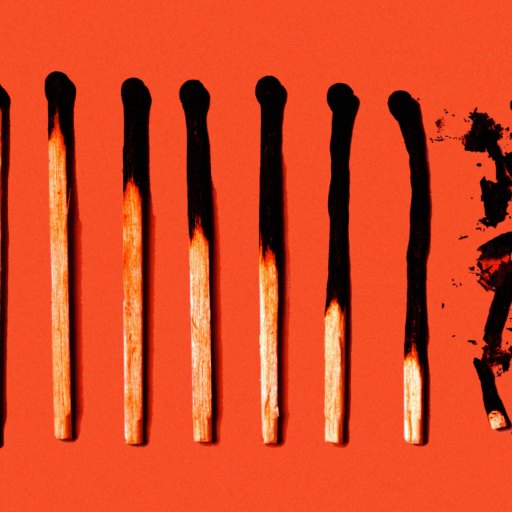
Eight burnt matchsticks stand upright on an orange background, with the last match forming a scattered, crumbling silhouette.
6mins
If you don’t feel better after the weekend, the “burnout paradox” could explain why.
a birthday cake with the number 100 on it.
4mins
Former Yale professor Dr. Morgan Levine shares 3 ways to change your diet to extend your life.
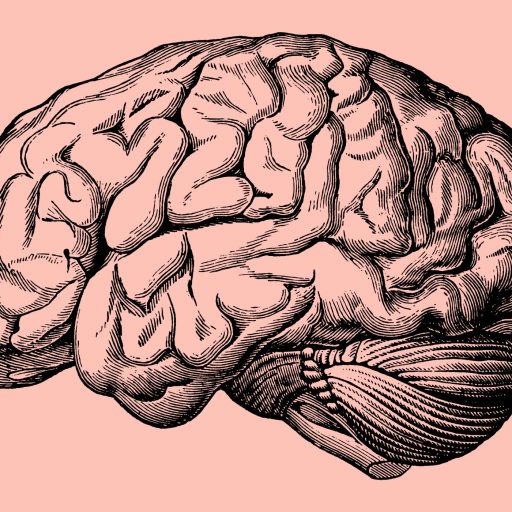
Black and white vintage illustration of a human brain viewed from the side, set against a solid light pink background.
7mins
Plato and Carl Sagan were wrong about the human brain, says a top neuroscientist.
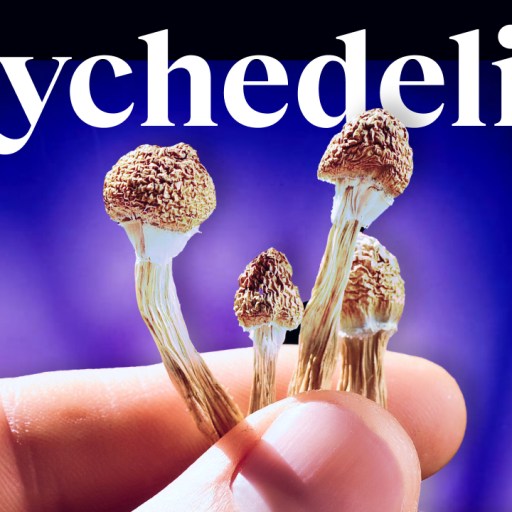
a hand holding a tiny group of mushrooms.
2hr 9mins
Johns Hopkins professor Dr. Matthew Johnson answers 24 huge questions about psychedelics.