


Test Special Issue

Game Change

Do elite athletes really make elite employees?

Sports, we tend to assume, offer a sharp-edged reflection of business life in microcosm — leadership under pressure, the winning mentality, valuable lessons drawn from loss. It’s all there. Just kick back with a beer and a pizza and watch your pathway to workplace success unfold on game day. Well, it turns out that the connections are often far more nuanced than we might have presumed. Do elite athletes really make elite employees? What’s the connection between Swedish pragmatics in soccer and a thriving startup culture? Have you factored in the difference between “wicked” and “kind” environments (and what does that even mean)? We investigate all of these pivotal tangents, and much more, in this Big Think special collection of essays, interviews, and curated book excerpts. Forget everything you’ve been told about the synergies between sports and business. It’s time to rewrite the rules.
Blue background with the words "Game Change" in white, surrounded by strategic game symbols and graphs in the background.
Presented by
John Templeton Foundation
1hr 33mins
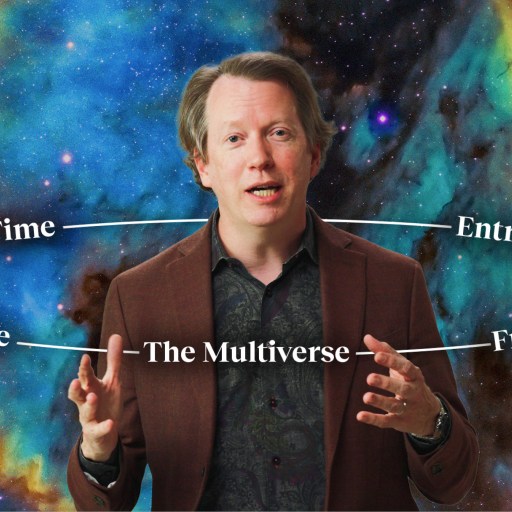
Everything you ever wanted to know about the Universe, explained by physicist Sean Carroll.
3mins
Our impulse to seek out agreement is stifling us, says world debate champion Bo Seo.
7mins
What astronaut Ron Garan saw in space changed his life forever – here’s what it taught him.
A sequence of human silhouettes in shades of blue and green shows progressive motion of a person walking from left to right.
3mins
Think via Bayes’ rule to become more rational and less brainwashed.
John Templeton Foundation
11mins
What doesn’t kill you makes you stronger. That old adage roughly sums up the idea of antifragility, a term coined by the statistician and writer Nassim Taleb. The term refers […]
9mins
What do physicists actually mean when they talk about the multiverse?
A person stands on an abstract surface, casting a large question mark-shaped shadow surrounded by vibrant orange, blue, and purple hues.
4mins
Can psychedelics solve the ‘hard problem’ of consciousness? A Johns Hopkins professor explains.
Illustration of a volcanic eruption with thick clouds of smoke, ash, and flowing lava rising from the volcano’s crater.
6mins
Pessimism sounds smart. Optimism sounds dumb. Don’t fall for it, says Wired’s Kevin Kelly.
John Templeton Foundation
31mins
Collective illusions — false assumptions about society that many people share — have existed for thousands of years in many different ways. Today, because of social media and modern technology, […]
5mins
The real risks of psychedelics, explained by a Johns Hopkins expert.
7mins
This scientist collected thousands of secrets. They all had 3 things in common.
A whimsical vintage illustration depicts people in Victorian-era attire flying in futuristic airships and vehicles above a cityscape.
7mins
We don’t need one Elon Musk. We need 8 billion empathic futurists.
5mins
Bo Seo, Harvard’s former debate coach, explains a good argument.
9mins
Stress shrinks your brain. Neuroscientist Lisa Genova explains how to strengthen it.
Three shadow-like human figures appear in sequence on a textured, speckled background, with each figure becoming more distorted towards the top.
7mins
A psychiatrist studied 1,000 near-death experiences. Here’s what he discovered.
8mins
Harvard professor Daniel Lieberman debunks the ‘10,000 steps per day’ myth.
8mins
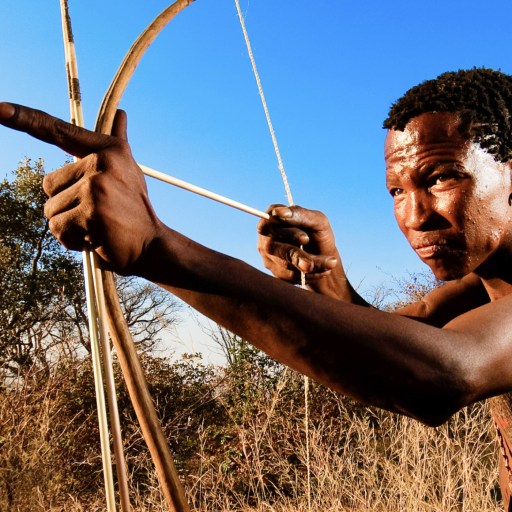
He lived with a tribe of hunter-gatherers to witness how an ancient culture survives one of the most brutal climates on Earth. His learnings may surprise you.
3mins
Short-term thinkers take shortcuts. Take the long path instead, explains futurist Ari Wallach.
Microscopic image of cells with red and green outlines and blue nuclei on a black background.
5mins
CRISPR’s gene drive can defy evolution. Here’s how, explained by Nobel Prize winner Jennifer Doudna.
John Templeton Foundation
4mins
Should you confess to cheating? A Columbia ethics professor explains.