



Test Special Issue

Game Change

Do elite athletes really make elite employees?

Sports, we tend to assume, offer a sharp-edged reflection of business life in microcosm — leadership under pressure, the winning mentality, valuable lessons drawn from loss. It’s all there. Just kick back with a beer and a pizza and watch your pathway to workplace success unfold on game day. Well, it turns out that the connections are often far more nuanced than we might have presumed. Do elite athletes really make elite employees? What’s the connection between Swedish pragmatics in soccer and a thriving startup culture? Have you factored in the difference between “wicked” and “kind” environments (and what does that even mean)? We investigate all of these pivotal tangents, and much more, in this Big Think special collection of essays, interviews, and curated book excerpts. Forget everything you’ve been told about the synergies between sports and business. It’s time to rewrite the rules.
Blue background with the words "Game Change" in white, surrounded by strategic game symbols and graphs in the background.
Presented by
John Templeton Foundation
A person in a red robe sits outdoors holding an hourglass, surrounded by greenery and a body of water, symbolizing predictions for the future.
What lies in store for humanity? Theoretical physicist Michio Kaku explains how different life will be for your descendants—and maybe your future self, if the timing works out.
John Templeton Foundation
Conformity
5mins
Thinking as a group and going along with the loudest voices can feel easy and even natural. But to make real positive change in our world, it’s important to hear all voices and question the perceived majority.
Stand Together
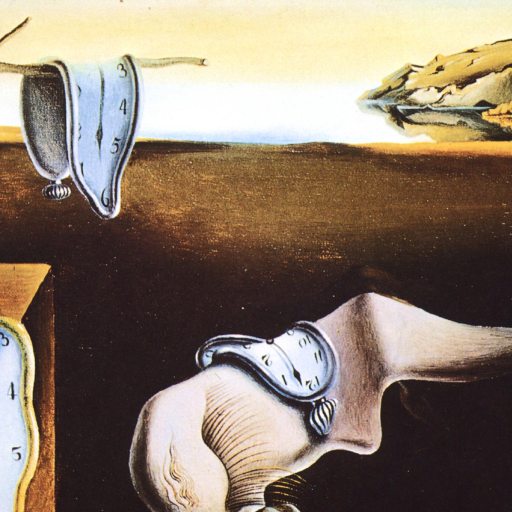
A surreal painting ponders is time travel possible, with melting clocks draped over a tree, ledge, and abstract form in a barren landscape against distant cliffs.
Theoretical physicist Brian Greene explores the potential particles of time and why we could, in theory, travel forward in time but not back.
John Templeton Foundation
Near death experiences
A psychiatrist studied 1,000 near-death experiences. Here’s what he discovered.
social media
Social media isn’t the majority – it’s the vocal fringe.
Stand Together
Workforce automation
The U.S. economy is creating thousands of new jobs each month–and overwhelmingly, most of them go to people with education beyond high school.
Lumina Foundation
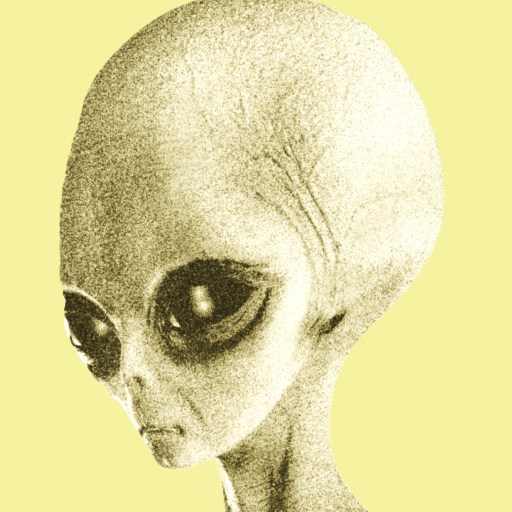
A digital illustration of a stereotypical alien figure, inspired by concepts of extraterrestrial life, featuring a large bald head, big dark eyes, and a small mouth on a pale yellow background.
5mins
Dr. Sara Walker is an astrobiologist and theoretical physicist, who is questioning the very nature of life and how we’re attempting to find it elsewhere.
John Templeton Foundation
types of cults
Scientology, QAnon, and Heaven’s Gate: why do we seek healing from cults?
success
The only way to support someone’s success is to understand how they define it.
Stand Together
Illustration of two hands touching or aligning a series of parallel lines and chevron patterns, all overlaid with a blue filter, evoking the precision and symmetry often found in mathematics.
5mins
Michio Kaku believes math is the mind of God.
John Templeton Foundation
trust
4mins
A majority of Americans think they are trustworthy, yet believe most other people can’t be trusted.
Stand Together
post secondary education
3mins
40% of today’s students work full time while another 40% are over the age of 25. Here’s how to change higher education to fit today's students.
Lumina Foundation
A target with several arrows on the ground nearby and none hitting the bullseye, capturing the joy of being wrong.
3mins
Arguments on social media are notorious. Can practicing intellectual humility make us smarter and happier? Science says yes.
John Templeton Foundation
Finding happiness in life
3mins
He’s written 7 books on happiness. He’s studied it for 30 years. He even taught it at Harvard. What can Tal Ben-Shahar tell you about really being happy?
Generational illusions
4mins
We’re wrong about what other people think – and that has harmful impacts on the next generation.
Stand Together
Sludge may be inevitable, but there are better ways to manage such frictions in our daily lives.
Side view X-ray image of a human head and brain in shades of purple, shown against a solid purple background, highlighting the serene focus often seen in meditators.
3mins
Psychologist Daniel Goleman shares what he learned by studying the brain waves of Olympic-level meditators, and his findings are unprecedented.
John Templeton Foundation
digital amnesia
3mins
Is social media changing your memory? Here’s what the science actually says.
what are collective illusions
1mins
From trust and conformity to aspiration, this new series, hosted by Todd Rose, explores and decodes the world's greatest Collective Illusions.
Stand Together