

Test Special Issue

Game Change

Do elite athletes really make elite employees?

Sports, we tend to assume, offer a sharp-edged reflection of business life in microcosm — leadership under pressure, the winning mentality, valuable lessons drawn from loss. It’s all there. Just kick back with a beer and a pizza and watch your pathway to workplace success unfold on game day. Well, it turns out that the connections are often far more nuanced than we might have presumed. Do elite athletes really make elite employees? What’s the connection between Swedish pragmatics in soccer and a thriving startup culture? Have you factored in the difference between “wicked” and “kind” environments (and what does that even mean)? We investigate all of these pivotal tangents, and much more, in this Big Think special collection of essays, interviews, and curated book excerpts. Forget everything you’ve been told about the synergies between sports and business. It’s time to rewrite the rules.

Blue background with the words "Game Change" in white, surrounded by strategic game symbols and graphs in the background.
Presented by
John Templeton Foundation
A person walks barefoot on a slackline stretched high above the ocean, with one arm raised for balance and cliffs visible at each end.
5mins
“If you ask a computer, it will say, most of the time you want to either be raising or folding, right? You want to take an aggressive action or quit. I think this is a great metaphor for lots of things in real life, too.”
Close-up of a person's face with brown eyes and freckles, next to an abstract blue and white pattern resembling tree branches and lightning.
7mins
A neuroscientist, a psychologist, and a psychotherapist discuss how emotions are stories built from old experiences.
Unlikely Collaborators
A painted woman's face is seen upside down on the left, looking at a large gray rock on the right, with a blue sky and clouds in the background.
2mins
What separates a disciplined life from a virtuous one? Psychologist Sarah Schnitker says the answer lies in your purpose.
A man sits on a chair in a photo studio, flanked by black-and-white illustrations of an early human ancestor on the left and a modern man running on the right.
1hr 13mins
“Nothing about human behavior makes sense except in the light of culture and in anthropology, and we need to understand the cultural component to our behaviors as well.”
Two red-toned, woodcut-style portraits side by side: one of a gorilla and one of an older man with a beard, on a beige background.
7mins
“The idea of evolution by natural selection is, for me, probably the most beautiful idea in biology.”
A person with long blonde hair wearing a beanie and plaid jacket looks upward outdoors; a transparent geometric square overlay is centered on the image.
2mins
Happiness researchers Robert Waldinger MD, Tal Ben-Shahar PhD, and Peter Baumann explain why the happiest people aren’t happy all the time.
Unlikely Collaborators
A person in classical attire holds a laurel wreath and a palm branch against a blue sky background.
6mins
Virtue is hard to attain, and that’s the point. Sarah Schnitker explains why self-help shortcuts miss the mark.
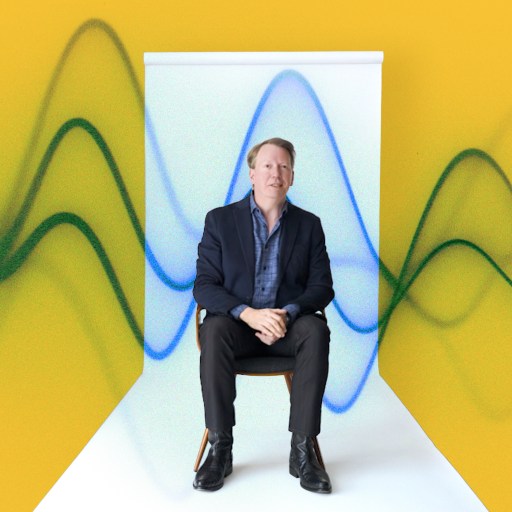
A man in a suit sits on a chair against a yellow background with abstract blue and green wave patterns behind him.
1hr 26mins
“I like to say that physics is hard because physics is easy, by which I mean we actually think about physics as students.”
Silhouette of a person overlaid with a sunset sky and a full moon, with tall grass in the foreground.
9mins
“You can be aware of sadness from a point of view that is not merely sad, and you can be aware of fear from a point of view that's not merely afraid.”
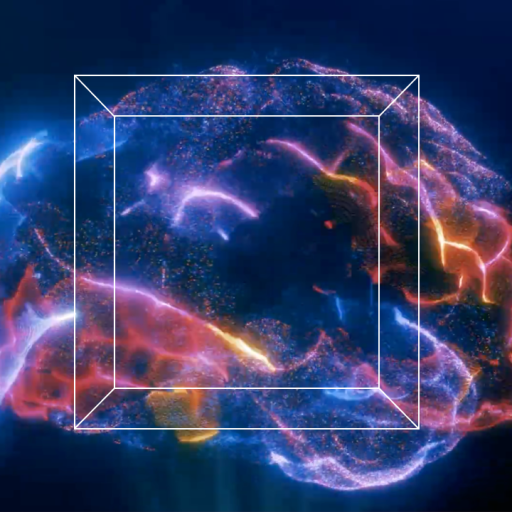
A digital illustration of a human brain with glowing neon lines and a translucent geometric cube overlay at the center.
3mins
Humans have always had religion. What does this say about our minds? Reza Aslan PhD, Lisa Miller PhD, and Rob Bell MDiv explain.
Unlikely Collaborators
A painting of a woman crying.
2mins
Many of us rely on emotional advice that doesn’t actually work. Psychologist Ethan Kross offers a smarter, science-backed approach to managing emotions with flexibility and perspective.
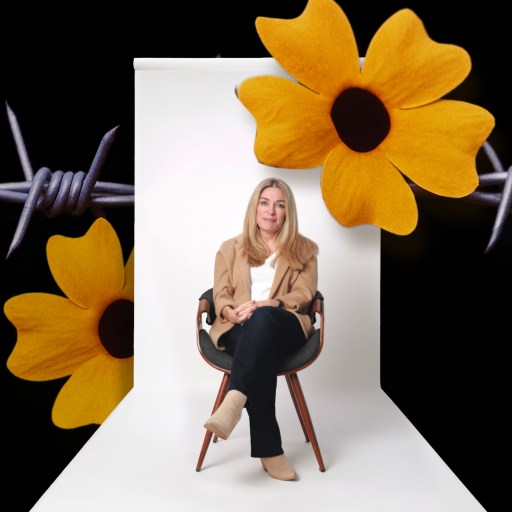
A woman sits on a chair in a studio with a neutral backdrop, overlaid with yellow flowers and barbed wire against a black background.
1hr 24mins
“There's a very pervasive belief that human nature is fundamentally selfish, but I know for a fact that that can't be true in part because my life was saved by a stranger a long time ago when I was 19.”
7mins
“Because of the efficiency worship that we have developed in our industrial age, we are now seeing procrastination as a character flaw rather than what it is, a signal that is worth listening to.”
Close-up view of mushroom gills with overlaid chemical structure diagrams, including molecular formulas and lines, set against a blue-tinted background.
5mins
What happens when the boundaries of “you” disappear? James Fadiman, PhD, Jamie Wheal, and Matthew Johnson, PhD explore how supported experiences with psychoactive drugs can dissolve identity and reveal a deeper reality.
Unlikely Collaborators
A hand holding a sealed envelope emerges from turbulent ocean waves against a black background.
13mins
“All information technologies up to the 21st century were organic networks based on our organic brain.”
A vintage, hexagonal brooch featuring a realistic painted human eye in the center, surrounded by a metallic frame.
2mins
Astrobiologist Betül Kaçar on why the simple act of asking questions (without needing a reason) is one of the most powerful things a human can do.
Two ancient coins depicting explicit erotic scenes with human figures in sexual positions, shown against a black background.
39mins
"One of the ways you can see the Roman Empire is it's the worldwide web of its day."
A man looking at a meteorite.
19mins
“So many things could have happened in a different way that we wouldn't be here at all, both individually, for sure, and certainly as a species.”
Two torn paper cutouts of open mouths are positioned against a black background, both appearing to be yelling or shouting.
6mins
“What did you win? You won awkward silence. You won their contempt. You won the first to apologize. When you win an argument, you will lose their confidence, you will lose their respect, you will lose the connection.”
Close-up of a person's eyes looking up, with white abstract doodles and lines superimposed over their forehead, symbolizing thoughts or imagination.
2mins
Your body language sends messages before your mouth does. Author Robert Greene and negotiation expert Daniel Shapiro PhD explain the key characteristics of nonverbal power and emotional presence that shape how others perceive you.
Unlikely Collaborators