Test Special Issue

Game Change

Do elite athletes really make elite employees?

Sports, we tend to assume, offer a sharp-edged reflection of business life in microcosm — leadership under pressure, the winning mentality, valuable lessons drawn from loss. It’s all there. Just kick back with a beer and a pizza and watch your pathway to workplace success unfold on game day. Well, it turns out that the connections are often far more nuanced than we might have presumed. Do elite athletes really make elite employees? What’s the connection between Swedish pragmatics in soccer and a thriving startup culture? Have you factored in the difference between “wicked” and “kind” environments (and what does that even mean)? We investigate all of these pivotal tangents, and much more, in this Big Think special collection of essays, interviews, and curated book excerpts. Forget everything you’ve been told about the synergies between sports and business. It’s time to rewrite the rules.

Blue background with the words "Game Change" in white, surrounded by strategic game symbols and graphs in the background.
Presented by
John Templeton Foundation
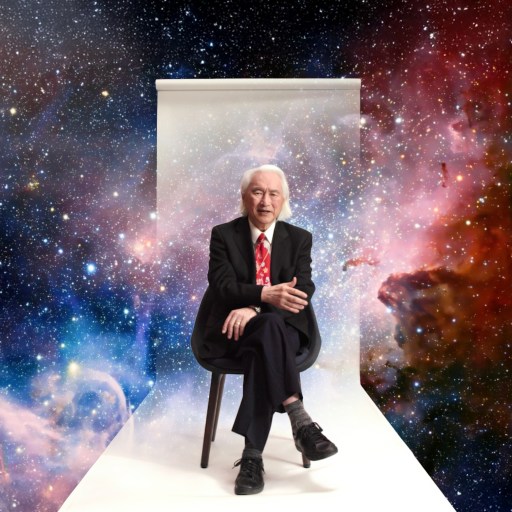
An older man in a suit and red tie sits on a chair against a white backdrop, with a colorful outer space scene in the background.
1hr 8mins
“An equation, perhaps no more than one inch long, that would allow us to, quote, 'Read the mind of God.'”
A red flower with a green stem and leaf drawn using overlapping scribbled lines on a black background.
17mins
“Anxiety is focused on things that are important to you in life. That is the key.”
Illustration of a brain with highlighted regions overlaid on a close-up image of blue synapses and neurons, representing neural communication.
2mins
Your brain changes when you experience something, and it changes again when you remember it. Two neuroscientists explain what that means for memory, perception, and identity.
Unlikely Collaborators
A split image showing the left half of a woman's face and the right half as a digital brain with neural connections and data waves.
7mins
Three doctors break down brain function, somatic awareness, and how to recover from bad experiences.
Unlikely Collaborators
Vintage illustration of a human head in profile with labeled sections of the brain, representing different personality traits and mental faculties.
3mins
What if emotional regulation isn’t just a trait, but a skill parents and teachers can help develop? Ethan Kross reveals what science says about shaping young minds.
1hr 1mins
“We can make ourselves more likely to be happy by building a life that includes the conditions that make for happiness.”
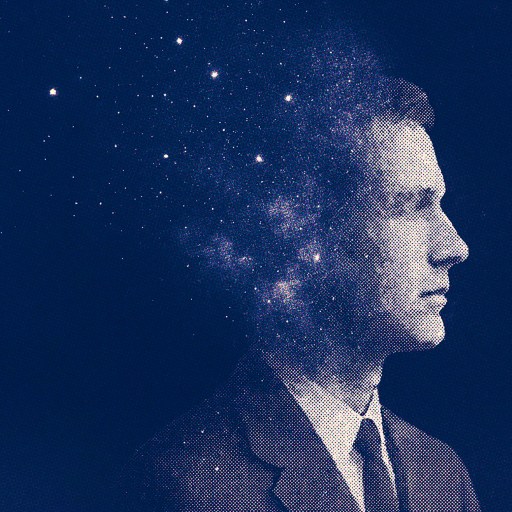
A man in a suit shown in profile, with the back of his head dissolving into a star-filled galaxy against a dark blue background.
17mins
"The sense that we are a solid entity, an unchanging entity that exists someplace in our body and takes ownership of our body, and even ownership of our brain rather than being identical to our brain, that is where the illusion lies."

A person sits behind bars at a desk with a computer in a dimly lit setting, suggesting restriction or confinement.
7mins
“The simplest, most powerful way to reinforce work, not jobs, is to ask people to do something different.”
A person in a long, light-colored garment leans forward with their head pressed against a brick wall against a red background.
7mins
From trepanning to lobotomies, humans have long struggled to manage emotion. Today, we have better tools. Psychologist Ethan Kross shares what actually works, and why.

A man with long curly hair sits on a chair in a white hallway, surrounded by illustrated documents, maps, and notes taped to a gray wall.
1hr 3mins
“The public really doesn't realize that they are much closer to CIA spies than they think they are.”

A silhouette profile of a person with long hair against a blue background featuring faint circuit board patterns; a warm light highlights their face.
9mins
Today’s technologist archetypes share a blind spot. Brendan McCord, founder of the Cosmos Institute explains why “philosophy is essential” when building planetary-scale technology.
Cosmos Institute
A grayscale photo of the sculpture "The Thinker" with a digitally added yellow halo above its head, set against a black background.
3mins
Philosopher Meghan Sullivan challenges the idea that religious texts can’t be taken seriously in modern philosophy. She explains how parables, scripture, and debate have always been connected to asking life’s biggest questions:
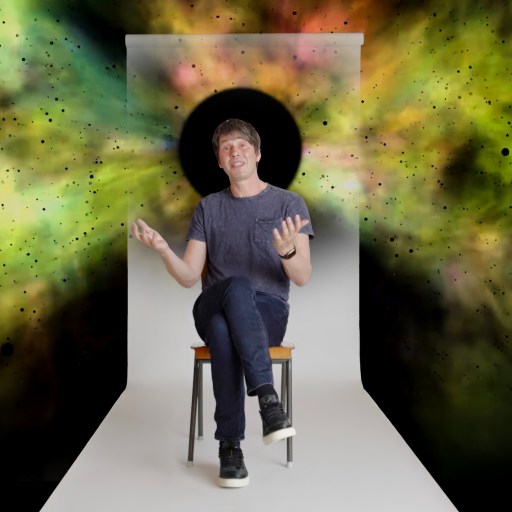
A man sits on a stool in front of a white backdrop with a black circle behind his head, surrounded by colorful, nebula-like clouds.
1hr 18mins
“Could black holes be the key to a quantum theory of gravity, a deeper theory of how reality, of how space and time works?”
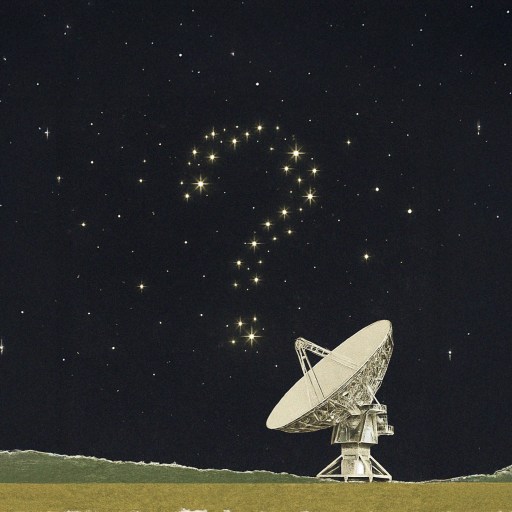
A radio telescope points at the night sky, where stars are arranged in the shape of a large question mark.
13mins
"We've sent out one or two little messages, but we certainly aren't investing billions of dollars shouting out into the cosmos saying, "Hey, we are here. Come say hi.""
A fantastical creature with a human face, colorful body, four legs, and spiky hair stands on grass, illustrated in a medieval manuscript style.
2mins
The ocean is evolving, and it’s not based on the ‘survival of the fittest.’ Astrobiologist Betül Kaçar explains how it’s not competition that has kept the ocean alive, but collaboration.

Silhouettes of two people face each other closely, with warm light casting their shadows on a wall.
1hr 25mins
"Virtually everything we're taught about sexuality for the first two decades of our lives is wrong."

A magnifying glass focusing on concentric circles against a plain teal background.
19mins
"It's a very, very beautiful calculation, but it's the best example I know of the relationship between these rather abstract quantities perhaps and something that you can look at in a telescope."
A historical illustration shows one man performing a medical procedure on another man’s chest using a metal instrument, both with serious expressions.
3mins
According to philosopher Meghan Sullivan, effective altruism may overlook the moral importance of seeing others as individuals. She explains how love should guide how we care for both present and future humans.
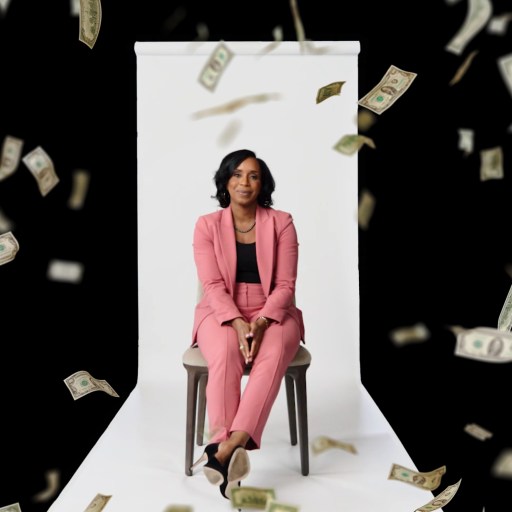
A woman in a pink suit sits on a chair against a white backdrop while U.S. dollar bills fall around her on a black background.
1hr 40mins
“Fraud never sleeps. It's really a global problem. Fraud is a trillion dollar problem, about $5 trillion today, with that number increasingly rising annually.”