

Test Special Issue

Game Change

Do elite athletes really make elite employees?

Sports, we tend to assume, offer a sharp-edged reflection of business life in microcosm — leadership under pressure, the winning mentality, valuable lessons drawn from loss. It’s all there. Just kick back with a beer and a pizza and watch your pathway to workplace success unfold on game day. Well, it turns out that the connections are often far more nuanced than we might have presumed. Do elite athletes really make elite employees? What’s the connection between Swedish pragmatics in soccer and a thriving startup culture? Have you factored in the difference between “wicked” and “kind” environments (and what does that even mean)? We investigate all of these pivotal tangents, and much more, in this Big Think special collection of essays, interviews, and curated book excerpts. Forget everything you’ve been told about the synergies between sports and business. It’s time to rewrite the rules.
Blue background with the words "Game Change" in white, surrounded by strategic game symbols and graphs in the background.
Presented by
John Templeton Foundation
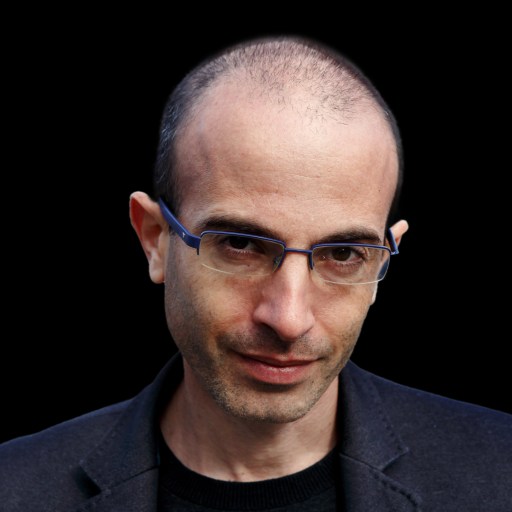
A person with glasses and a black blazer is looking directly at the camera against a black background.
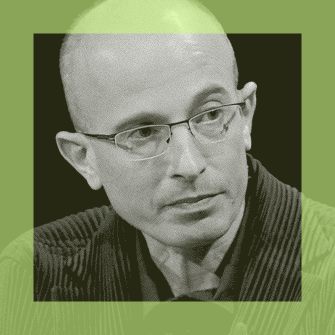
1hr 15mins
“Why is it that the quality of our information did not improve over thousands of years? Why is it that very sophisticated societies have been as susceptible as stone age tribes to mass delusion and the rise of destructive ideologies?”
The image shows the words "Organizational Friction" in bold white text on a black background with red arrows crossing over them.
7mins
“When we face a problem, our natural tendency is to race ahead – but some friction is actually a good thing.”
A woman with blonde hair smiles while sitting on a beige chair. She wears a bright pink top and the background is a plain light color.
7mins
Kaelynn Partlow shares her story about life with autism, ADHD, and dyslexia, and how finding the right diagnosis helped her embrace her neurodivergent identity.
Unlikely Collaborators
Illustration of two human silhouettes facing each other with neural connections and nodes, featuring the text "BORN AND MADE" on a green background.
7mins
“I'm often asked: “Are great strategic thinkers born, or are they made?” And my answer is always yes. Like so many human capabilities, it’s a mixture of nature, nurture and experience.”
A person wearing safety goggles is using a tool to grind or cut metal, creating sparks in a dimly lit workshop.
6mins
Through woodworking, John Furniss, known as The Blind Woodsman, discovered a new purpose and a way to share his vision with the world.
Unlikely Collaborators
Illustration comparing generative and predictive AI with a visual of Earth connected to digital data icons.
8mins
Eric Siegel, Co-Founder & CEO, Gooder AI, argues machine learning (ML) projects go astray because their stakeholders focus too often on the technological fireworks — the “rocket science” of predictive models.
5mins
“If we didn't find helping other people pleasurable, we wouldn’t be altruistic.”
6mins
“People will claim that something is rigorous because it's by an authority figure or it's written in a book. But anyone can write a book.”
Illustration featuring an eye, an ear, and a hand, each encircled by overlapping multicolored circles.
7mins
Expanding your worldview starts with understanding your brain. Stanford neuroscientist David Eagleman explains.
Unlikely Collaborators
White text on a black background reads "The Impact of Nothing.
3mins
From nothing to everything: How zero changed our understanding of the universe, forever.
5mins
Who decides what’s “normal” and why? As social norms increasingly dissolve, here’s how to find true guidance.
A fern frond unfurling in a spiral shape against a plain green background.
1mins
What would the world be like if we focused on “the inherent beauty of math,” rather than its technical aspects? A statistician reflects:
A grayscale marble statue of a woman's head and shoulders is depicted against a black background, overlaid with colorful glitch-like text fragments.
8mins
How can ancient philosophical wisdom guide us in ensuring that artificial intelligence enhances human flourishing rather than diminishing it?
Cosmos Institute
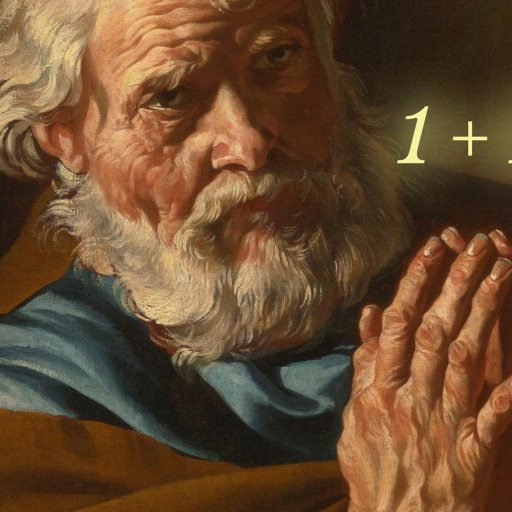
An elderly man with white hair and a beard, hands clasped in prayer, with the equation “1 + 1” glowing above his hands.
2mins
Statistician Talithia Williams on how math is the clearest path to understanding our existence.
7mins
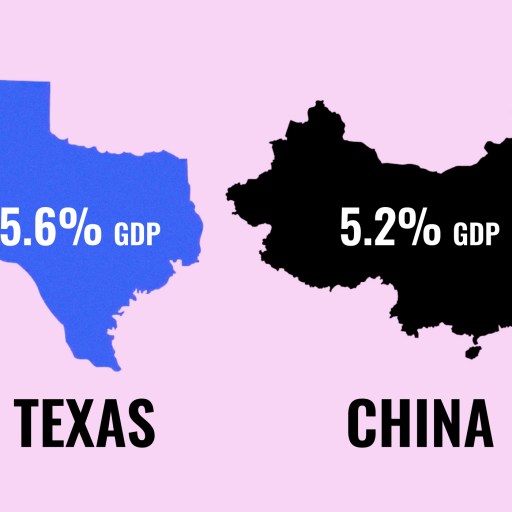
The winners of the remote work boom? Utah, Arizona, and Maine. Here’s what the US’ post-pandemic migration looks like.
Stylized illustration of Frankenstein's monster with outstretched arms against a red and orange background.
3mins
How do scientists measure and define life in the natural world? Dr. Lee Cronin gives us a definition, in 4 minutes:
Abstract image resembling a stylized blue and black eye with a white background and a large black semicircle at the bottom.
6mins
Algorithms dictate a lot more than your social media feeds. Here’s how to win back your agency.
7mins
Have we evolved to understand multiple rejections on Bumble, or survive more than one ghosting from Tinder? Christine Emba explores the sociology of modern dating and how to make them more ethical.
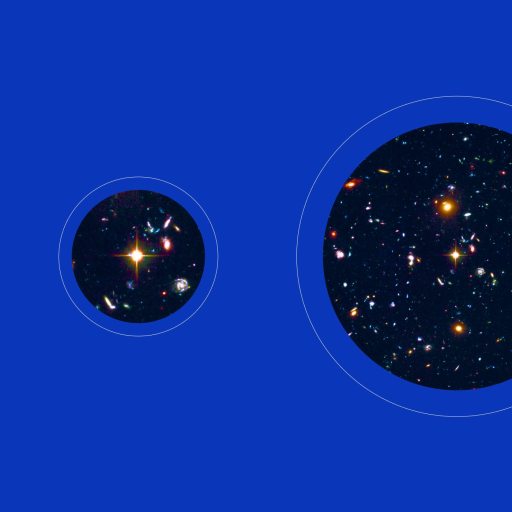
Three circles of increasing size, each containing images of distant stars and galaxies, set against a solid blue background.
3mins
What drives the universe's expansion? Chemist Lee Cronin explains the theories linking time, space, and selection, providing a fresh perspective on this cosmic mystery.
Illustration depicting human evolution from a primate to an early human holding a spear, advancing from left to right.
8mins
Biological evolution in humans has slowed. Can AI, culture wars, and modern tech explain why?