

Test Special Issue

Game Change

Do elite athletes really make elite employees?

Sports, we tend to assume, offer a sharp-edged reflection of business life in microcosm — leadership under pressure, the winning mentality, valuable lessons drawn from loss. It’s all there. Just kick back with a beer and a pizza and watch your pathway to workplace success unfold on game day. Well, it turns out that the connections are often far more nuanced than we might have presumed. Do elite athletes really make elite employees? What’s the connection between Swedish pragmatics in soccer and a thriving startup culture? Have you factored in the difference between “wicked” and “kind” environments (and what does that even mean)? We investigate all of these pivotal tangents, and much more, in this Big Think special collection of essays, interviews, and curated book excerpts. Forget everything you’ve been told about the synergies between sports and business. It’s time to rewrite the rules.

Blue background with the words "Game Change" in white, surrounded by strategic game symbols and graphs in the background.
Presented by
John Templeton Foundation
A digital vortex with glowing cyan concentric circles and geometric shapes giving a sense of depth and motion.
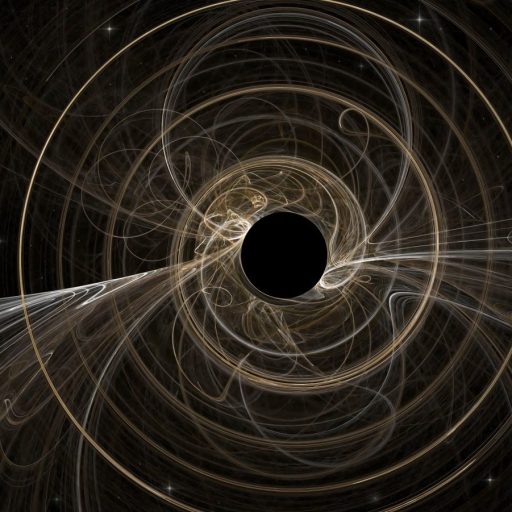
The problem for galactic-scale civilizations comes down to two numbers.
A pink brain shaped like a heart with rays emanating from it against a black background.
8mins
“Self-awareness, it's the least visible part of emotional intelligence, but we find in our research that people low in self-awareness are unable to develop strengths very well in other parts of emotional intelligence.”
atoms
If atoms are mostly empty space, then why can't two objects made of atoms simply pass through each other? Quantum physics explains why.
Black and white portrait of a man with a thick mustache and short hair, looking slightly to the side.
“Could you create a god?” Nietzsche's titular character asks in "Thus Spoke Zarathustra."
Two young children with curly hair in striped sweaters enjoy lollipops, showcasing the whimsical nature of genes and behavior. The black-and-white photo gives a nostalgic feel.
When it comes to behavior, genetics may play a larger role than you think.
A large anthropomorphic figure blows bubbles labeled with financial terms, while a crowd of people chase after them, unaware of the bubble revisionism at play.
From tulips to Bitcoin, bubbles have been given a bad rap as destroyers of dreams — but they’re essential for our brightest future. Here’s why.
evolution universe cosmic history big bang
From a hot, dense, uniform state in its earliest moments, our entire known Universe arose. These unavoidable steps made it all possible.
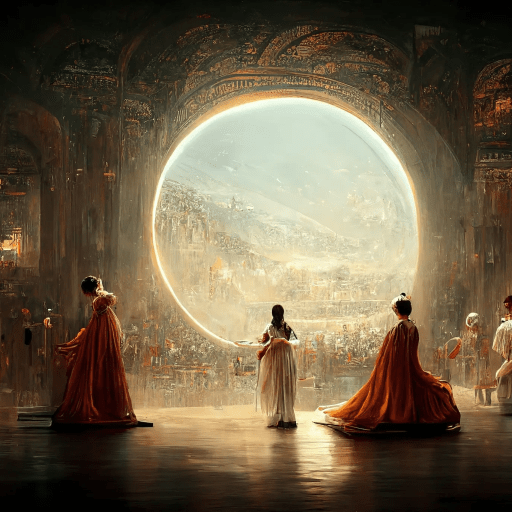
A grand, ornate setting with three figures in flowing attire standing before a large, luminous circular window overlooking a vibrant cityscape.
With no reliable way to discern the author of an artwork, we may eventually abandon the question of whether something was made by humans or not.
A hand clasps an older, wrinkled hand against a black background, symbolizing care and support.
4mins
Americans are getting older, and so are traditional healthcare methods. CEO of Northwell Health Michael Dowling shares his take on how we can develop the best care for our elderly loved ones.
Northwell Health
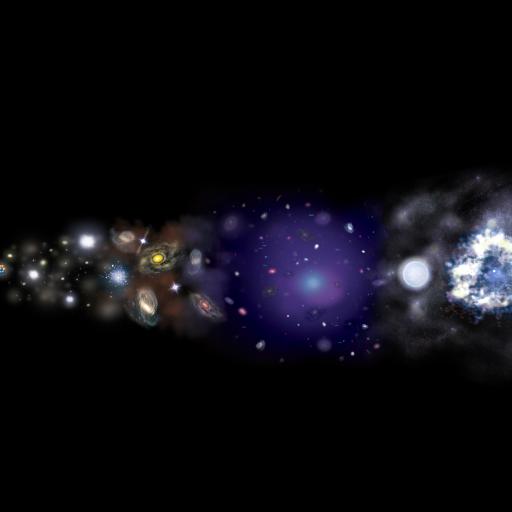
A sky full of stars with a large central galaxy, surrounded by smaller galaxies and bright spots on a dark background.
It was barely a century ago that we thought the Milky Way encompassed the entirety of the Universe. Now? We're not even a special galaxy.
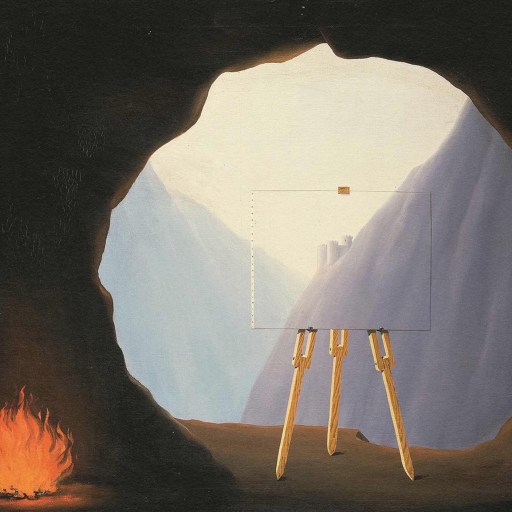
A painting on an easel at the entrance of Plato's cave overlooks misty mountains, with a small fire flickering nearby.
Plato's cave metaphor illustrates the cognitive trap of ignorance, where we may be unaware of the limitations of our understanding.
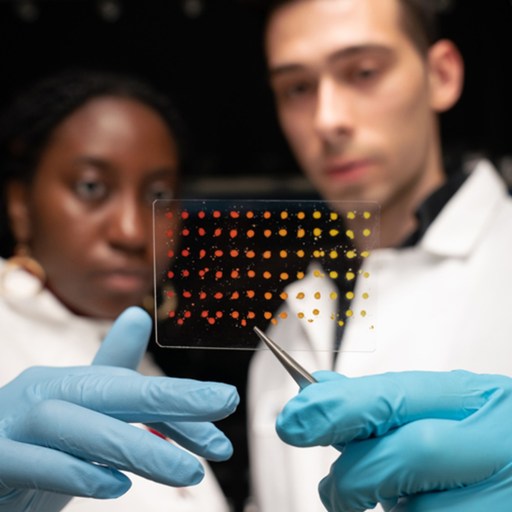
Two scientists in lab coats and gloves examine a small transparent plate with colorful dots, held by tweezers, in a laboratory setting.
It’s been 65 years since Richard Feynman saw “plenty of room” in the nano-world. Are we finally getting down there?
Illustration of a galactic collision, showing one galaxy colliding with the Milky Way, creating a loop of stars and cosmic material against a black background.
Even with just a momentary view of our galaxy right now, the data we collect enables us to reconstruct so much of our past history.
A man looking at a mirror.
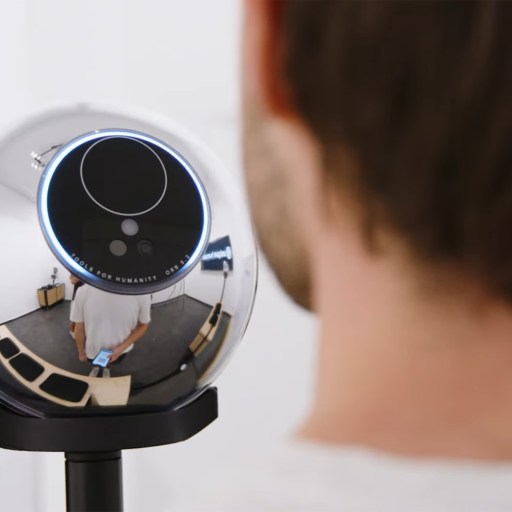
"Personhood" credentials could cleanse the internet of bots — but are the costs worth it?
A man in a suit looks upward with a surprised expression. There is a fiery effect in the foreground. Buildings and people are visible in the background.
9mins
"Humans, like most mammals, tend to shut down in really frightening situations for which they have no training or prior experience. Researchers call it negative panic. People do nothing. They shut down."
black hole
50 years ago, Stephen Hawking showed that black holes emit radiation and eventually decay away. That fate may now apply to everything.
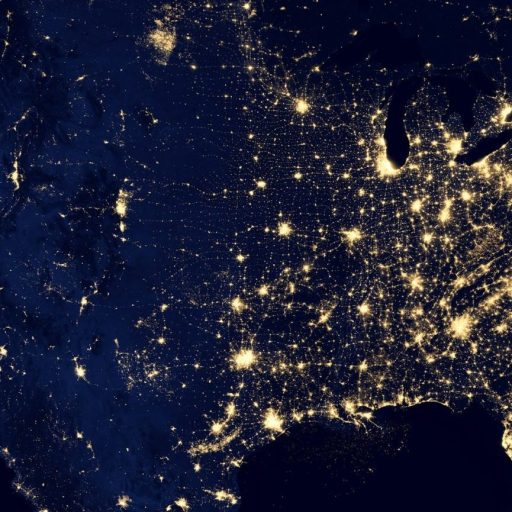
Satellite view of the United States at night reveals illuminated cities and areas, with dense clusters of lights in the eastern region, highlighting vibrant economic hubs reminiscent of workforce data concentrations, contrasted by the sparser illumination in the western regions.
A National Center for Data and Evidence could supplement our archaic and expensive system and more accurately measure AI's impact on jobs.
A sepia-toned illustration of a man with wavy hair, reminiscent of Keats, resting his chin on his hand and gazing thoughtfully into the distance, embodying the contemplative patience of playing the long game.
Welcome to The Nightcrawler — a weekly newsletter from Eric Markowitz covering tech, innovation, and long-term thinking.
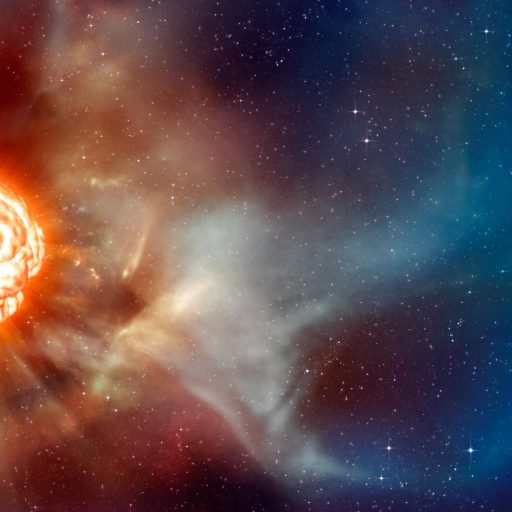
Betelgeuse visualization
The closest known star that will soon undergo a core-collapse supernova is Betelgeuse, just 640 light-years away. Here's what we'll observe.