

















The true communications challenge facing climate scientists, educators and policy-makers is time. Aggressive reductions in greenhouse gas emissions could need to begin in the next decade to avoid “dangerous anthropogenic interference” in the climate system, like
the collapse of major ice sheets, shifts in ocean circulation and the widespread degradation
of coral reefs (e.g., O’Neill and Oppenheimer 2002). Garnering strong public and political support for any substantial near-term action is requiring society to adapt beliefs held relatively constant for millennia in a matter of years.
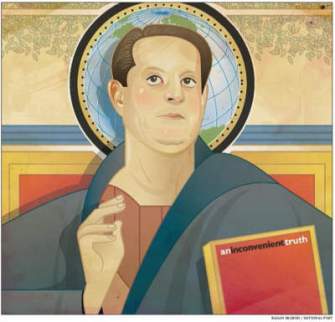
This is one example where scientific community may need to work with theologians and philosophers. Many leaders in the Christian, Jewish, Hindu, Buddhist and Islamic community recognize the possible threat posed by human-induced climate change and are actively working to reconcile understanding of climate change with their belief systems (Schut and Barnett 2005).
The influential Christian evangelical movement in the USA recently began a campaign to educate followers about the need for action on climate change (Hagg 2006). Scientists should not be afraid to embrace religious or philosophical initiatives to address the fundamental understanding of the human relationship with the climate. Otherwise, future historians may conclude that a failure to confront questions of belief, rather than questions of economics, explains the failure of our generation to act in time.
Leadership masterclass: Nike, Jordan, and James Baldwin