











And Matthew C. Nisbet, an American University communications professor, says, “We have had more science coverage on climate change than at any time in history. The next challenge is to find ways to cover the story across news beats and in ways that engage new readers.”
Later in the article, I talk about the important frame shift that has happened since the release of Inconvenient Truth. (For more, see this past blog post.)
Nisbet, for one, sees a dramatic shift in media rhetoric on climate change. In the spring of 2006, fear was at the heart of Al Gore’s documentary film, An Inconvenient Truth, which jump-started media coverage of global warming after years on the back burner. Suddenly, climate change–that term is gaining ground over global warming, by the way–was on front pages and magazine covers, including Time’s iconic image of a lone polar bear and the warning, “Be Worried. Be Very Worried.”
Today, says Nisbet, “the underlying appeal is a moral message: ‘We’re all in this together.’ It’s a moral call to arms.” Gore’s new $300-million “We” media campaign seeks to cross the partisan divide with the optimistic motto: “We Can Solve It.” The cover of Time’s Spring 2008 environment issue, bordered in green instead of Time’s customary red, took the famous World War II photo of Marines raising a U.S. flag on Iwo Jima and substituted a tree to illustrate its bold headline: “How to Win the War on Global Warming.”
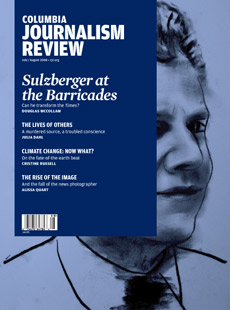
As a side bar to the article, Russell and CJR staffers put together a definitive list of the top Web resources for journalists reporting on climate change. Here’s what CJR has to say about Framing Science.
Framing Science: American University communications professor Matthew C. Nisbet blogs here about the “intersections between science, media and politics.” Nisbet has a well-earned reputation for leading research and commentary on media and public opinion about climate change.
Leadership masterclass: Nike, Jordan, and James Baldwin