















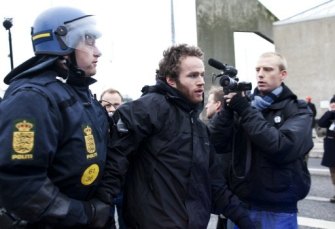
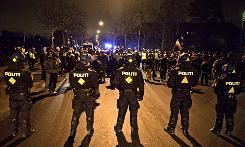
The unfortunate communication mish-mash offered by protest groups is made worse by the routinized tendencies of journalists and news organizations in covering social protest. Below are four possible frames through which the media historically cover protest, drawn from a body of scholarship that has labeled these media tendencies “The Protest Paradigm.” Research finds that protest is almost exclusively covered through the first two frames of reference and it is rare that coverage spans into more substantive or sympathetic portrayals of the protest event. My reading of the protest coverage this morning suggests to me that predictably, journalists have applied the first two frames and storylines to the Copenhagen protests [For examples, see links in the caption to the picture atop this post]:
Marginalizing frames
Violent crime story, Property crime story, Carnival, Freak show, Romper room, Riot
Mixed frames
Showdown with policy or public officials, Dissection of strategies and tactics, Comparison or association frame with other groups that legitimize or marginalize
Sympathetic Frames
Protest defined as creative expression or as unjust prosecution. An emphasis on telling “our story” or that “protesters are not alone” in working for change.
The Balanced Frame
The debate: Focuses on issues and complaints.
The Copenhagen protests offer the opportunity for an in depth scholarly analysis of key differences by country or across news organizations, blogs, and alternative media in how the protests have been portrayed. Consider, for example, coverage at the NY Times and WPost, which features elements of the second and fourth frames in this typology, respectively.
Game Change