- Latest
-
Topics
Philosophy
Mind & Behavior
Business
-
Videos
Latest Videos
 Why Einstein called awe the fundamental emotion If you’ve gotten goosebumps when hearing a story about a stranger’s selfless heroism, or you’ve felt your chest swell at...
 How facing adversity can help you live a deeper, more meaningful life “There would be something very, very empty and meaningless about [a] sort of life with no problems.”
 Can you measure love? 3 experts discuss From neuroscience to philosophy, experts reveal why compassion may be the most important human skill we have.
 How accepting impermanence can end the struggle to “fix” your life “The idea is that we move from a place of wanting the world to conform to what we like [towards]...
 How your cognitive biases lead to terrible investing behaviors “Let me walk you through the biggest traps that you should be aware of that are a danger to your...
 Is free will a fallacy? Science and philosophy explain. Philosophy asks if free will is real. Neuroscience reveals why the answer is more complicated than we expected.
 Why 2025 is the single most pivotal year in our lifetime "We're living in an extraordinary moment in history. We are at a moment here in 2025 where we have world...
 Even AI is self-censoring. Here’s why that matters. If the people controlling AI are biased, the output will also be. Free speech scholar Jacob Mchangama makes the case...
 -
Columns
Columns
 Mini Philosophy Mini Philosophy is a space to explore ideas. It’s where we pause the busyness of life to reflect on ourselves,...
 Starts With A Bang Understand how the universe works with Ethan Siegel.
 Books Big Ideas. Thoughtful Conversations. One Book at a Time.
 The Long Game A Big Think Business column written by investor Eric Markowitz, focused on the philosophy and practice of long-term thinking.
 The Well Exploring life's biggest questions, publication by the John Templeton Foundation and Big Think.
 13.8 A series exploring the beauty and power of science in culture by Adam Frank and Marcelo Gleiser.
 -
Classes
Featured Classes
- My Account
- Sign In
- Membership
- More




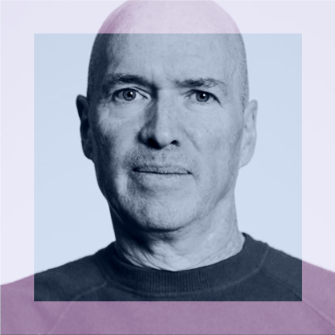

Big Questions Online
In January 2017 Martin Rees, one of the world's leading cosmologists and the 2011 Templeton Prize recipient, gave a lecture at a meeting of the American Physical Society in Washington, D.C. His lecture, titled “From Mars to the Multiverse," offered a synoptic account of the modern cosmological story—how the universe as we know it came to be over the course of billions of years—touching on the big bang, red shift, background radiation, and dark matter and energy along the way. He also ventured into more conjectural domains to consider the multiverse and string theory and whether the universe might end in a “big crunch" or a “big rip."
After his talk, Lord Rees sat down with BQO's Adam Keiper to talk about “speculative physics," the limits of the observable universe, and more:
[youtube https://www.youtube.com/embed/6unlzrRY8-w?feature=oembed]
The post Martin Rees on Speculative Physics appeared first on ORBITER.
No transcript available for this video.