- Latest
-
Topics
Philosophy
Mind & Behavior
Business
-
Videos
Latest Videos
 Why Einstein called awe the fundamental emotion If you’ve gotten goosebumps when hearing a story about a stranger’s selfless heroism, or you’ve felt your chest swell at...
 How facing adversity can help you live a deeper, more meaningful life “There would be something very, very empty and meaningless about [a] sort of life with no problems.”
 Can you measure love? 3 experts discuss From neuroscience to philosophy, experts reveal why compassion may be the most important human skill we have.
 How accepting impermanence can end the struggle to “fix” your life “The idea is that we move from a place of wanting the world to conform to what we like [towards]...
 How your cognitive biases lead to terrible investing behaviors “Let me walk you through the biggest traps that you should be aware of that are a danger to your...
 Is free will a fallacy? Science and philosophy explain. Philosophy asks if free will is real. Neuroscience reveals why the answer is more complicated than we expected.
 Why 2025 is the single most pivotal year in our lifetime "We're living in an extraordinary moment in history. We are at a moment here in 2025 where we have world...
 Even AI is self-censoring. Here’s why that matters. If the people controlling AI are biased, the output will also be. Free speech scholar Jacob Mchangama makes the case...
 -
Columns
Columns
 Mini Philosophy Mini Philosophy is a space to explore ideas. It’s where we pause the busyness of life to reflect on ourselves,...
 Starts With A Bang Understand how the universe works with Ethan Siegel.
 Books Big Ideas. Thoughtful Conversations. One Book at a Time.
 The Long Game A Big Think Business column written by investor Eric Markowitz, focused on the philosophy and practice of long-term thinking.
 The Well Exploring life's biggest questions, publication by the John Templeton Foundation and Big Think.
 13.8 A series exploring the beauty and power of science in culture by Adam Frank and Marcelo Gleiser.
 -
Classes
Featured Classes
- My Account
- Sign In
- Membership
- More


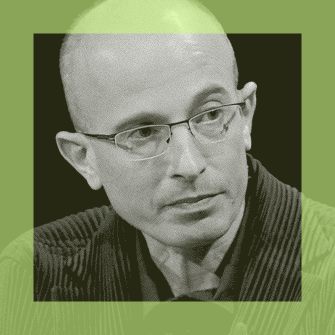




“Our Big Bang might not be the only one."
So says Lord Martin Rees, one of the world's leading astrophysicists and cosmologists, in a recent interview (embedded below). He speaks with excitement in his eye and a passion that underlies his notable contributions to his field, which earned him the prestigious 2011 Templeton Prize among other awards. As a former president of the Royal Society (a UK fellowship of eminent scientists), Rees is noted for his research on black hole formation and on the cosmic microwave background, a key piece of evidence of the Big Bang.
“First, are there many Big Bangs or just one?" asks Rees. “Second, if there are many, are they all governed by the same physics or not?"
These questions and more are what Rees calls “speculative physics." In a January meeting of the American Physical Society in Washington, D.C., Rees gave a lecture titled “From Mars to the Multiverse," providing an overview on what cosmologists believe about the origin of the universe. He touched on the Big Bang, red shift, background radiation, dark matter, string theory, and even multiverse theory—the possibility of many universes, including the one in which we live.
“It's speculative, it's exciting science, and it may be true."
But how could one ever verify multiverse theory? Often posed this question, Rees stresses the need for breakthroughs in the study of our universe's origin, how we trust Einstein's unobserved theory about the inside of black holes, and the likelihood for further discovery in the next 50 years.
Watch Big Questions Online editor Adam Keiper interview Martin Rees below.
[youtube https://www.youtube.com/embed/6unlzrRY8-w]
The post Multiverse Theory: More Than One Big Bang? appeared first on ORBITER.
No transcript available for this video.