- Latest
-
Topics
Philosophy
Mind & Behavior
Business
-
Videos
Latest Videos
 Why Einstein called awe the fundamental emotion If you’ve gotten goosebumps when hearing a story about a stranger’s selfless heroism, or you’ve felt your chest swell at...
 How facing adversity can help you live a deeper, more meaningful life “There would be something very, very empty and meaningless about [a] sort of life with no problems.”
 Can you measure love? 3 experts discuss From neuroscience to philosophy, experts reveal why compassion may be the most important human skill we have.
 How accepting impermanence can end the struggle to “fix” your life “The idea is that we move from a place of wanting the world to conform to what we like [towards]...
 How your cognitive biases lead to terrible investing behaviors “Let me walk you through the biggest traps that you should be aware of that are a danger to your...
 Is free will a fallacy? Science and philosophy explain. Philosophy asks if free will is real. Neuroscience reveals why the answer is more complicated than we expected.
 Why 2025 is the single most pivotal year in our lifetime "We're living in an extraordinary moment in history. We are at a moment here in 2025 where we have world...
 Even AI is self-censoring. Here’s why that matters. If the people controlling AI are biased, the output will also be. Free speech scholar Jacob Mchangama makes the case...
 -
Columns
Columns
 Mini Philosophy Mini Philosophy is a space to explore ideas. It’s where we pause the busyness of life to reflect on ourselves,...
 Starts With A Bang Understand how the universe works with Ethan Siegel.
 Books Big Ideas. Thoughtful Conversations. One Book at a Time.
 The Long Game A Big Think Business column written by investor Eric Markowitz, focused on the philosophy and practice of long-term thinking.
 The Well Exploring life's biggest questions, publication by the John Templeton Foundation and Big Think.
 13.8 A series exploring the beauty and power of science in culture by Adam Frank and Marcelo Gleiser.
 -
Classes
Featured Classes
- My Account
- Sign In
- Membership
- More



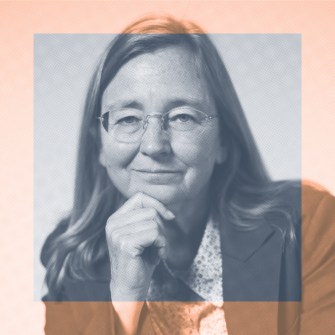
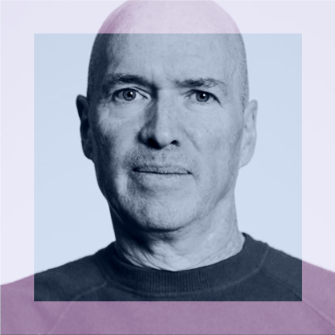
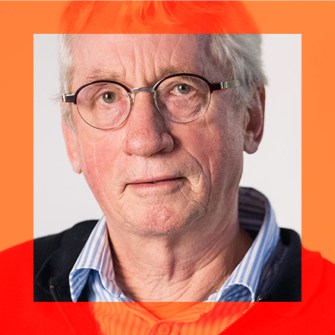
In the span of less than a decade, social scientist Elaine Howard Ecklund's research has ostensibly supported complete opposite observations in the ongoing "wars" (real or imagined) between science and religion.
A 2007 ABC News story, leaning heavily on an Ecklund study, was titled “The Clash Between Religion and Science." The article essentially declared the battle a stalemate, beginning with this paragraph:
“Here's one reason why the war between science and religion cannot be resolved. Most scientists do not believe in God."
What a difference a decade makes. A new story titled “There's Proof that Scientists Don't Hate Christians" begins with a paragraph quite unlike the one from ABC in 2007:
“If you assume America's laboratories and research facilities are filled with people who believe in the laws of science but not in God, you're not alone. You're also not correct."
The story cites a new book by Ecklund and co-author Christopher P. Scheitle, Religion vs. Science: What Religious People Really Think (Oxford University Press). The new release is a natural follow-up to Ecklund's 2012 tome, Science vs. Religion: What Scientists Really Think (Oxford University Press).
In this recent interview with Think (from KERA radio in Dallas), Ecklund discusses some of her findings. She's convinced the warfare thesis is not only wrong historically, but also does not reflect the attitudes of the thousands of Americans she has surveyed and the hundreds she has interviewed. She says Americans generally think science is good, but religious persons, especially evangelicals, tend to mistrust scientists, assuming scientists are atheists with an “agenda" or bias in their work.
Ecklund also wrote about what she's been learning in recent years here.
Ten years ago, Ecklund's work—which led to that ABC News story lead and to her 2012 book—had found that there were many more religious “nones" in science departments of top universities (52% of scientists surveyed had no current religious affiliation) than in the general public (14%). But among all these atheists and “nones," many were respectfully skeptical of religion, while some even considered themselves “spiritual." Only five of the 275 scientists she interviewed were hostile to religion.
Despite the denial of climate change science by many evangelicals, Ecklund has found that evangelicals are more science friendly than you think. At the same time, Ecklund's research shows that scientists are more religious than you think (and less hostile towards religion).
Check out the Thinkpodcast for a wide-ranging discussion that touches on New Atheists, evolution, and miracles as well as some interesting questions from listeners.
In the end, Ecklund addresses the common assumptions about the alleged “war" by saying, “We need to be careful when we let the loudest voices seem the most numerous.
Here's an overview of Ecklund's new book, and you can learn more about Ecklund in this interview from The Institute for Advanced Study at the University of Minnesota:
[youtube https://www.youtube.com/embed/LRJA_KwcVtE?feature=oembed]
No transcript available for this video.