




















Search


53mins
Members
“Our conscious awareness is everything. And the fact that it's still so mysterious to scientists and to all of humanity, the fact that it's still one of the great unsolved mysteries makes it something that everyone can be excited about and that inspires awe in everyone.”

8mins
"The thing that the nihilist recognizes is that the values he or she holds are not grounded in anything other than their own preferences."
7mins
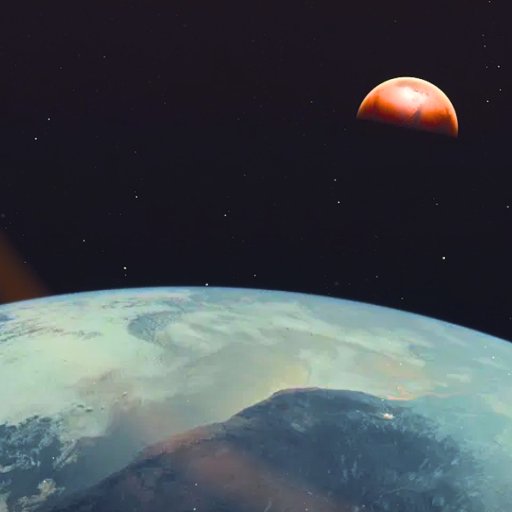
30 years ago, we didn’t know other stars had planets orbiting them. Now, we may be on the verge of finding Earth’s Twin. Sara Seager explains.

1hr 23mins
Why social media is the perfect recipe for kids to become addicted to their smartphones.

25mins
"In the process of mapping the heavens, it doesn't take long to realize the data problem they generated."

1hr 23mins
"The process of systematizing, correcting errors, finding approximations, and making them work as civil systems that was what really drove me to start looking at human calculation and what was the foundation that it laid for the modern computer age."

18mins
"It's this modern idea of doing voluntary discretionary, physical activity for the sake of health and fitness."

21mins
"By keeping people biologically younger, we can enjoy a longer health span, a longer period of healthy life where we're active, where we're happy, where we can engage in our hobbies, and play with our grandkids and great grandkids."

54mins
Members
"This will help people take meaningful steps to slow the rate of aging and increase what we call their health span or their kind of time of life expectancy free from disease."

7mins
Members
We tend to trust our intuitions about consciousness because they feel immediate and personal, but feeling convinced is not the same as being right. Annaka Harris explores what happens when […]

1hr 51mins
Stoicism has been flattened into slogans about toughness, detachment, and emotional silence, a version that’s easy to sell, but mostly wrong. Massimo Pigliucci returns Stoicism to its original purpose: a […]

25mins
"I continue to believe that in the long run, boys, young men will believe their eyes more than their ears."

22mins
"It's much better to try to understand how the world works and then act accordingly. Rather than trying to impose on the world the way we want to think or the way we preferred things to be."

25mins
"The big question then is why are most people resilient and why are some people not resilient?"

16mins
"Being connected to another person makes us feel safer and keeps our bodies at a kind of physiologic equilibrium that promotes health."

54mins
“How can all the diversity and, sort of, seeming order that's out there in the world emerge from a process dependent upon chance?”

7mins
Members
“The problem with cognitive scripts is when we use them to make more important decisions in our lives, we let our choices be driven by those stories that we have internalized that tell us how we're supposed to behave in a certain situation.”

19mins
David S. Goyer explains how paying attention to mystery, and not brushing it aside, became the foundation for the way he builds stories, characters, and worlds.

11mins
Members
“The next revolution will be quantum computers that will make the digital computer look like an abacus.”

47mins
“The problem is in our information. Humans, yes, we are generally good and wise, but if you give good people bad information, they make bad decisions.”