




















Search


Many beloved fantasy adventures take place in worlds that bear a striking resemblance to our own.

The successful tactics of big-name leaders — including Bob Iger, Mary Barra, and Satya Nadella — reveal key approaches to innovation.
5mins
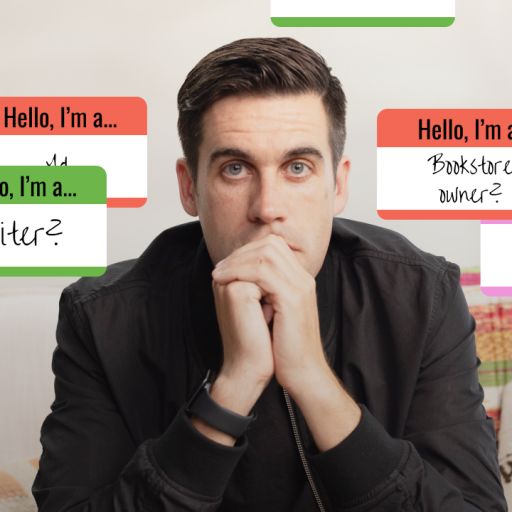
How the successful marketer used ancient philosophy to overcome modern obstacles and change his mindset.
Unlikely Collaborators

Whether your hair is straight, wavy, curly, or kinky isn't just genetic in nature. It depends on the physics of your hair's very atoms.

Hang on to something — or ride the wave — because three big tech trends are about to converge.

Reusable rockets, moon landers, civilian astronauts, and more.

How can "you" move on when the old "you" is gone?

Do you always act professionally in the workplace? Depends what you mean by "professional."

4mins
“Part of what's happening now in the world is tension between organic animals and an inorganic digital system which is increasingly controlling and shaping the entire world.”

One of the 20th century's most famous, influential, and successful physicists is lauded the world over. But Feynman is no hero to me.

MIT Scientist Jason Soderblom describes how the NASA mission will study the geology and composition of the surface of Jupiter’s water-rich moon and assess its astrobiological potential.

Here's the dark side of first contact.

Due to chaos, it was long thought that planets couldn't stably orbit systems containing three stars. GW Orionis is the first counterexample.

Welcome to The Nightcrawler — a weekly newsletter from Eric Markowitz covering tech, innovation, and long-term thinking.

Burns’ latest documentary dives into the long-romanticized life and work of the Italian polymath.

Mars and Earth were sister planets in many ways, with early similar conditions. Why did Mars die? The leading explanation isn't universal.

A deep dive into missing data and the limitations of disaster databases.

In his latest book, Malcolm Gladwell explores a strange phenomenon of group dynamics.

Rather than allowing technology to exacerbate stress and disconnection, we can use it to actively support our wellbeing.

NASA's space telescopes and observatories bring humanity unrivaled science images and scientific discoveries. Here's what should be next.