










Search
Adam Frank
Astrophysicist

Adam Frank is a professor of astrophysics at the University of Rochester and a leading expert on the final stages of evolution for stars like the sun. Frank's computational research group at the University of Rochester has developed advanced supercomputer tools for studying how stars form and how they die. A self-described “evangelist of science," he is the author of four books and the co-founder of 13.8, where he explores the beauty and power of science in culture with physicist Marcelo Gleiser.
Read Less
Big Think spoke with astronomer David Kipping about technosignatures, "extragalactic SETI," and being a popular science communicator in the YouTube age.
A conversation with Annaka Harris on shared perception, experimental science, and why our intuition about consciousness is wrong.

The "Doctor Strange" director says mystery shifts your worldview — "not in a metaphorical sense, but in a deeply experiential one."

A new SETI study shows how far the field of technosignatures has come.
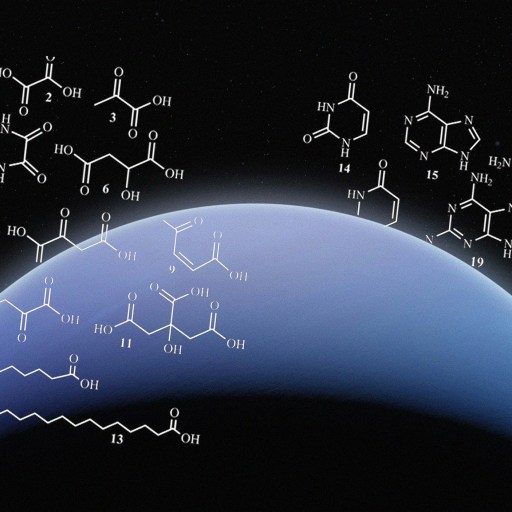
Life might be more common across the Universe than the "Hard Steps Model" suggests.

Astronomer Adam Frank reflects on some responses to his recent appearance on the Lex Fridman Podcast.

The nation-state had a good run, but its usefulness may have come to an end.
The problem for galactic-scale civilizations comes down to two numbers.
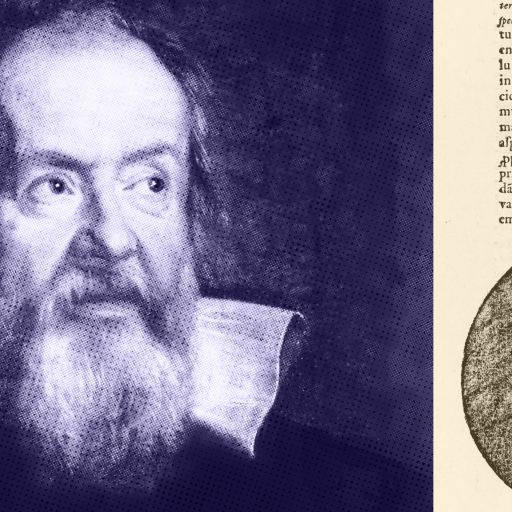
"I was stunned. Here in front of me was the original apparatus through which a new vision of the world was slowly and painfully brought to light."
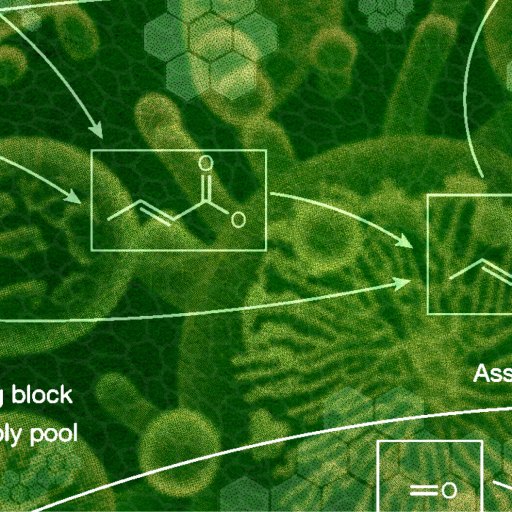
We need a "theory that explains the evolution of evolution," argues theoretical physicist Sara Imari Walker.

Astronomer Adam Frank asks: With so many extraordinary claims, why can't anybody produce the proof?
How did life on Earth begin? Is there life on other worlds? An answer to either question will reflect heavily on the other.
It's deceptively tricky to distinguish living systems from non-living systems. Physics may be key to solving the problem.
By focusing on the role of human experience, we may uncover new insights on the fundamental structure of reality.
Finding life beyond our Solar System requires understanding its host planet.
In "Life As No One Knows It," Sara Imari Walker explains why the key distinction between life and other kinds of "things" is how life uses information.
In the 1970s, James Lovelock proposed that the biosphere was not just green scruff quivering on Earth's surface. Instead, it managed to take over the geospheres.

The Extremely Large Telescope (ELT) will have a light-collecting power 10 times greater than today's best telescope.

Physicists have increasingly begun to view life as information-processing "states of matter" that require special consideration.

The future belongs to complexity.