







Amanda Ripley

Amanda Ripley

A person with short hair stands outside near a chain-link fence, holding green leaves with the sun casting a soft light.

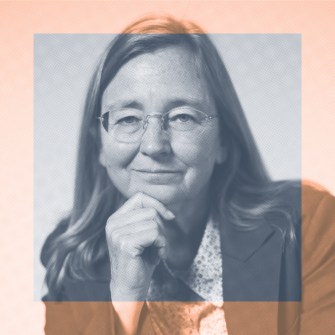
Amanda Ripley is a New York Times bestselling author, Washington Post contributor, and co-founder of consultancy firm, Good Conflict. Her books include The Smartest Kids in the World, High Conflict, and The Unthinkable.

A silhouette of a person seated with blurred movement in the background and large text reading "KNOW YOUR EXIT" on the right.
19 min
Most people freeze in a crisis. Here’s why — and how to stop it
“The fear of panic has killed more people than most disasters themselves.”

A person sits on a chair in front of a white backdrop in a loft-style room with brick walls, dark flooring, and two windows.
1 min
Conflict, crisis, consumption: What’s eating our nation?
"The more uncertain and scary things get in the world, the more we as humans are drawn to simple dichotomies."
Several microphones facing forward against a blue background with the text "Agents of Conflict" above them.
11 min
Depression and anxiety triggers are ‘best practices’ in bad journalism
"These days, no national news network is trusted by more than half of American adults. And that's a problem."

A man in a suit looks upward with a surprised expression. There is a fiery effect in the foreground. Buildings and people are visible in the background.
9 min
How your brain works in an emergency, in 9 minutes
"Humans, like most mammals, tend to shut down in really frightening situations for which they have no training or prior experience. Researchers call it negative panic. People do nothing. They shut down."
Fragmented image of the U.S. flag with white stars on a blue background and red and beige stripes, resembling weathered paint on a wall.
4 min
The one temptation to resist post-election: Good vs. evil
“Most of us aren't sure what to think about everything, but we don't really see that modeled anywhere, right? You're supposed to know for sure, and there's very little intellectual humility on social media or on TV.”
A black-and-white image of a ship in water on the left pairs with a red-tinted photo of a large explosion on the right, capturing the essence of naval catastrophe through expert storytelling. The groundbreaking optimism of catastrophe expert Samuel Henry Prince
How “Catastrophe and Social Change” (1920) became the first systematic analysis of human behavior in a disaster.