



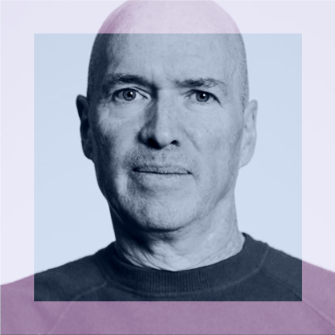
David Eagleman
Neuroscientist, Stanford University

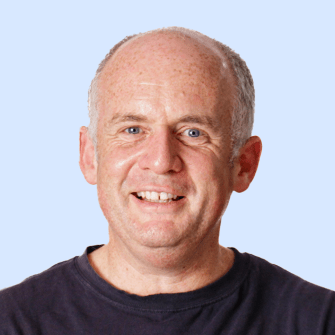
David Eagleman is a neuroscientist at Stanford University and an internationally bestselling author. He is co-founder of two venture-backed companies, Neosensory and BrainCheck, and he also directs the Center for Science and Law, a national non-profit institute. He is best known for his work on sensory substitution, time perception, brain plasticity, synesthesia, and neurolaw.
He is the writer and presenter of the international PBS series, The Brain with David Eagleman, and the author of the companion book, The Brain: The Story of You. He is also the writer and presenter of The Creative Brain on Netflix.
Beyond his 120+ academic publications, he has published many popular books. His latest book Livewired tells the story of brain plasticity: how your forest of billions of neurons reconfigures every moment over your life. His bestselling book Incognito: The Secret Lives of the Brain, explores the neuroscience “under the hood” of the conscious mind: all the aspects of neural function to which we have no awareness or access. His work of fiction, SUM, is an international bestseller published in 33 languages and turned into two operas. The Safety Net examines what the advent of the internet means on the timescale of civilizations. The award-winning Wednesday is Indigo Blue explores the neurological condition of synesthesia, in which the senses are blended. The Runaway Species, co-authored with music composer Anthony Brandt, explores the neuroscience and behavior behind human creativity.
Eagleman is a TED speaker, a Guggenheim Fellow, and serves on several boards, including the American Brain Foundation and the The Long Now Foundation. He is the Chief Scientific Advisor for the Mind Science Foundation, and the winner of Claude Shannon Luminary Award from Bell Labs and the McGovern Award for Excellence in Biomedical Communication.
He serves as the academic editor for the Journal of Science and Law, was named Science Educator of the Year by the Society for Neuroscience, and was featured as one of the Brightest Idea Guys by Italy’s Style magazine. He has served as the scientific advisor to several television shows (including Westworld and Perception), and has been profiled on the Colbert Report, NOVA Science Now, the New Yorker, CNN’s Next List, and many other venues. He appears regularly on radio and television to discuss literature and science.