














Don Lincoln

Don Lincoln

don lincoln

Dr. Don Lincoln is a Senior Scientist at Fermilab, America’s leading particle physics laboratory, who has coauthored over 1,500 scientific papers. He was a member of the teams that discovered the top quark in 1995 and the Higgs boson in 2012.

Dr. Lincoln is also an avid popularizer of science. He has written several books for the public, most recently Einstein’s Unfinished Dream. He also writes for many online venues, such as CNN and Scientific American. He appears frequently on the Fermilab YouTube channel and has made several video courses available through The Great Courses company.

Dr. Lincoln is a recipient of the 2013 Outreach Prize from the European Physical Society and the 2017 Gemant Award from the American Institute of Physics. He is a Fellow of the American Physical Society and the American Association for the Advancement of Science.

You can learn more about Dr. Lincoln on his home page, and you can follow him on Facebook

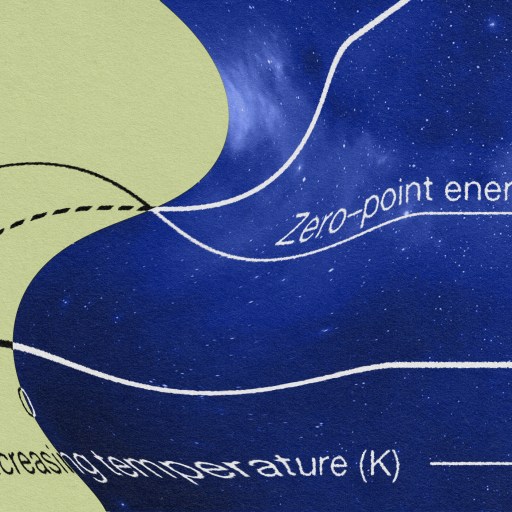
A diagram illustrating the various phases and motion of a star, with a particular focus on zero-point energy.
The term "zero-point energy" has at least two meanings, one that is innocuous and one that is a great deal sexier (and scammier).
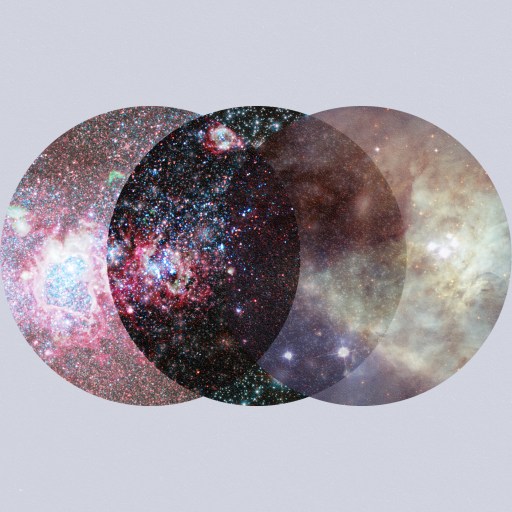
Nasa's nebulas and galaxies - exploring parallel universes.
What do ghosts and anomalous galaxy rotation rates have in common? Some sci-fi enthusiasts believe the answer involves "parallel universes."
An image showcasing the captivating shape of space featuring a mesmerizing red and blue nebula.
Einstein's theory of general relativity introduced the concept of space having a shape. So, what is the shape of space?
A black and white photo of Albert Einstein demonstrating gravity force.
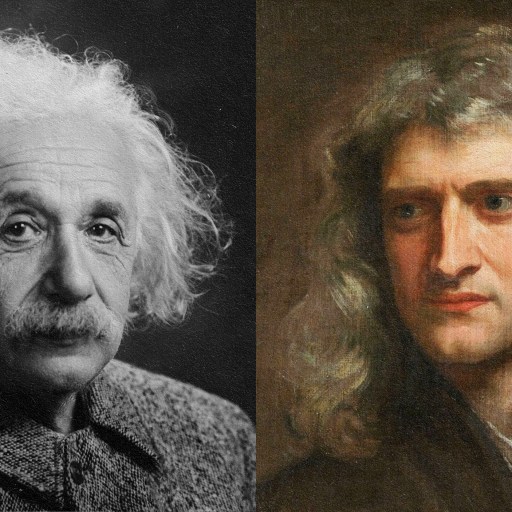
Isaac Newton and Albert Einstein are locked in an eternal battle over the nature of gravity. Whose side are you on?
Nasa's finely-tuned image of a cluster of galaxies.
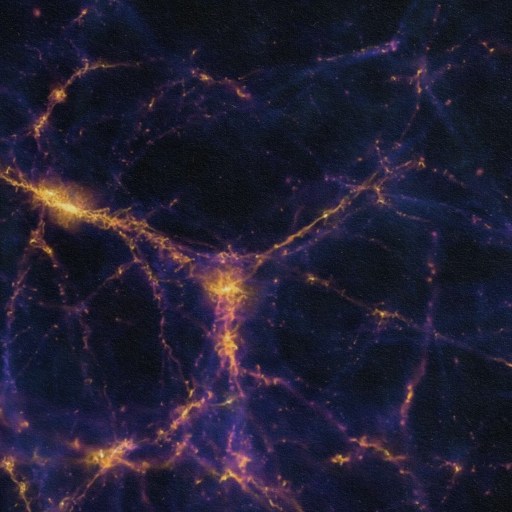
The question of why the Universe is the way it is is an ancient one, and none of the answers we have come up with are satisfying.
The study of antimatter.
Sci-fi enthusiasts have long hoped that a substance called antimatter might experience gravity opposite that of ordinary matter. It doesn't.