
















Donald Johanson
Paleoanthropologist
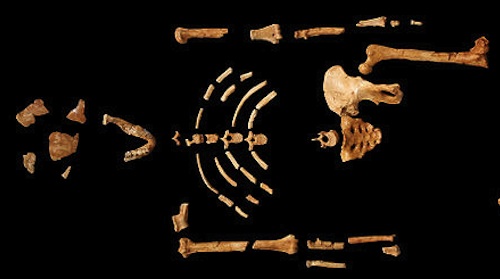
Donald Johanson is an American paleoanthropologist and the founder of the Institute of Human Origins. He went on his first exploratory expedition to Ethiopia in 1972, and the following year completed his PhD and began teaching at Case Western Reserve University. In 1974 he discovered AL 288-1, a partial skeleton of a female australopithecine who soon became world-renowned as "Lucy." In 1975 he and his team found a major collection of fossils, known as "The First Family," at a single site. In 1976, more hominid fossils were discovered, along with stone tools which, at 2.5 million years, were the oldest in the world. In 1978, he and his colleague, Tim White, named the species he had discovered Australopithecus afarensis.
In 1981, Johanson founded the Institute of Human Origins, a non-profit research institution devoted to the study of prehistory. He is the author of several books including, most recently, "Lucy's Legacy: The Quest for Human Origins" (with Kate Wong, Harmony Books, 2009).