







Eric Siegel

Eric Siegel

Co-Founder & CEO, Gooder AI, and Author, The AI Playbook
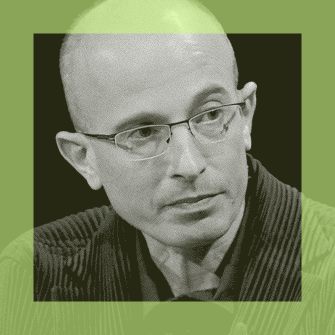
A man wearing glasses and a blue shirt.

Eric Siegel, Ph.D., is a former Columbia University professor who helps companies deploy machine learning. He is the co-founder and CEO of Gooder AI, the founder of the long-running Machine Learning Week conference series and its new sister, Generative AI Applications Summit, the instructor of the acclaimed online course “Machine Learning Leadership and Practice – End-to-End Mastery,” executive editor of The Machine Learning Times, and a frequent keynote speaker. Eric’s interdisciplinary work bridges the stubborn technology/business gap. At Columbia, he won the Distinguished Faculty award when teaching the graduate computer science courses in ML and AI. Later, he served as a business school professor at UVA Darden. A Forbes contributor, Eric publishes op-eds on analytics and social justice.

Eric has appeared on Bloomberg TV and Radio, BNN (Canada), Israel National Radio, National Geographic Breakthrough, NPR Marketplace, Radio National (Australia), and TheStreet. His books have been featured in BBC, Big Think, Businessweek, CBS MoneyWatch, Contagious Magazine, The European Business Review, Fast Company, The Financial Times, Fortune, GQ, Harvard Business Review, The Huffington Post, The Los Angeles Times, Luckbox Magazine, MIT Sloan Management Review, The New York Review of Books, The New York Times, Newsweek, Quartz, Salon, The San Francisco Chronicle, Scientific American, The Seattle Post-Intelligencer, Trailblazers with Walter Isaacson, The Wall Street Journal, The Washington Post, and WSJ MarketWatch.
Illustration comparing generative and predictive AI with a visual of Earth connected to digital data icons.
8mins
Eric Siegel, Co-Founder & CEO, Gooder AI, argues machine learning (ML) projects go astray because their stakeholders focus too often on the technological fireworks — the “rocket science” of predictive models.
A dark background with the words "Generative AI HYPE" written in flames.
8mins
Eric Siegel has been in the AI field since 1991. He’s “horrified” by the AI hype bubble, but not for the reason you think.
A compilation of visuals featuring a mannequin and a robot, showcasing effective machine learning capabilities.
Practical ML can radically improve business operations, but there’s a deployment issue.
Machine learning is a powerful and imperfect tool that should not go unmonitored.
Everyone wants to predict who will win the 2020 presidential election. Here are 2 misconceptions to bust so people don't proclaim the death of data like they did in 2016.
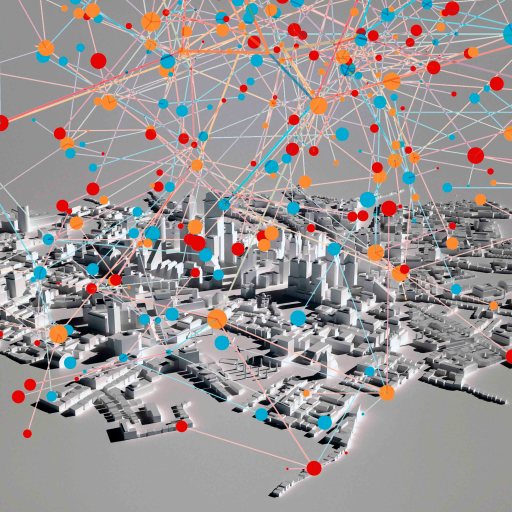
Machine learning, which actively protects you from all sorts of dangers, including fires, explosions, collapses, crashes, workplace accidents, restaurant E. coli, and crime.
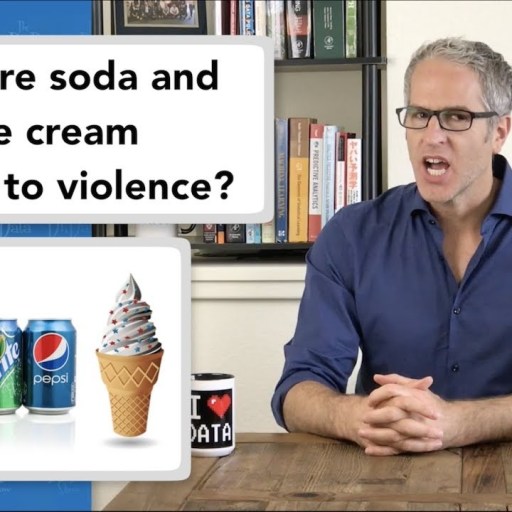
Why are soda and ice cream each linked to violence? This article delivers the final word on what people mean by "correlation does not imply causation."
The Dr. Data Show is a new web series that breaks the mold for data science infotainment, captivating the planet with short webisodes that cover the very best of machine learning and predictive analytics.
Predictive policing introduces a scientific element to law enforcement decisions, such as whether to investigate or detain, how long to sentence, and whether to parole.
Prediction is reinventing industries and running the world. More and more, predictive analytics drives commerce, manufacturing, healthcare, government, and law enforcement.
3mins
You have been predicted — by companies, governments, law enforcement, hospitals, and universities. In this lesson excerpt from Big Think+, Eric Siegel, author of Predictive Analytics: The Power to Predict Who Will Click, Buy, Lie, or Die, explains why these entities not only have the power to predict the future "but also to influence the future." rn
3mins
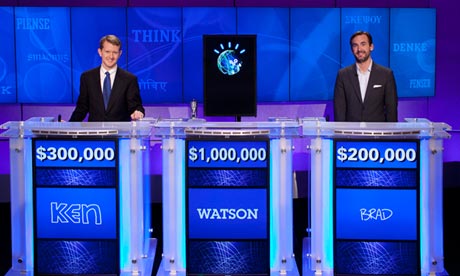
Eric Siegel never thought he would experience a machine acting in a way that he would subjectively consider to be intelligent. IBM’s Watson, however, changed all of that.
Eric Siegel on IBM's Watson: This is the first time I’ve ever had the feeling and the impulse to say, “You know what?  That’s intelligent.”
As with the anecdotally rich discoveries in Freakonomics, practitioners of predictive analytics constantly stumble upon insightful gems such as,vegetarians miss fewer flights.
Siri’s underlying technology is designed "to solve a different, simpler variant of the human language problem" than Watson. 
One of the things that’s happening now is your Smartphone is being more integrated with your car.
My opinion is that IBM’s Watson computer is able to answer questions, and so, in my subjective view, that qualifies as intelligence.
3mins
Predictive analytics is technology that not only gives organizations the power to predict the future but also to influence the future.
Today, predictive analytics' all-encompassing scope already reaches the very heart of a functioning society. Several mounting ingredients promise to spread prediction even more pervasively: bigger data, better computers, wider familiarity, and advancing science.   
The president won reelection with the help of the science of mass persuasion, a very particular, advanced use of predictive analytics.