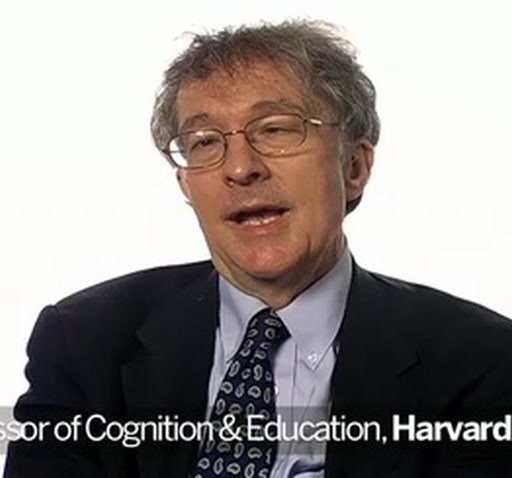

















Howard Gardner
Hobbs Research Professor of Cognition and Education, Harvard Graduate School of Education

Howard Gardner is the John H. and Elisabeth A. Hobbs Research Professor of Cognition and Education at the Harvard Graduate School of Education. Among numerous honors, Gardner received a MacArthur Prize Fellowship and a Fellowship from the John S. Guggenheim Memorial Foundation in 1981 and 2000, respectively. In 2020, he received the Distinguished Contributions to Research in Education Award, the premier honor from the American Educational Research Association. He has been elected a member of the American Academy of Arts and Sciences, the American Philosophical Society, the National Academy of Education, and the London-based Royal Society for the Encouragement of Arts, Manufactures, and Commerce. He serves on a number of boards, including New York’s Museum of Modern Art and the American Philosophical Society.
The author of thirty books translated into thirty-two languages, and several hundred articles, Gardner is best known in educational circles for his theory of multiple intelligences, a critique of the notion that there exists but a single human intelligence that can be assessed by standard psychometric instruments. In 2020, Gardner’s intellectual memoir, A Synthesizing Mind, was published by MIT Press.
His most recent research undertaking, conducted with Wendy Fischman, is a large-scale national study documenting how different groups think about the goals of college and the value of a course of study emphasizing liberal arts and sciences. The study seeks to understand how the chief constituencies on campuses (incoming students, graduating students, faculty, senior administrators, parents, alumni/ae, trustees and job recruiters) think about these changes and how they may impact the college experience. Ultimately, the study aims to provide valuable suggestions of how best to provide quality, non-professional higher education in the 21st century.