














Search
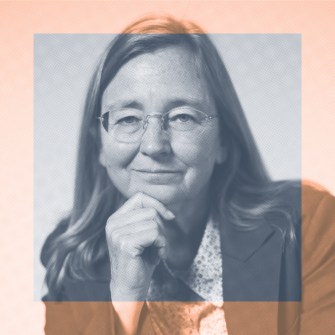
Janna Levin
Theoretical Astrophysicist, Barnard College

Janna Levin is a professor of physics and astronomy at Barnard College of Columbia University. She is also director of sciences at Pioneer Works, a center for arts and sciences in Brooklyn, and has contributed to an understanding of black holes, the cosmology of extra dimensions, and gravitational waves in the shape of spacetime. Her previous books include How the Universe Got Its Spots and a novel, A Madman Dreams of Turing Machines, which won the PEN/Bingham Prize. She was recently named a Guggenheim fellow.
Read Less
4mins
When one path is blocked, a new one must be paved. How Einstein, Heisenberg and Gödel used constraints to make life-changing discoveries:

6mins
A physicist discusses the boundaries of reality and experimentation.

12mins
Quantum wormholes are mathematically possible — but might also be physically impossible. Physicist Janna Levin explains Hawking’s famous information paradox.

5mins
Gravity defies quantum mechanics. What does that mean for a theory of everything?
9mins
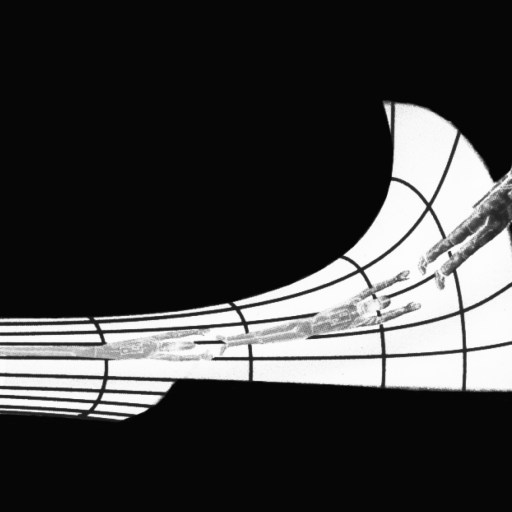
Ever wonder what would happen if we got sucked into a black hole? Turns out we could live in it for a while — if it was big enough.

5mins
What does a theoretical physicist do all day? Janna Levin shares some insight on perception vs. reality, and provides a glimpse of how she spends her time (hint: doing math).

4mins
If you can't break through a wall, you climb over it. Janna Levin, Professor of Physics and Astronomy at Barnard College, points to three genius scientists who embraced limitations.
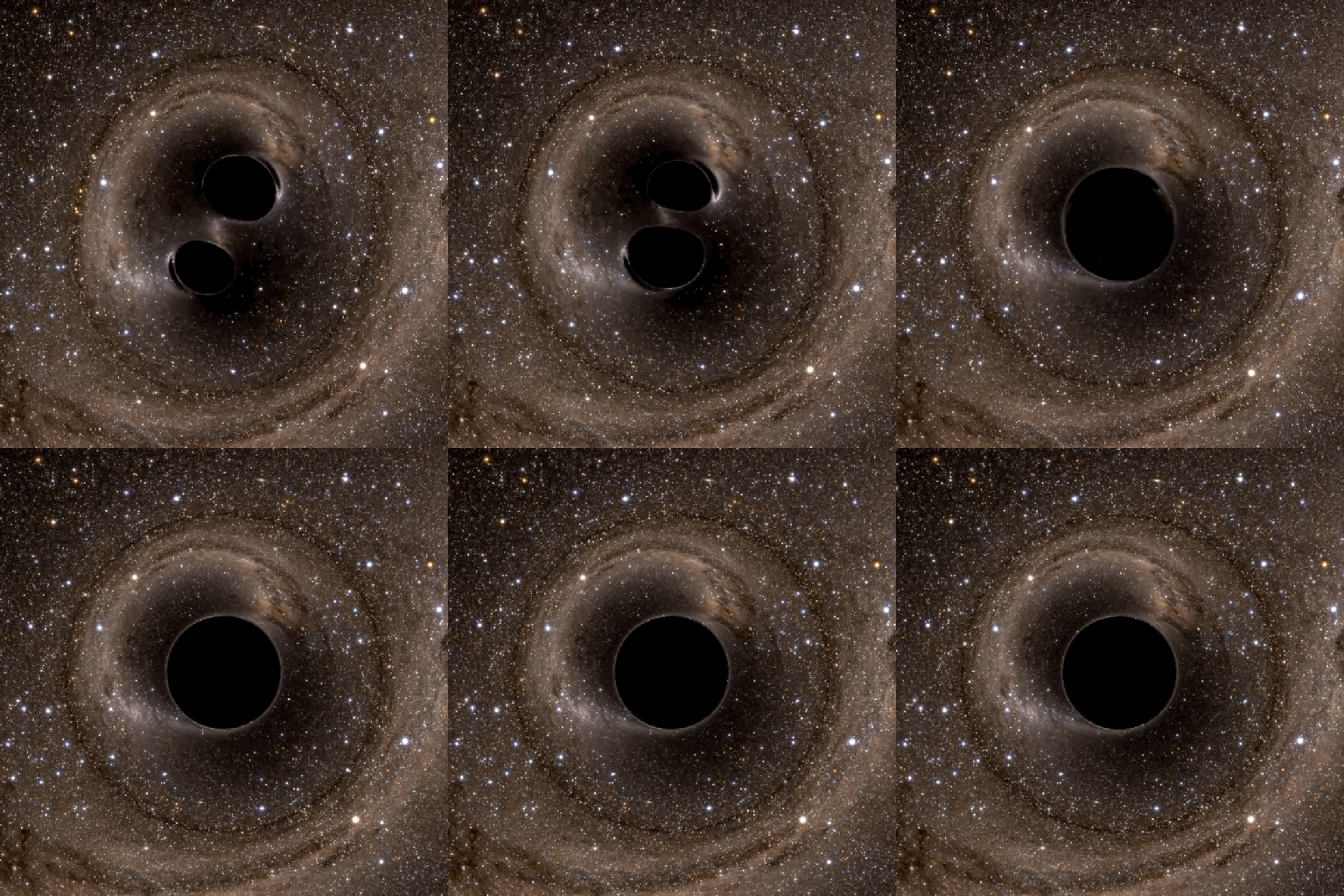
6mins
Albert Einstein was the first to discuss the fabric of space, and according to his theorems, the curvature of it. We have been discussing the possibility of gravitational waves ever since.