









Search
Joel Cohen
Mathematical Biologist, Rockefeller University
Joel E. Cohen is a mathematical biologist and Professor of Populations at Rockefeller and Columbia Universities. His research deals with the demography, ecology, epidemiology and social organization of human and non-human populations and with mathematical concepts useful in these fields. The author of 14 books, he has been honored with numerous awards, including the Sheps Award from the Population Association of America, the Distinguished Statistical Ecologist Award, the Tyler Prize for Environmental Achievement in 1999 and the Mayor's Award for Excellence in Science and Technology from the Mayor of the City of New York, Michael R. Bloomberg in 2002. Professor Cohen has been elected to the National Academy of Sciences, the American Academy of Arts and Sciences and the American Philosophical Society. He lives in New York.
Read Less

43mins
In his lecture, Professor Joel Cohen teaches you how demography can provide answers to the life or death questions caused by the world's swelling population and dwindling resources.
1mins
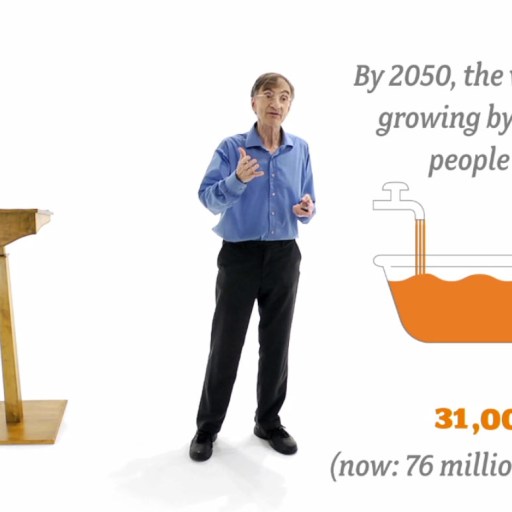
Cohen explains that population, economics, and environment are a dynamic, interconnected system – and that no single element holds the key to solving the world’s problems.

8mins
In 2050 there will be about 9 billion people in the world. The vast majority of them will live in urban areas, and will have a significantly higher average age […]

4mins
In wealthy nations across the world, population growth rates have rapidly declined from their peak in 1965. The reasons behind this are varied and rife with complications, as scientists still […]
4mins
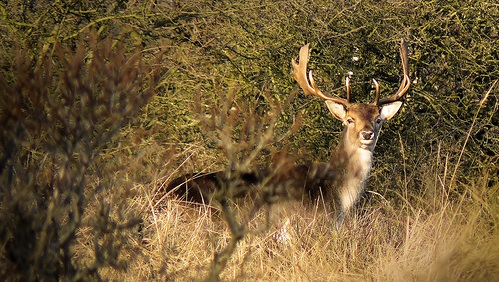
The world of comedy hasn’t exactly been kind to scientists, but here are a couple of jokes in which math nerds get the last laugh.

8mins
Scientific estimates of Earth’s maximum capacity range in the thousands of billions, but here’s some troubling numbers we have confirmed: Earth’s 6.8 billion residents produce enough food to feed between […]

3mins
Each of us consumes energy at a rate roughly equivalent to a 100-watt bulb. But, given the amount of energy that goes into maintaining domestic farm animals, and the inanimate […]

3mins
Of Earth’s ice-free land, we have about 130 million square kilometers to work with, about 8% of which goes to creating foods that go directly to humans while another 30% […]

4mins
Humans exist in a “food web,” wherein we enjoy our familiar menu of plants, vegetables, animals and their by-products, etc; but what’s out there itching to get ahold of us…and […]
8mins
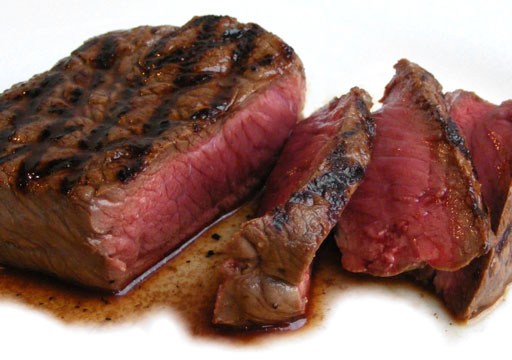
Global populations, economics, environments, cultures and human health all intersect in meat.

41mins
A Conversation with the mathematical biologist at Rockefeller University.