









Kayt Sukel

Kayt Sukel

Author of Dirty Minds: How Our Brains Influence Love, Sex, and Relationships

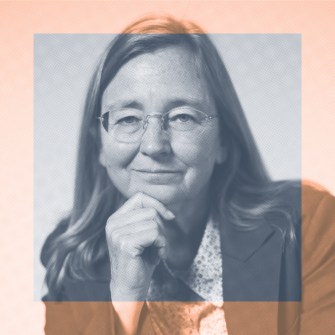
Kayt is a member of the American Society of Journalists and Authors (ASJA), the Author's Guild and the National Association of Science Writers (NASW). She has recently returned to the United States after living abroad for six years and has just published her first book, DIRTY MINDS:  HOW OUR BRAINS INFLUENCE LOVE, SEX AND RELATIONSHIPS, an exploration of the neurobiology of love (Free Press, 2012).  

Kayt Sukel's writing credits include personal essays in the Washington Post, American Baby, the Bark, USAToday, Literary Mama and the Christian Science Monitor as well as articles on a variety of subjects for the Atlantic Monthly, Parenting, Cerebrum, BrainWork and American Baby magazines. She blogs regularly about traveling on the Lowell Thomas Travel Journalism Award winning travel blog, Travel Savvy Mom; and science, love and life at the Houston Chronicle's Hearts and Minds blog.

You can often find her oversharing on Twitter as @kaytsukel.

 

The American Gut Project is an open-source, community effort to better understand the diversity of our microbiomes. 
Have you gotten a measure of your attention skills on a site like Lumosity?  Has a physician recommended that your elderly parent give software like BrainHQ a try? Then you are already part of the booming Digital Brain Health market . . .
Unique architecture may play a role in Einstein's creativity and ability to solve complex problems in physics. 
Once upon a time, my marriage was falling apart. So my now ex-husband and I did what many couples do.  We sought out the services of a therapist specializing in […]
You know the old Facebook line:  relationships are complicated.  Paul C. Brunson, the Modern Day Matchmaker, knows that better than anyone else.  And his new book, IT’S COMPLICATED (BUT IT […]
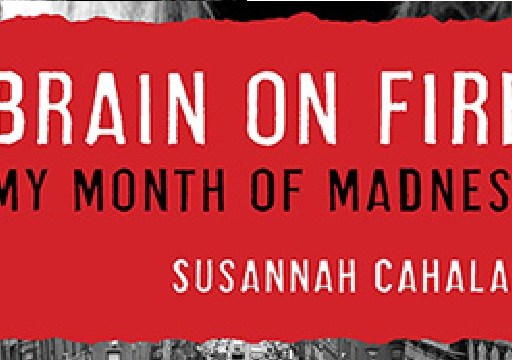
Susannah Cahalan was just another ambitious New York kind of girl–a fast-rising cub reporter at the New York Post and fabulous gal about town–when something surprising happened.  She lost her […]
As I travel around and talk about the neuroscience of orgasm, there is one question I am consistently asked–usually by a particularly curious and outgoing person of the male persuasion:  […]