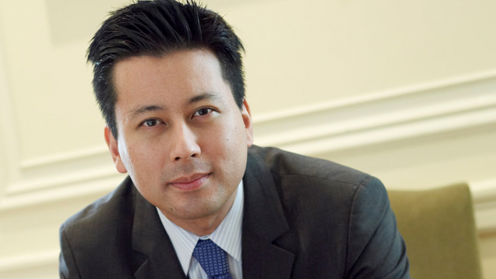













Kenji Yoshino
Chief Justice Earl Warren Professor of Constitutional Law and Director of the Center for Diversity, Inclusion, and Belonging, NYU School of Law
Kenji Yoshino is the Chief Justice Earl Warren Professor of Constitutional Law at NYU School of Law. He is an East Coast native, now living in NYC with his husband and two children. Yoshino studied at Harvard, Oxford, and Yale Law Schools. His fields are constitutional law, anti-discrimination law, and law and literature. He has received several distinctions for his teaching and research, including the Podell Distinguished Teaching Award in 2014, the American Bar Association’s Silver Gavel Award in 2016, an honorary degree from Pomona College in 2018, and the Peck Medal in Jurisprudence in 2021.
Yoshino is the author of three books and has published in major academic journals, including The Harvard Law Review, The Stanford Law Review, and The Yale Law Journal. He has also written for Los Angeles Times, The New York Times, and The Washington Post. In 2011, he was elected to the Harvard Board of Overseers for a six-year term. He also serves on the board of the Brennan Center for Justice, advisory boards for diversity and inclusion at Charter Communications and Morgan Stanley, and on the board of his children’s school. In addition to teaching at NYU School of Law, Yoshino is also the faculty director of the Center for Diversity, Inclusion, and Belonging. Together with the executive director, David Glasgow, he is writing a book focused on how to have diversity conversations to be published by Simon & Schuster next year.