















Search
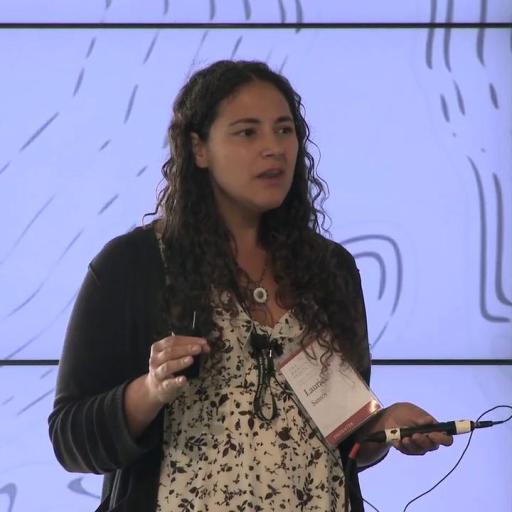
Laurie Santos
Professor of Psychology and Cognitive Science, Yale University

Dr. Laurie Santos is an Associate Professor of Psychology at Yale University. Her research provides an interface between evolutionary biology, developmental psychology, and cognitive neuroscience, exploring the evolutionary origins of the human mind by comparing the cognitive abilities of human and non-human primates. Her experiments focus on non-human primates (in captivity and in the field), incorporating methodologies from cognitive development, animal learning psychology, and cognitive neuroscience.
Read Less
6 min
Hustle culture is part of our DNA — but it’s making us unhappy. Yale psychologist Laurie Santos explains how to escape your inner drill sergeant and find peace in imperfection.

7 min
Knowing your key strengths can make you happy in anything you do. Here’s how to identify them.

7 min
If you don’t feel better after the weekend, the “burnout paradox” could explain why.
9 min
Your brain isn’t wired for happiness — but you can change that, explains Yale scientist Laurie Santos.
John Templeton Foundation

Other primates don’t seem to share their own desires and intentions with others, which leads to a lack of cooperation in a lot of domains.
18 min
Sharing might be the defining characteristic of being human. We are also very good at learning from others. The problem, however, is that we lack the proper filters and are […]
4 min
From falling prey to expectations to taking advice from friends, an understanding of our cognitive evolution helps us avoid misperceiving the limits of our knowledge.