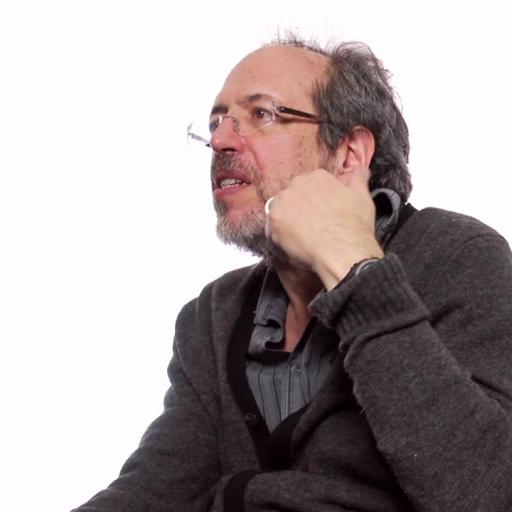









Lee Smolin

Lee Smolin

Founding & Senior Faculty Member, Perimeter Institute for Theoretical Physics

Lee attended Harvard University for graduate school receiving a Ph.D. in theoretical physics in 1979.  He held postdoctoral positions at the Institute for Advanced Study in Princeton, The Institute for Theoretical Physics (now KITP) in Santa Barbara and the Enrico Fermi Institute at the University of Chicago. This was followed by faculty positions at Yale, Syracuse and Penn State Universities, where he helped to found the Center for Gravitational Physics and Geometry.   In September of 2001 he moved to Canada to be a founding member of the Perimeter Institute for Theoretical Physics, where he has been ever since.  

Lee's main contributions to research are so far to the field of quantum gravity. He was, with Abhay Ashtekar and Carlo Rovelli,  a founder of the approach known as loop quantum gravity, but he has contributed to other approaches including string theory and causal dynamical triangulations.  He is also known for proposing the notion of the landscape of theories, based on his application of Darwinian methods to Cosmology.  He has contributed also to the  foundations of quantum mechanics, elementary particle physics and theoretical biology.  He also has a strong interest in philosophy and his three books, Life of the Cosmos, Three Roads to Quantum Gravity and The Trouble with Physics are in part philosophical explorations of issues raised by contemporary physics.


2mins
To have breakthrough ideas, try veering off your original field of study.
18mins
Since the idea of locality is dead, space itself may not be an aloof vacuum: Something welds things together, even at great distances.
Lee Smolin: As long as people of faith respect the facts and the deductions of science we should be respectful of their faith and their search for a faith.
Lee Smolin: I used to think that my job as a physicist was this kind of mystical transcendent undertaking to transcend the daily reality and experience of the world and discover this timeless representation of the world where the truth really was.
It was actually "physics envy" that got us in trouble in the first place. 
This is to counterpose the picture which is developed in physics from Galileo and Newton and Descartes down to the present quantum cosmologists. 
3mins
Theoretical Physicist Lee Smolin argues that the fundamental laws of physics are subject to evolutionary pressures akin to natural selection.
Einstein is quoted as saying, “We physicists, we who understand science know that the distinction between past, present and future’s an illusion.”
Everything we experience and know about is caught in time, is caught in a moment, is not an illusion. 
6mins
Economists were seduced by physics because it made their claims seem more scientific. Their belief was in the concept of equilibrium, in which it would be impossible to profit from […]
The lesson of the experiments of the last few years is that the standard model of particle physics as it was in the mid 70s is perfectly adequate. 
Science works because scientists form communities and traditions based not on a common set of methods, but a common set of ethical principles.
Once you know what the laws of nature are, another kind of question unfolds itself which is why are those the laws and not other laws.