















Search
Megan Erickson
Associate Editor, Big Think
Megan Erickson is an Associate Editor at Big Think. Prior to Big Think, she taught reading and writing to ninth and tenth graders in NYC public schools and tutored students of all ages at the Stuyvesant Writing Center, which she helped launch. In her spare time, she worked in the communications department at the Center for Constitutional Rights and served as a mentor at the Urban Assembly, where she designed and led an extracurricular civics course on grassroots community action. She’s written on education, small business, and the arts for CNNMoney, Fortune Small Business, and The Huffington Post. Megan received her master’s degree in Education from Teachers College. You can reach her at megan@bigthink.com.
Read Less

What’s the Big Idea? In her essay “Outfox Them!” in the March 8th edition of the London Review of Books, Sheila Fitzpatrick, an Australian-American historian of Soviet Russia, tells an […]

Today, the question of how people make decisions is an animated and essential one, capturing the attention of everyone from neuroscientists to lawyers to artists. In 1956, there was one person in all of New York known for his work on the brain: Harry Grundfest. An aspiring psychiatrist, Eric Kandel chose to take an elective in brain science and found himself studying alongside Grudfest at Columbia University.

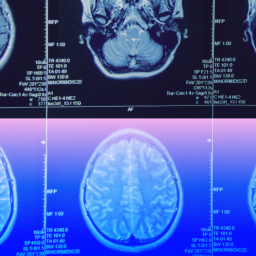
Brain imaging studies show that every time we learn a new task, we're changing our brain by expanding our neural network.

Google versus Facebook. Silicon Valley versus Hollywood. Wall Street versus Main Street. Increasingly, the rivalries and alliances that define our lives have nothing to do with kings, queens, or Congress. What we’re witnessing is a fundamental shift in the way our society is organized.

Information is power. The Internet has made it possible to share and spread information faster than ever before. Unprecedented levels of access to information means that democracy is bound to take root and flower in even the most authoritarian corners of the world -- right? Not necessarily, says MacKinnon.

James Cameron’s films may all cover wildly different terrain — the distant, futuristic planet Pandora in Avatar, an ill-fated Edwardian-era passenger liner in Titanic, and an alien-embattled underwater oil platform in […]

We all know them: parents whose children run wild in public, allowed to behave in ways that make the rest of us cringe and calculate privately how we can avoid […]