


Search
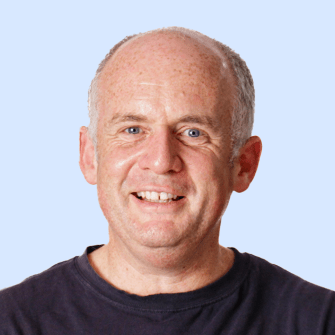
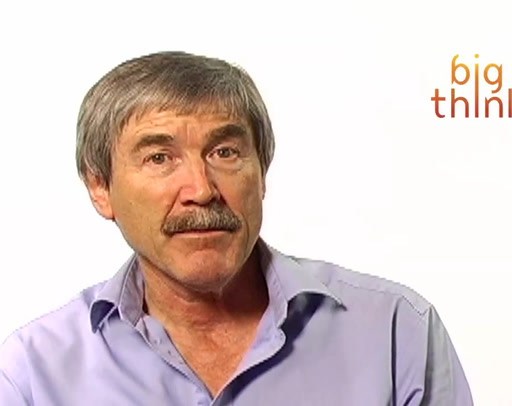
Paul Davies
Cosmologist & Astrobiologist, Arizona State University
Paul Davies is a theoretical physicist, cosmologist, astrobiologist, and bestselling author. He is Director of the Beyond Center for Fundamental Concepts in Science and co-Director of the Cosmology Initiative, both at Arizona State University. Previously he held academic appointments at the Universities of Cambridge, London and Newcastle upon Tyne in the UK, before moving to Australia in 1990, initially as Professor of Mathematical Physics at The University of Adelaide. Later he helped found the Australian Centre for Astrobiology in Sydney.
Davies’s research focuses on the “big questions” of existence, ranging from the origin of the universe to the origin of life, and include the nature of time, the search for life in the universe, and foundational questions in quantum mechanics. He helped create the theory of quantum fields in curved spacetime, with which he provided explanations for how black holes can radiate energy, and what caused the ripples in the cosmic afterglow of the Big Bang. In astrobiology, he was a forerunner of the theory that life on Earth may have come from Mars. He is currently championing the theory that Earth may host a shadow biosphere of alternative life forms.
Davies has lectured on scientific topics at institutions as diverse as The World Economic Forum, the United Nations, the Commission of the European Union, Google, Windsor Castle, The Vatican and Westminster Abbey, as well as mainstream academic establishments such as The Royal Society, The Smithsonian Institution, and the New York Academy of Sciences. Davies devised and presented a series of 45 minute BBC Radio 3 science documentaries and a one-hour television documentary about his work in astrobiology, entitled "The Cradle of Life." Among his bestselling books are "The Mind of God," "How to Build a Time Machine," and "The Goldilocks Enigma." His latest book, "The Eerie Silence," was published by Houghton Mifflin Harcourt in 2010.
Davies’s research focuses on the “big questions” of existence, ranging from the origin of the universe to the origin of life, and include the nature of time, the search for life in the universe, and foundational questions in quantum mechanics. He helped create the theory of quantum fields in curved spacetime, with which he provided explanations for how black holes can radiate energy, and what caused the ripples in the cosmic afterglow of the Big Bang. In astrobiology, he was a forerunner of the theory that life on Earth may have come from Mars. He is currently championing the theory that Earth may host a shadow biosphere of alternative life forms.
Davies has lectured on scientific topics at institutions as diverse as The World Economic Forum, the United Nations, the Commission of the European Union, Google, Windsor Castle, The Vatican and Westminster Abbey, as well as mainstream academic establishments such as The Royal Society, The Smithsonian Institution, and the New York Academy of Sciences. Davies devised and presented a series of 45 minute BBC Radio 3 science documentaries and a one-hour television documentary about his work in astrobiology, entitled "The Cradle of Life." Among his bestselling books are "The Mind of God," "How to Build a Time Machine," and "The Goldilocks Enigma." His latest book, "The Eerie Silence," was published by Houghton Mifflin Harcourt in 2010.
Read Less
4 min
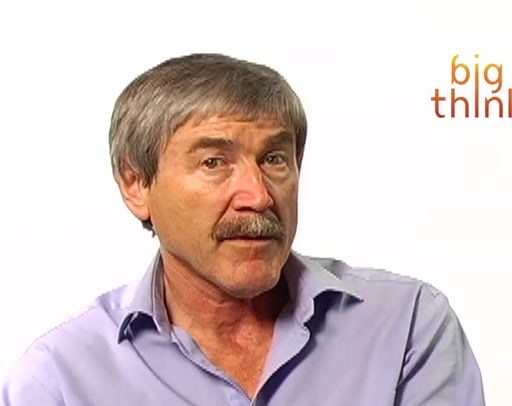
Seeking a “penicillin moment” in cancer research through a radically new approach.
3 min
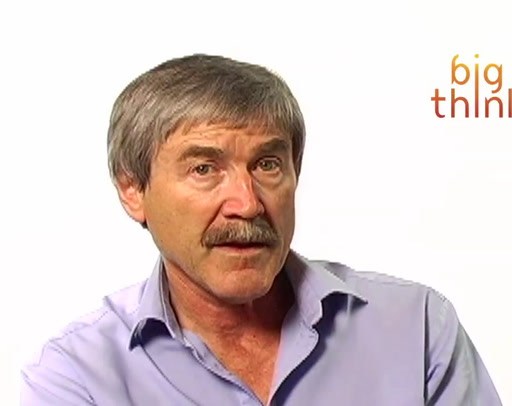
If humans contacted aliens, the astrobiologist would be the man in charge of sending the first message. So what would he say?
5 min
OK, Paul Davies admits it’s a “crazy idea.” But if we want to improve our search for ET, it’s the kind of idea we might need.
4 min
Good luck finding intelligent life within 1,000 light years. As for super-advanced alien civilizations, they’re probably closer to the center of the galaxy.
7 min
If we want to test the idea that life forms easily in Earthlike conditions, why not search for organisms outside our tree of life—right here on Earth?
5 min
“There’s no lack of real estate” where life might spring up in the universe. So why has our search for ET turned up nothing?
3 min
The theory that life on our planet originated on Mars was originally dismissed as a “crackpot notion.” It’s now considered a distinct possibility.