









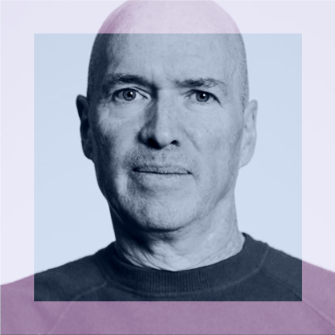
Ray Kurzweil

Ray Kurzweil

Co-Founder & Chancellor, Singularity University

A person with short brown hair wearing a blue checkered shirt, smiling slightly against a plain white background.

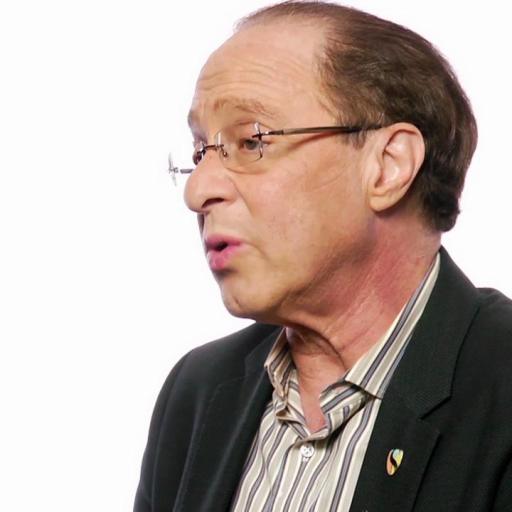
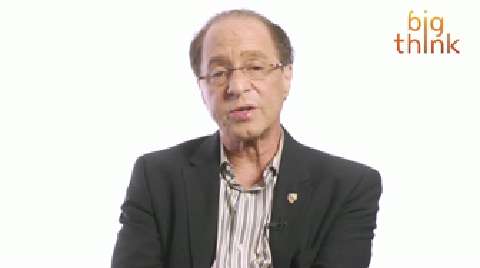
Ray Kurzweil is a world class inventor, thinker, and futurist, with a 35-year track record of accurate predictions. He was the principal inventor of the first CCD flat-bed scanner, the first omni-font optical character recognition, the first print-to-speech reading machine for the blind, the first text-to-speech synthesizer, and many more. For these achievements, he was selected as one of the top entrepreneurs by Inc. magazine, which described him as the “rightful heir to Thomas Edison.”

Ray has received a Grammy Award for outstanding achievements in music technology. He is also the recipient of the National Medal of Technology, was inducted into the National Inventors Hall of Fame, and holds honors from three US presidents. Ray has written five national best-selling books including The Singularity Is Near (2005) and How to Create a Mind (2012). He is also a principal researcher and AI visionary at Google, looking at the long-term implications of technology and society


A red hourglass sits against a background of swirling purple patterns.
Kurzweil predicts that AI will combine with biotechnology to defeat degenerative diseases this decade. Then things will get really interesting.
1mins
Technologist and futurist Ray Kurzweil says our brains, as complex as they are, are constrained by an upper limit of 300 million “pattern recognizers.” But our future, cloud-based “virtual brains” will have no such constraints.
1mins
In our most recent discussion with Ray, he discusses the ability of natural language machines, such as IBM's Jeopardy!-slaying computer named Watson, to overleap our own cognitive abilities. The result, he says, will be a computerized personal assistant to help us throughout the day.
3mins
Your computer will be an assistant that helps you through the day, will answer your questions before you ask them or even before you realize you have a question
2mins
Ray Kurzweil is the author of the book How to Create a Mind. The first question we have for him is “why create a mind?”
Being funny, being sexy or expressing a loving sentiment - that's the cutting edge of human intelligence. 
2mins
The basic technologies to enable us to look inside the brain and see its functioning are growing exponentially. And they're at a point now where we can actually see individual interneural connections forming and firing.
I'm not actually predicting that until 2029 that we will match human intelligence, but computers will nonetheless do things that humans can't do.
We won't be able to solve the major problems that we have without more intelligence. 
I think you have a very different perspective on the future when you consider the exponential growth of information technology.  
My prediction is, in a few decades, we will come to accept entities that are not biological as conscious. 
There's a million apps out there, and if you look through all of them they're doing remarkable things. 
Intelligence actually involves things like being funny, being sexy or expressing a loving sentiment, maybe in a poem or in a musical piece. 
I did do an analysis of the 147 predictions I did for 2009 in my book, The Age of Spiritual Machines, which I wrote in the mid to late 1990’s […]
All too often we get plans which have this common assumption that the future’s going to be just like today.
Ray Kurzweil is the author of the recent book How to Create a Mind. The first question we have for him is "why create a mind?"
1mins
Ray Kurzweil has developed six epochs for stages in the evolution of information.
In 10 years we’ll have three dimensional virtual realities that will seem just like real reality, beamed straight from eyeglasses into our retinas.