












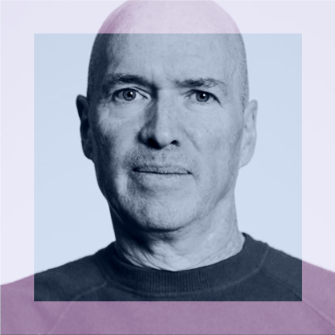

Sam Wang

Sam Wang

Neuroscientist, Princeton University

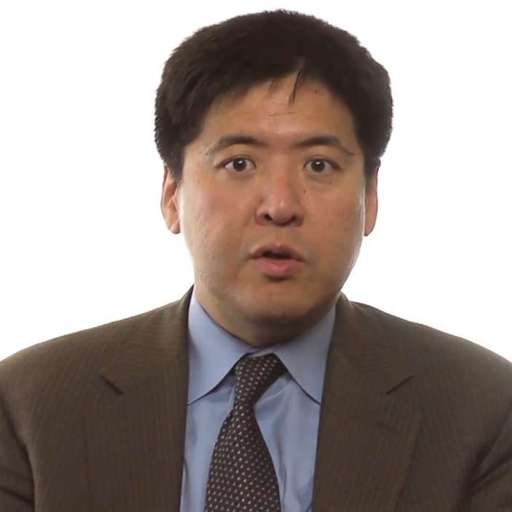
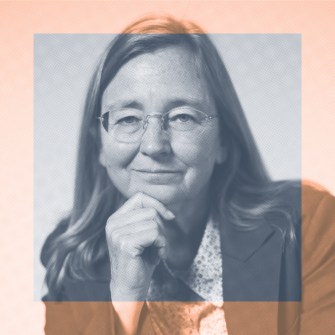
Sam Wang is an associate professor, Department of Molecular Biology and the Princeton Neuroscience Institute. 

Wang grew up in California and studied physics at the California Institute of Technology. Seeking his Ph.D. at Stanford University, he switched to neuroscience. He has worked at Duke University as a postdoctoral fellow and aided political leaders as a Congressional Science Fellow. After completing his postdoctoral studies, he spent two years at Bell Laboratories in Murray Hill, N.J., where he learned to use pulsed lasers to study brain signaling before coming to Princeton.

Wang, who has published more than 40 articles on the brain in leading scientific journals. His educational reach extends past the laboratory and classroom in his books, popular articles and efforts to convey neuroscience to interested nonscientists.


A good half the time, I’m doing what I want to do, which is very rewarding.  It’s like play.
Is willpower something that we’re born with and live with our entire lives? 
We have old genes that are well adapted to living in some previous environment that are constantly encountering new environments. 
Stress at critical periods of development can be bad for the developing brain.
As long as the stress is transient, and then taken away, that seems to be a feature that leads to better stress responses later on. 
Family size is a much larger determinate of personality than the order of one’s birth. 
Brushing your teeth with the wrong hand can increase things that might matter to you much more, like sticking with an exercise program. 
1mins
Children exposed to two languages before their first birthday enjoy myriad cognitive benefits.
2mins
Two things that are intuitively obvious to most parents – the importance of teaching children self-discipline and the educational power of fun – are also unusually well-supported by science.
Studies in neuroscience over the last few decades have confirmed an idea originally suggested by philosophers and psychologists: how much the brain can change in response to our experiences.
Listening to Mozart does not improve your child's cognitive development. Reading Shakespeare will. 
Passive acts, like listening to Mozart, will not make your child smarter. On the other hand, active engagement–learning to play an instrument or processing words–improves mental functioning. For instance, there […]
4mins
Sam Wang says Google is a trade-off between rapid knowledge and knowledge retention.
3mins
Neuroscientist Sam Wang on the nexus between genetics and development.
3mins
Sam Wang says a mentally engaged lifestyle is the best training for the brain.
5mins
Sam Wang explores the state of autism prevention and therapy.
2mins
Sam Wang on Happiness and the Brain.
10mins
Over the last few decades neuroscientists have come to appreciate how much the brain can change.
4mins
Sam Wang debates genius vs. hard work.
12mins
Sam Wang discusses his book, ‘Welcome to Your Brain.’