







Shai Tubali

Shai Tubali

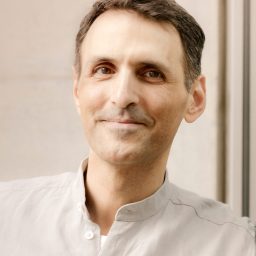
A person with short hair wearing a light-colored shirt is smiling slightly while standing indoors.

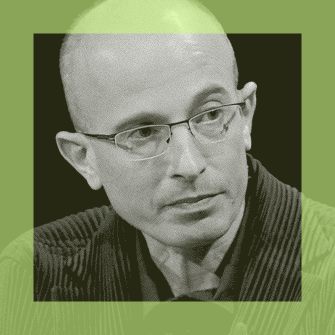
Shai Tubali is a philosopher and researcher specializing in the philosophy of religion, consciousness studies, and artificial intelligence. He holds a Ph.D. in the philosophy of religion from the University of Leeds, where his dissertation explored transformative dialogue across Eastern and Western traditions, particularly through the lens of Pierre Hadot and Jiddu Krishnamurti. Recently completing a postdoctoral research fellowship at the University of Leeds, Shai's work examined how AI mirrors human cognitive processes and raises existential questions.

Author of 21 books, Shai’s writings include The Transformative Philosophical Dialogue (Springer Nature, 2023) and Cosmos and Camus: Science Fiction and the Absurd (Peter Lang, 2020). His interdisciplinary approach connects existentialism, Indian philosophy, and the ethical implications of AI, making him a unique voice in exploring human consciousness and technology. Beyond academia, Shai engages a wide audience through articles, workshops, and media appearances, translating complex philosophical ideas into practical insights.
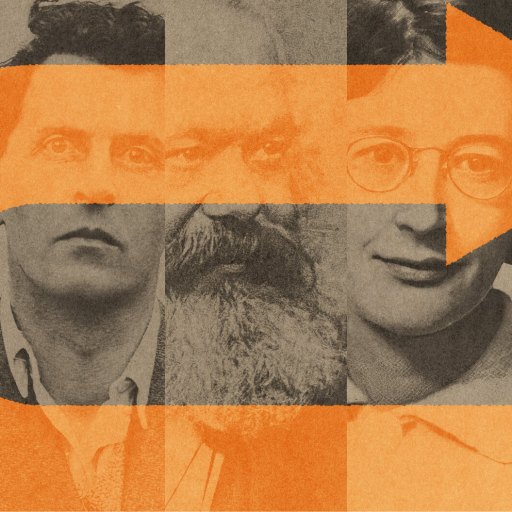
An orange arrow looping to the right is overlaid on a collage of black-and-white portraits of philosophers.
Philosophers rarely change their minds. These thinkers did — often at social and professional cost.
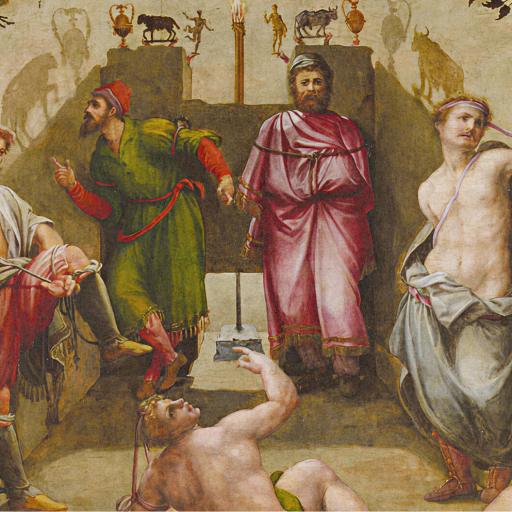
A group of people in ancient attire react to shadows cast on a wall, referencing Plato’s Allegory of the Cave.
Why some of philosophy’s strangest scenarios are more than mental games.
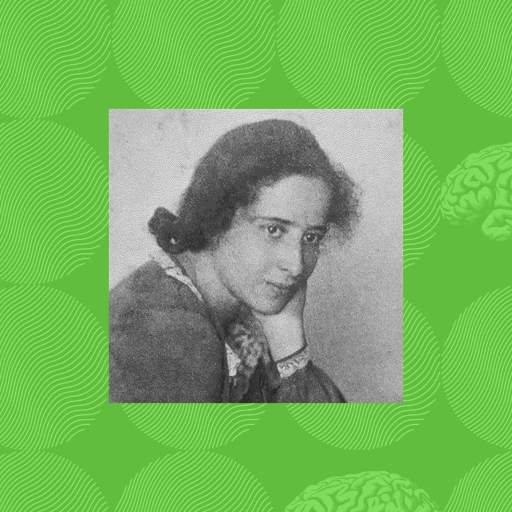
Black and white photo of a young woman resting her chin on her hand, set against a green background with circular and brain patterns.
Arendt thought 20th-century philosophy had become too passive and abstract. She called for "active thinking" that prepares us to live in the real world.
A stone bust of a bearded figure with an orange band across its forehead displaying several question marks.
“It’s much more interesting to live not knowing than to have answers that might be wrong.”
Map of Europe overlaid with an image of a contemplative monkey, set against a dark blue grid background.
Whether we should tear down philosophy’s Berlin Wall and let East and West finally merge depends entirely on what we think philosophy is—and what it’s for.
View of Earth rising over the Moon’s surface against a black space backdrop, captured during an Apollo mission.
If humanity lives in an otherwise barren Universe, we'll have to forge philosophy that fills the void.