






Search

Our mission is to answer the biggest questions of all, scientifically.
What is the Universe made of? How did it become the way it is today? Where did everything come from? What is the ultimate fate of the cosmos?
For most of human history, these questions had no clear answers. Today, they do. Starts With a Bang, written by Dr. Ethan Siegel, explores what we know about the universe and how we came to know it, bringing the latest discoveries in cosmology and astrophysics directly to you.
Read Less
with
Full Profile
Ethan Siegel is an award-winning PhD astrophysicist and the author of four books, including The Grand Cosmic Story, published by National Geographic.

Protected: Ask Ethan: Could evolving dark energy lead to a Big Crunch?
There is no excerpt because this is a protected post.

Two parts of our Universe that seem to be unavoidable are dark matter and dark energy. Could they really be two aspects of the same thing?
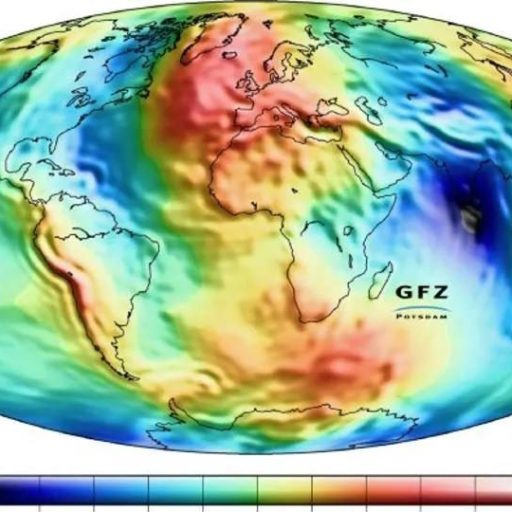
Scalars, vectors, and tensors come up all the time in physics. They're more than mathematical structures. They help describe the Universe.
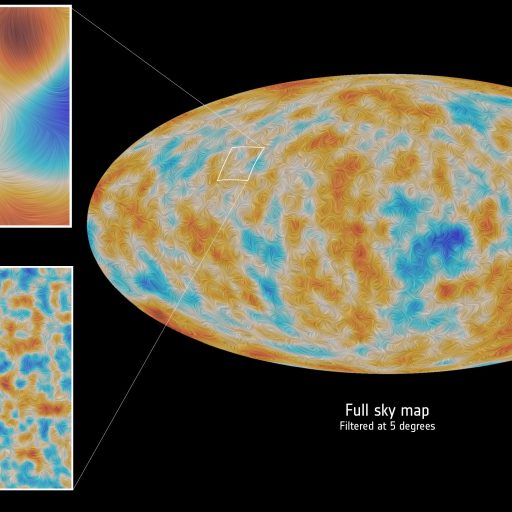
Since the mid-1960s, the CMB has been identified with the Big Bang's leftover glow. Could any alternative explanations still work?
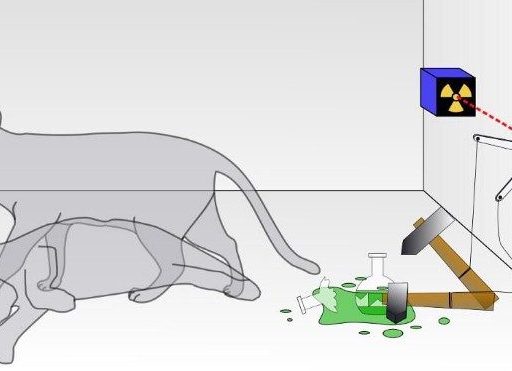
Our classical intuition is no good in a quantum Universe. To make sense of it, we need to learn, and apply, an entirely novel set of rules.

It's the ultimate setup for a Thanksgiving Day disaster. The physics of water and its solid, liquid, and gas phases compels us not to do it.
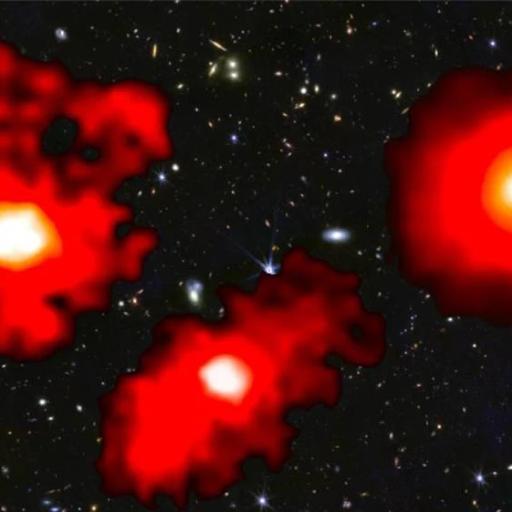
The most massive early galaxies grew up faster, and have more stars, than astronomers expected, according to JWST. What does it all mean?
There are a few small cosmic details that, if things were just a little different, wouldn't have allowed our existence to be possible.