






Search
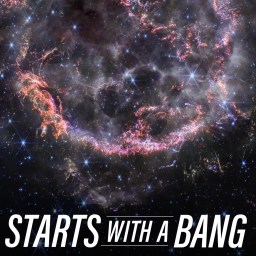
Our mission is to answer the biggest questions of all, scientifically.
What is the Universe made of? How did it become the way it is today? Where did everything come from? What is the ultimate fate of the cosmos?
For most of human history, these questions had no clear answers. Today, they do. Starts With a Bang, written by Dr. Ethan Siegel, explores what we know about the universe and how we came to know it, bringing the latest discoveries in cosmology and astrophysics directly to you.
Read Less
with
Ethan Siegel
Ethan Siegel is an award-winning PhD astrophysicist and the author of four books, including The Grand Cosmic Story, published by National Geographic.

Full Profile
Groupthink in science isn’t a problem; it’s a myth
Scientists are notoriously resistant to new ideas. Are they falling prey to groupthink? Or are our current theories just that successful?
As early as we've been able to identify them, the youngest galaxies seem to have large supermassive black holes. Here's how they were made.
For 550 million years, neutral atoms blocked the light made in stars from traveling freely through the Universe. Here's how it then changed.
Even after the first stars form, those overdense regions gravitationally attract matter and also merge. Here's how they grow into galaxies.
The first stars in the Universe were made of pristine material: hydrogen and helium alone. Once they die, nothing escapes their pollution.
The first stars took tens or even hundreds of millions of years to form, and then died in the cosmic blink of an eye. Here's how.
The Big Bang's hot glow faded away after only a few million years, leaving the Universe dark until the first stars formed. Oh, the changes!
The Universe is an amazing place. Under the incredible, infrared gaze of JWST, it's coming into focus better than ever before.