











Starts With A Bang

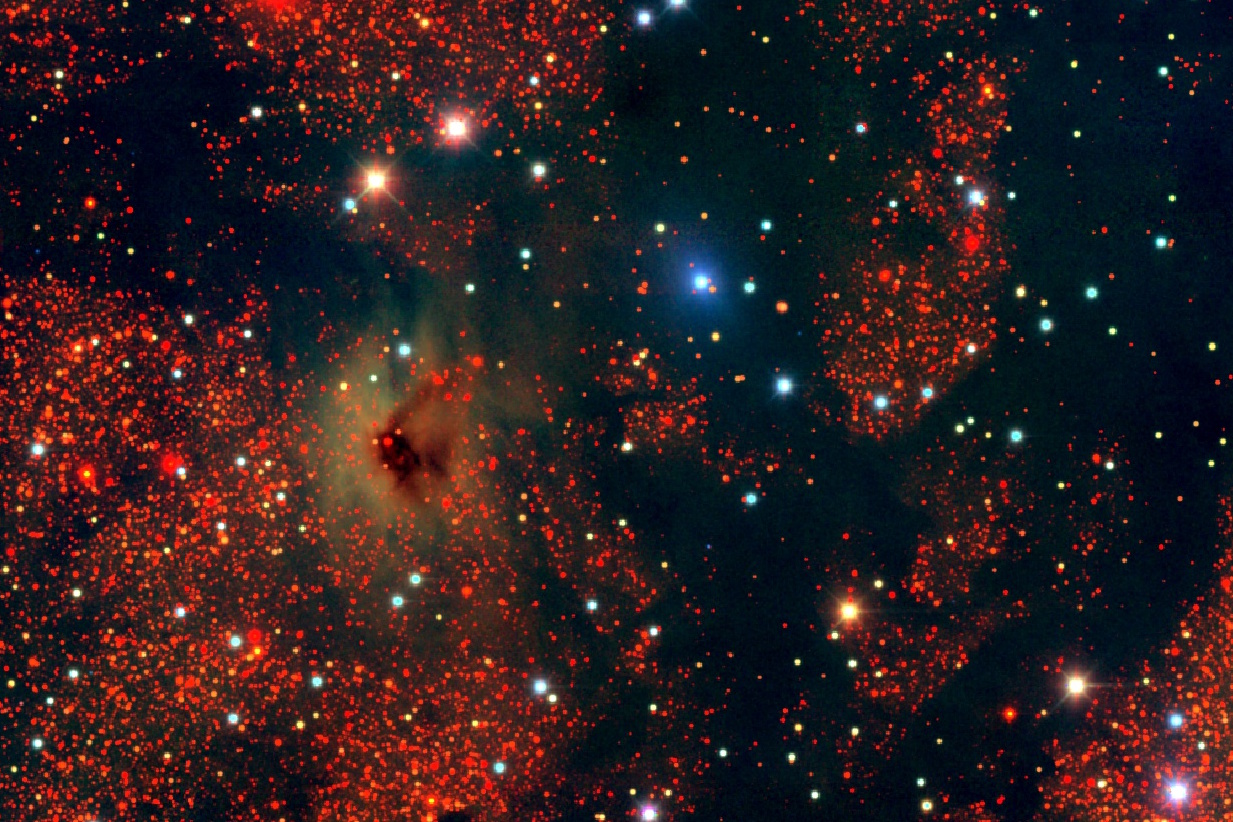
A dense starfield, with various colored stars shimmering through a dark cloud-like formation, lies against a deep black background in the mysterious zone of avoidance.
The Universe is out there, waiting to be discovered

Our mission is to answer the biggest questions of all, scientifically.

What is the Universe made of? How did it become the way it is today? Where did everything come from? What is the ultimate fate of the cosmos?

For most of human history, these questions had no clear answers. Today, they do. Starts With a Bang, written by Dr. Ethan Siegel, explores what we know about the universe and how we came to know it, bringing the latest discoveries in cosmology and astrophysics directly to you.

with Ethan Siegel
Ethan Siegel is an award-winning PhD astrophysicist and the author of four books, including The Grand Cosmic Story, published by National Geographic.

Full Profile
A bald man with a long beard and handlebar mustache gestures with his hands against a backdrop of an upside-down cityscape wearing a purple shirt.
Groupthink in science isn’t a problem; it’s a myth
Scientists are notoriously resistant to new ideas. Are they falling prey to groupthink? Or are our current theories just that successful?

Ethan Siegel

solar system model
pulse light quantum tunnel barrier
In all the Universe, only a few particles are eternally stable. The photon, the quantum of light, has an infinite lifetime. Or does it?
cosmic rays
Our Universe requires dark matter in order to make sense of things, astrophysically. Could massive photons do the trick?
how many planets
For some reason, when we talk about the age of stars, galaxies, and the Universe, we use "years" to measure time. Can we do better?
travel straight line
Is the Universe finite or infinite? Does it go on forever or loop back on itself? Here's what would happen if you traveled forever.
first contact
Life arose on Earth very early on. After a few billion years, here we are: intelligent and technologically advanced. Where's everyone else?
terraforming
The first world that humans should inhabit beyond the Earth is the Moon, not Mars. Here's why terraforming our lunar neighbor is so appealing.
cosmic inflation
Many contrarians dispute that cosmic inflation occurred. The evidence says otherwise.