




Strange Maps

White text on a light gray background reads "Strange Maps" in a large, decorative font.
The world, seen sideways

Most maps show the world as something to be navigated. Strange Maps reveals the worlds humans have imagined.

Since 2006, Frank Jacobs has been collecting and interpreting maps that do more than chart geography or political borders. These maps — often obscure, beautiful, funny, and deeply revealing — each tell a story, usually one that’s more about how we see ourselves than where we are.

Published as a book in 2009 and a Big Think column since 2010, Strange Maps draws on a steady stream of reader submissions and rare discoveries. Together, they offer a way of seeing the world from unfamiliar angles, where cartography becomes culture, argument, and art.

with

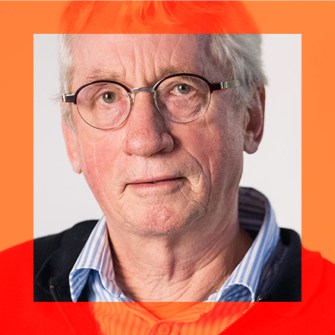
Frank Jacobs is a journalist whose work explores how culture, history, and imagination shape the way we see the world.
Full Profile
strange maps
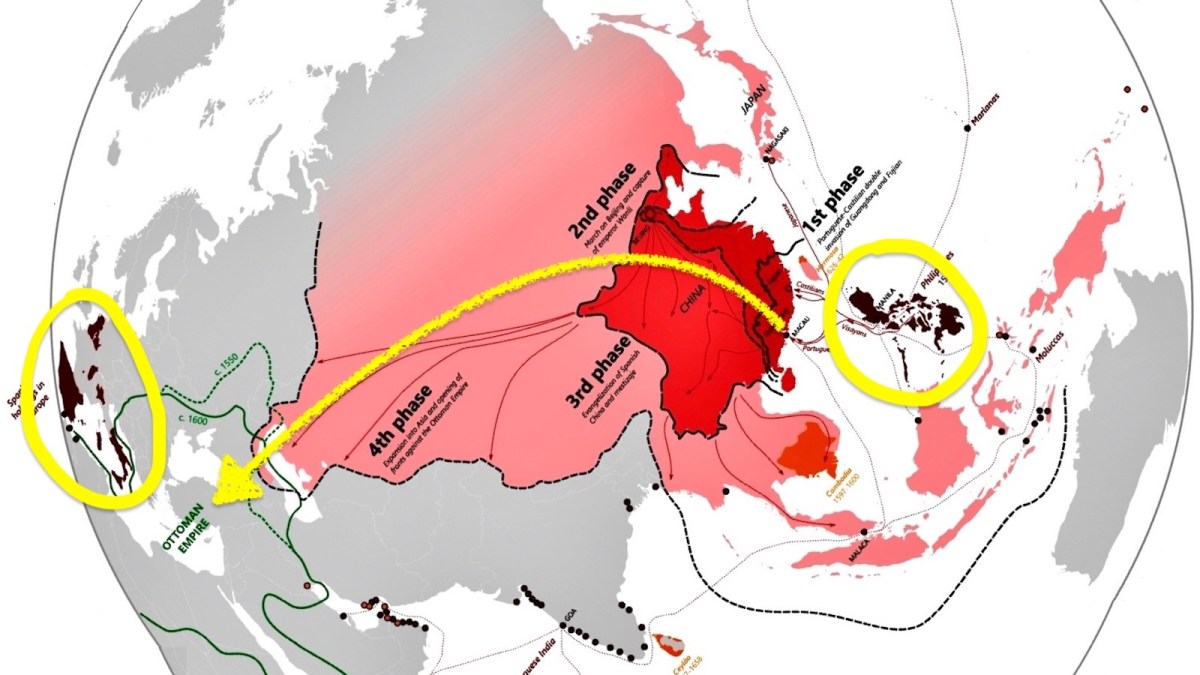
“The Chinese Job”: Spain’s wild 1580s plan to conquer the world — via Beijing
The plan — conquer China and push west to attack the Ottomans — was peak imperial hubris, as the Spanish themselves eventually realized.

Frank Jacobs

A color-coded map of Asia shows four migration phases from China, with arrows pointing toward Papua New Guinea and the Andaman Islands, both circled in yellow.
A raised hand with bracelets is shown in focus against a blurred background of people indoors.
Nearly 30 would be "nones" — an amorphous group that spans from zealous atheists to the vaguely spiritual.
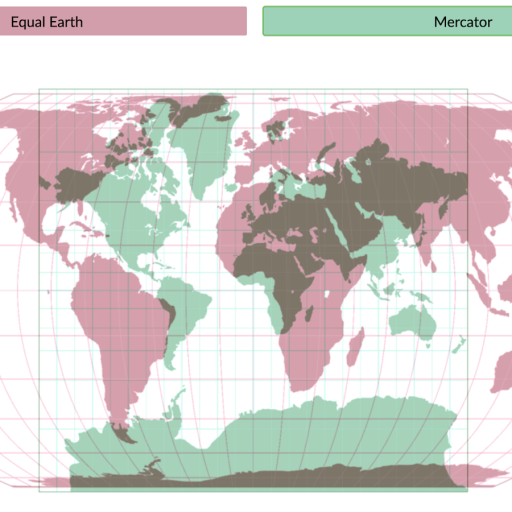
A world map comparing landmass outlines of the Equal Earth projection in pink and Mercator projection in green, with grid lines overlaid.
The African Union argues that the Mercator projection distorts the continent, both in size and global attention.
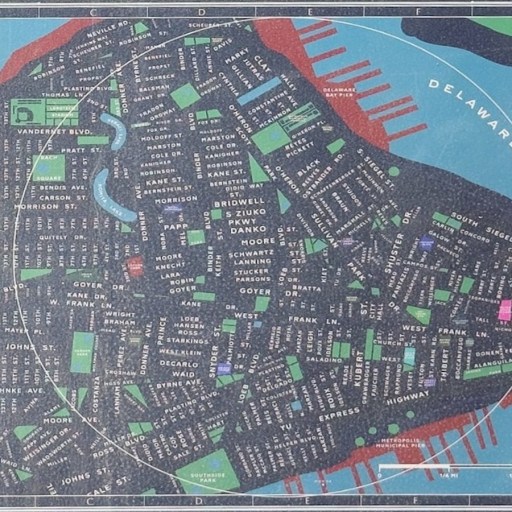
Illustrated map showing streets, parks, and landmarks of a coastal city bordered by Hob's River and Delaware Bay, with a compass rose in the lower right corner.
The latest "Superman" film sets Metropolis in the First State.
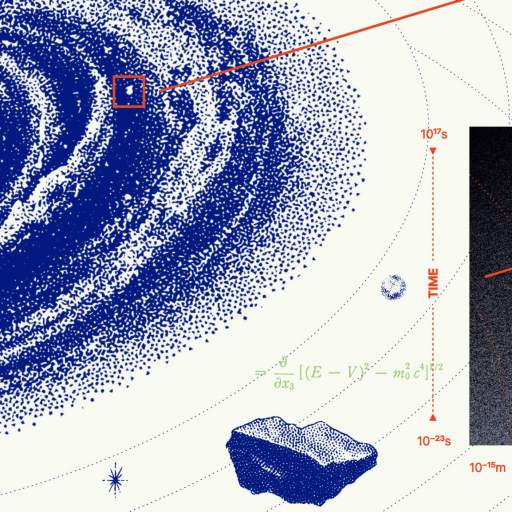
Diagram showing a galaxy, zooming in to highlight a small area labeled "Human Experience" within a grid mapping time and space on logarithmic scales.
Science helps us imagine the vastness of space and time — and our small but meaningful place within it.
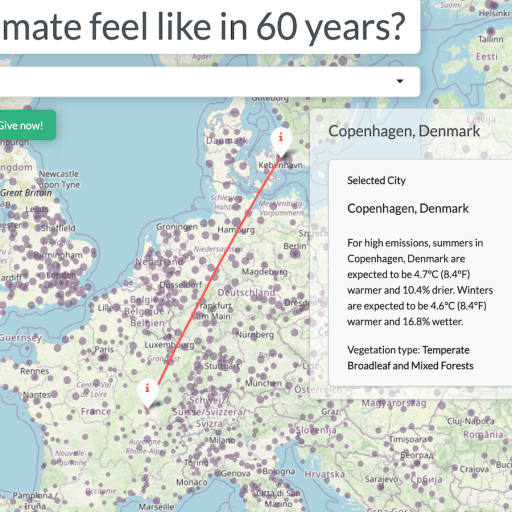
Map showing Copenhagen, Denmark’s projected 2080 climate as similar to Demigny, France today, with a red arrow connecting the two cities and climate details listed in pop-up boxes.
“Climate analog mapping” finds the place that is currently as warm as your city might be in 60 years.
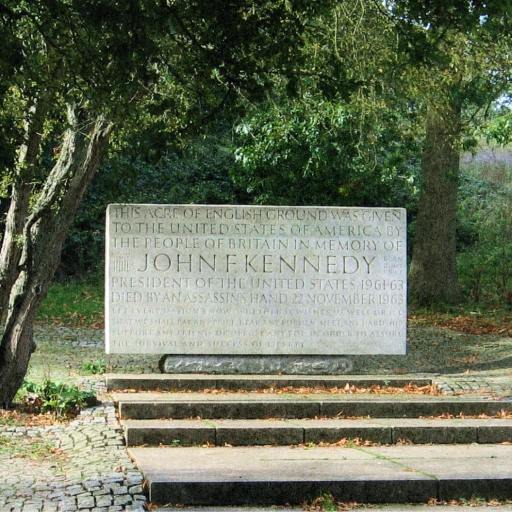
Granite memorial stone for John F. Kennedy, surrounded by trees and located on a paved area with steps. Inscription dedicates the site from the people of Britain to the United States.
The JFK Memorial at Runnymede provides a link between America's and Britain's founding documents.
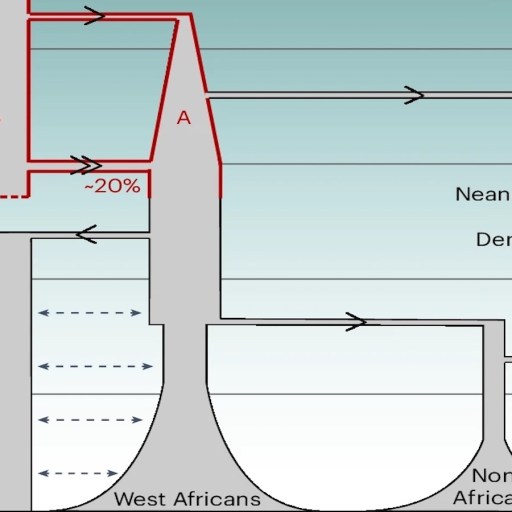
Diagram showing human evolutionary relationships and gene flow among Khoisan, West Africans, Non-Africans, Neanderthals, and Denisovans over time, with percentages of genetic admixture indicated.
After more than a million years of separation, two branches of humanity reunited around 300,000 years ago, suggests new research.
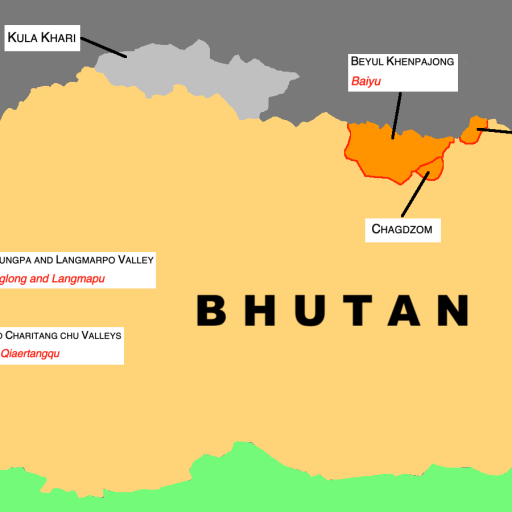
Map of Bhutan showing its borders with China and India, highlighting several disputed regions with labels indicating their names and locations.
As Beijing encroaches on the territory of the Himalayan kingdom, its ultimate aim is leverage over India.
Map showing income per capita in 1300 (US dollars, 1990 PPP) across Europe, the Middle East, North Africa, and Asia, with regions shaded by income brackets.
A comparison of wealth gaps in ancient empires reveals stark differences and lasting consequences.
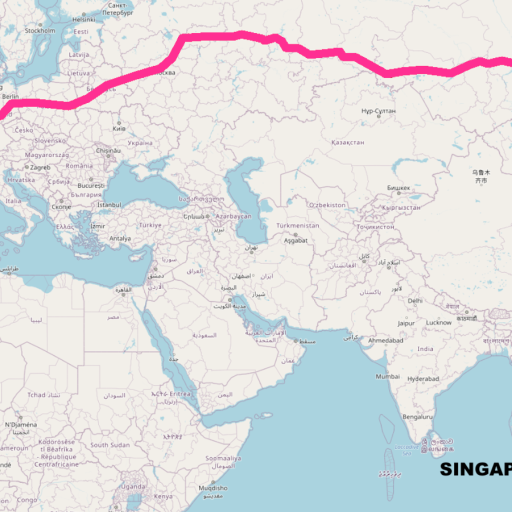
Map showing a pink route line from Lagos, Nigeria to Singapore, crossing Europe and Asia. Lagos and Singapore are labeled with bold text and marked with colored dots.
Can you travel by rail from Portugal all the way to Singapore? In theory, yes. In practice? Not so much.
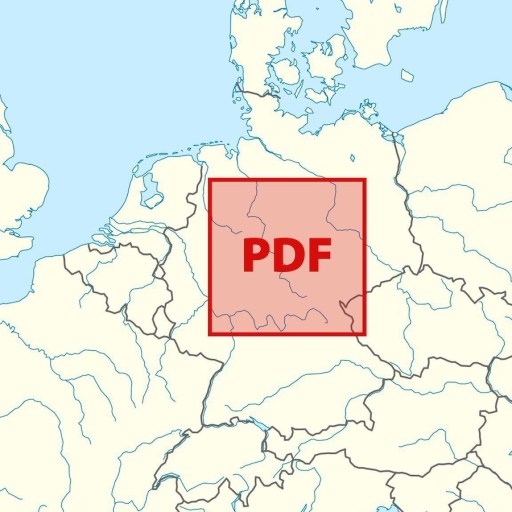
Map highlighting an area in Europe, centered on the Netherlands and surrounding countries, with a red overlay labeled "PDF.
Common knowledge says the maximum size of a PDF is as big as 40% of Germany — but that’s a gross underestimate.
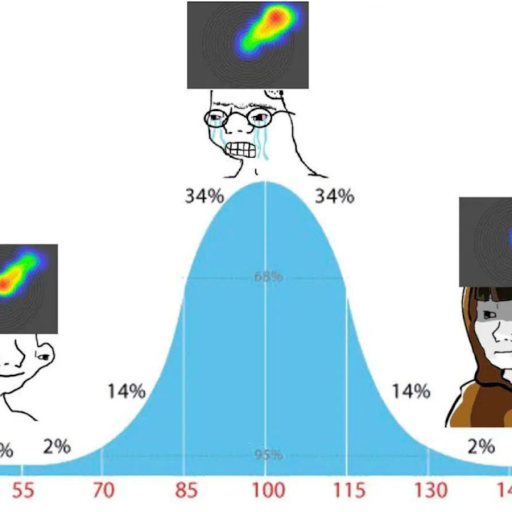
Illustrated bell curve depicting IQ distribution with meme characters at various IQ levels: 70, 100, and 130, representing different intellectual stereotypes.
A study on the “moral circles” of liberals and conservatives gets drafted into the culture wars — with mixed results.
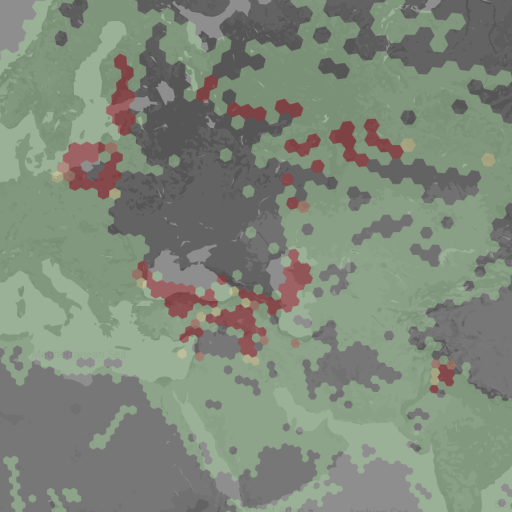
Hexagonal map showing Europe, parts of Asia, and North Africa in varying shades of green and gray, with clusters of red and purple indicating specific regions.
"Gyroscope-on-a-chip" technology could soon enable us to navigate over long distances without GPS.
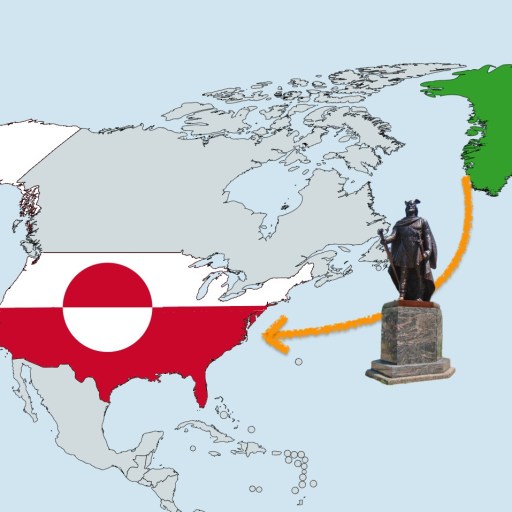
A map showing Greenland in green and the United States in red with a statue connected by arrows, indicating movement or relation between the two locations.
"It’s only natural for us to get America back," quipped Kim Kielsen, former prime minister of Greenland, in 2019.
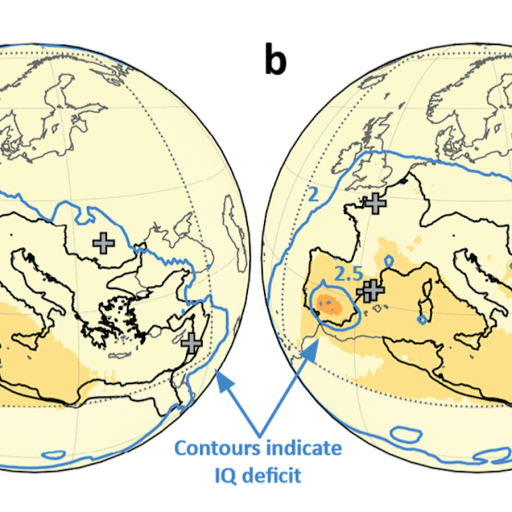
Map showing regions in Europe and North Africa. Two parts labeled 'a' and 'b' highlight areas with IQ deficit contours. Several crosses are marked on the map.
The Roman Empire at one point emitted roughly 3,600 tons of lead dust per year, causing “widespread cognitive decline.”
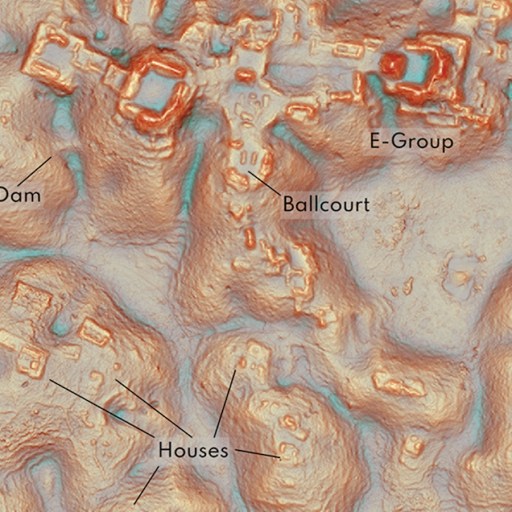
An aerial view of a topographic map showing labeled features: Dam, Ballcourt, E-Group, and Houses, with varying elevation and terrain details.
Dubbed "Valeriana" by researchers, the city of 50,000 peaked around 800 AD before being swallowed by the jungle.
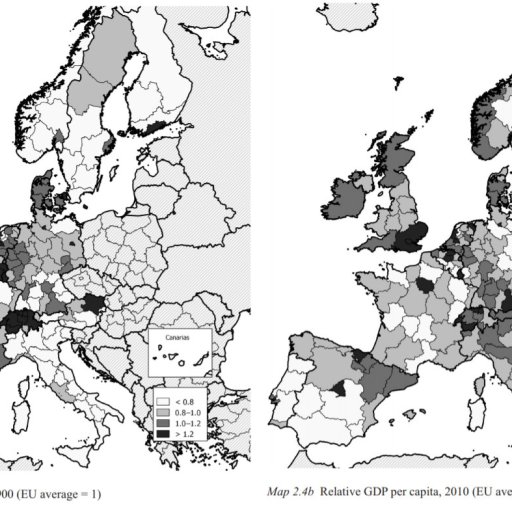
Two maps show relative GDP per capita in Europe comparing 1900 and 2010. Darker shades indicate higher GDP relative to the EU average.
In 1900, the UK clearly was the richest country in Europe. That's no longer the case.
Map showing migration routes across the Pacific and Atlantic Oceans to the Indian Ocean, with sightings marked by colors and dates.
In 8,000-mile journey, a male humpback ditches Colombia for Tanzania — however, scientists don’t know why he made the trip.
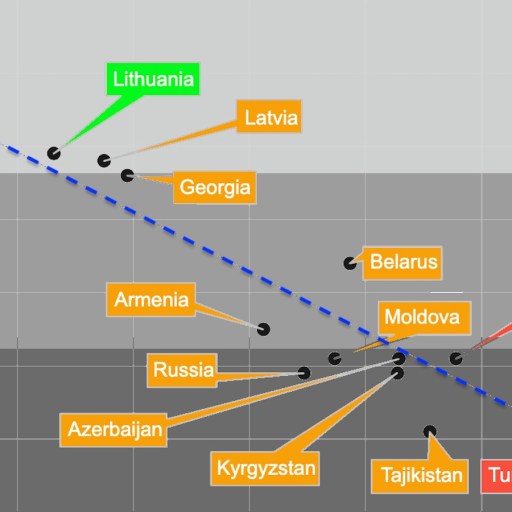
In post-Soviet nations where ministers have a relatively high BMI, corruption tends to be high, too.
Map displaying a rail route from Helsinki to Bruxelles, passing through cities like Tallinn, Riga, Warsaw, Berlin, and Hamburg. Northern and Central Europe countries are labeled.
A new railway will switch the Baltic region's train gauge from Soviet to standard European — a megaproject with political, economic, and military dimensions.