














Astrophysics

Astrophysics

solar system model Groupthink in science isn’t a problem; it’s a myth
Scientists are notoriously resistant to new ideas. Are they falling prey to groupthink? Or are our current theories just that successful?
ufo lights liverpool Why aliens might not “speak physics” the same way we do
Physicist Daniel Whiteson challenges the notion that all intelligent species would eventually uncover the same laws of nature. Do you agree?
An image of El Gordo, a massive galaxy cluster captured by Hubble Where does the expanding Universe begin?
The planet, the Solar System, and the galaxy aren't expanding. But the whole Universe is. So where does the dividing line begin?
dark matter 5 undeniable, truthful facts about dark matter
Dark matter has never been directly detected, but the astronomical evidence for its existence is overwhelming. Here's what to know.
A dense cluster of differently sized red, blue, and green spheres overlaps against a black background, evoking the biggest mysteries surrounding the origin of the universe. We still don’t know how “hot” the hot Big Bang was
We've long known we can't go back to infinite temperatures and densities. But the hottest part of the hot Big Bang remains a cosmic mystery.
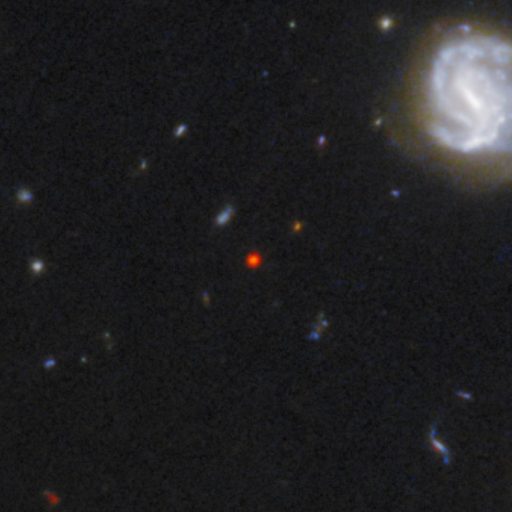
quasar-galaxy hybrid Is our first “galaxy-quasar hybrid” also a Little Red Dot?
Found by Hubble before JWST's launch, GNz7q looked like a mix of a galaxy and a quasar. Was it actually our first known "little red dot"?
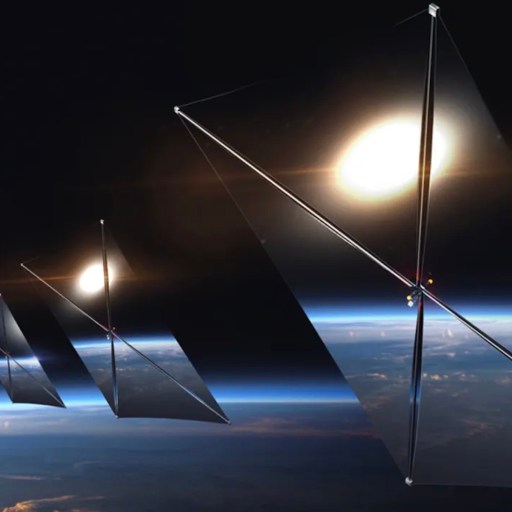
A series of solar sail spacecraft harvest solar power at night, floating above Earth's atmosphere with the sun shining in the background. The true cost of “solar power at night” with Reflect Orbital
Solar power has the disadvantage that there's no Sun at night. Satellite startup Reflect Orbital wants to change that, but at what cost?
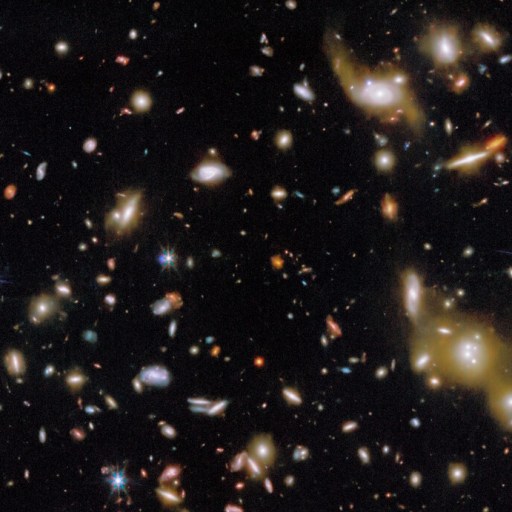
A view of deep space showing numerous galaxies of various shapes and sizes scattered across a dark background. Starts With A Bang podcast #122 – Galaxy evolution and JWST
To learn how our Universe grew up, we have to look at large numbers of galaxies at all distances to find out. Good thing we have JWST!
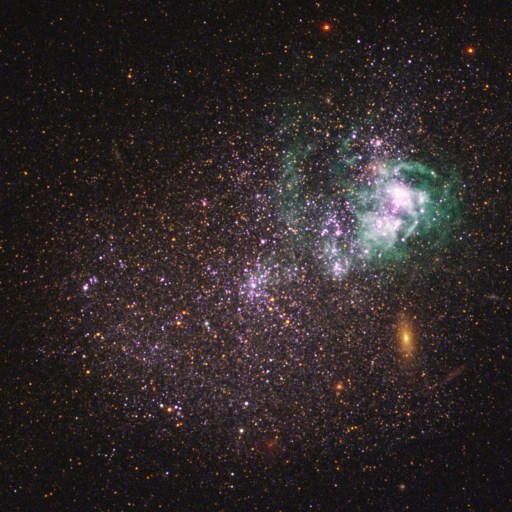
A colorful, irregular galaxy with bright clusters of stars, some possibly from a generation stars before sun, and nebulae against a dark background scattered with distant stars. Ask Ethan: How many generations of stars came before the Sun?
Our Sun only arose after 9.2 billion years of cosmic history: with many stars living and dying first. How many prior generations were there?
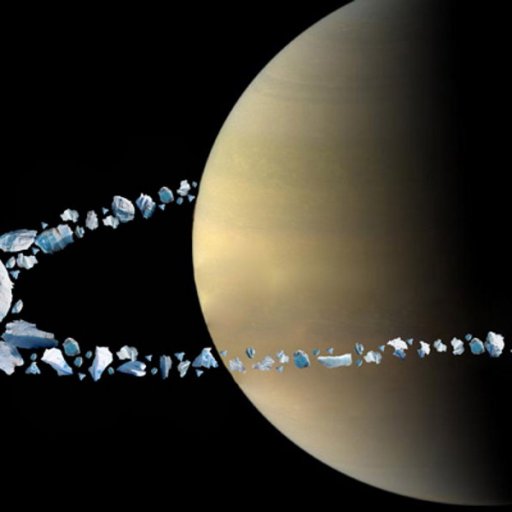
400 years later, astronomers finally understand Saturn’s rings
Since the time of Galileo, Saturn's rings have remained an unexplained mystery. A new idea may have finally solved the longstanding puzzle.
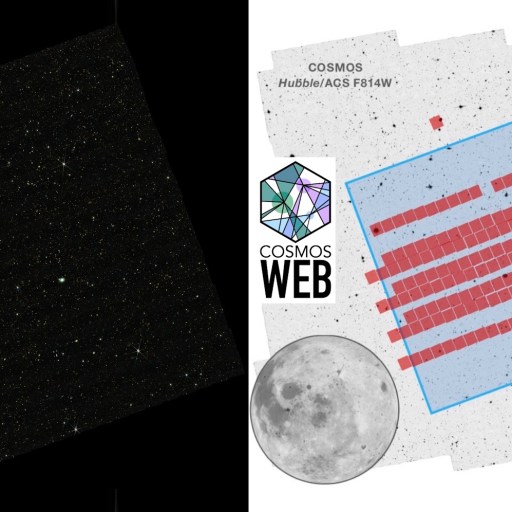
A split image shows a star field on the left and a COSMOS-Web survey area diagram on the right, with labeled NIRCam and MIRI footprints alongside the moon for scale, highlighting galaxies explored by JWST science. COSMOS-Web unveils JWST’s newest gravitational lenses
By deeply imaging a large volume of space, COSMOS-Web provides JWST's widest cosmic views. Its gravitational lenses reveal a big surprise.
Ask Ethan: How and when will the Universe die?
As the Universe ages, it continues to gravitate, form stars, and expand. And yet, all this will someday end. Do we finally understand how?
What do distant observers see when they look at Earth?
From here on Earth, looking farther away in space means looking farther back in time. So what are distant Earth-watchers seeing right now?
An astronaut stands proudly on the moon's surface near scientific equipment and a lunar lander, as the American flag waves in the background, symbolizing a pioneering USA nation. Thousands of NASA employees to bid farewell to the NASA they knew
As October begins, thousands of longtime NASA employees are leaving the agency. 4000+ will exit by January 9, 2026, changing NASA forever.
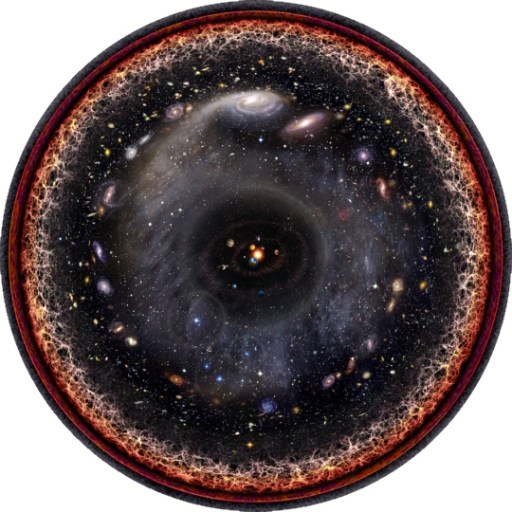
A circular diagram illustrating the observable universe, showing planets, stars, galaxies, and cosmic background radiation layers—revealing where Big Bang echoes still linger. Ask Ethan: Where are we located relative to the Big Bang?
If you think of the Big Bang as an explosion, we can trace it back to a single point-of-origin. But what if it happened everywhere at once?
black hole Even before the Big Bang, space wasn’t truly empty
All of the matter that we measure today originated in the hot Big Bang. But even before that, and far into the future, it'll never be empty.
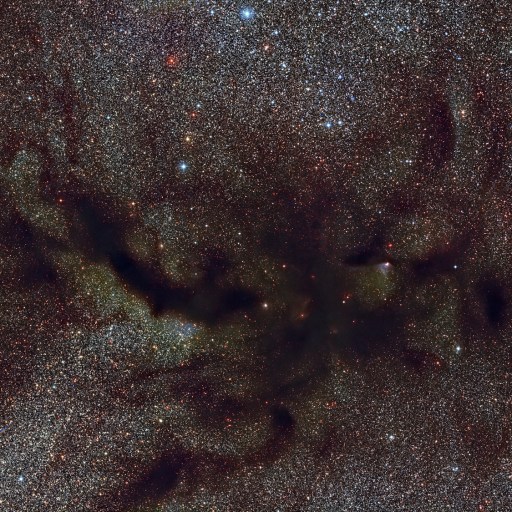
A dense star field with dark, irregular dust clouds—where cosmic dust come from—obscures parts of the glowing stars in the Milky Way. Ask Ethan: Where does cosmic dust come from?
Dust is ubiquitous in the modern Universe, appearing in nearly all galaxies. But our cosmos was born dust-free. So where does it originate?
Book cover of "Facing Infinity: Black Holes and Our Place on Earth" by Jonas Enander, exploring the mysteries priest black holes hold, next to the text "an excerpt from" on a split blue and beige background. Centuries before Stephen Hawking, an isolated priest imagined black holes
In this excerpt from "Facing Infinity," Jonas Enander examines how John Michell conceived of "dark stars," or massive bodies with enough gravity to trap light, all the way back in 1783.
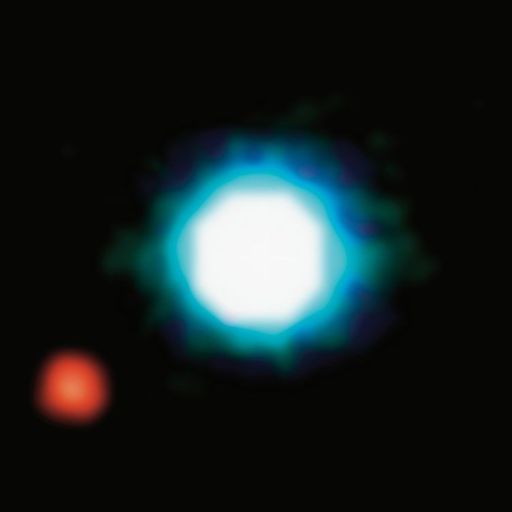
A bright, circular blue and white object is centered against a black background, with a smaller red object to the lower left. Starts With A Bang podcast #121 – Direct exoplanet imaging
Going back to 1990, we hadn't even found one planet outside of our Solar System. As we close in on 6000, we now see many of them directly.
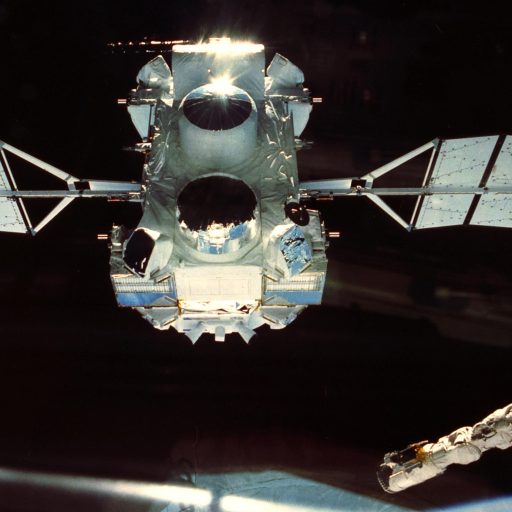
Compton gamma-ray observatory deployment The Sun is fainter than the Moon, at least in gamma-rays
Across all wavelengths of light, the Sun is brighter than the Moon. Until we went to the highest energies and saw a gamma-ray surprise.
An artist's rendering of the nasa jupiter spacecraft. NASA to needlessly kill Juno mission to Jupiter this month
The Juno spacecraft, orbiting and imaging Jupiter since 2016, is still succeeding. Without a further extension, the mission now faces death.
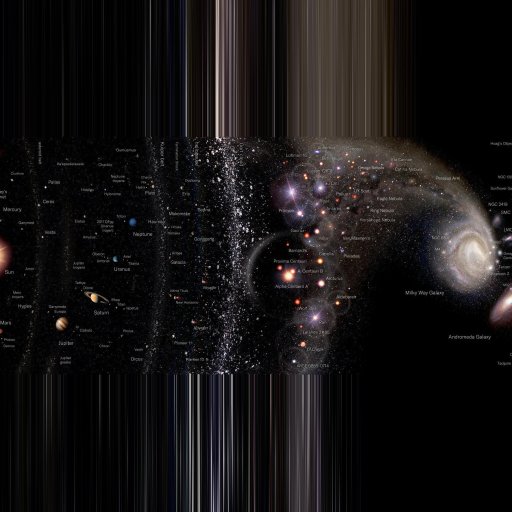
See the whole Universe at once in this unique logarithmic view
As we look to larger cosmic scales, we get a broader view of the expansive cosmic forest, eventually revealing the grandest views of all.
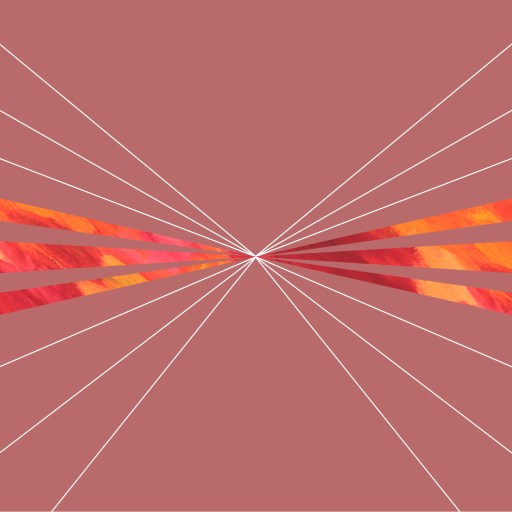
a red and orange abstract background with lines. Mass misconception: The real reason we can’t outpace light speed
Explanations for the cosmic speed limit often conflate mass with inertia.
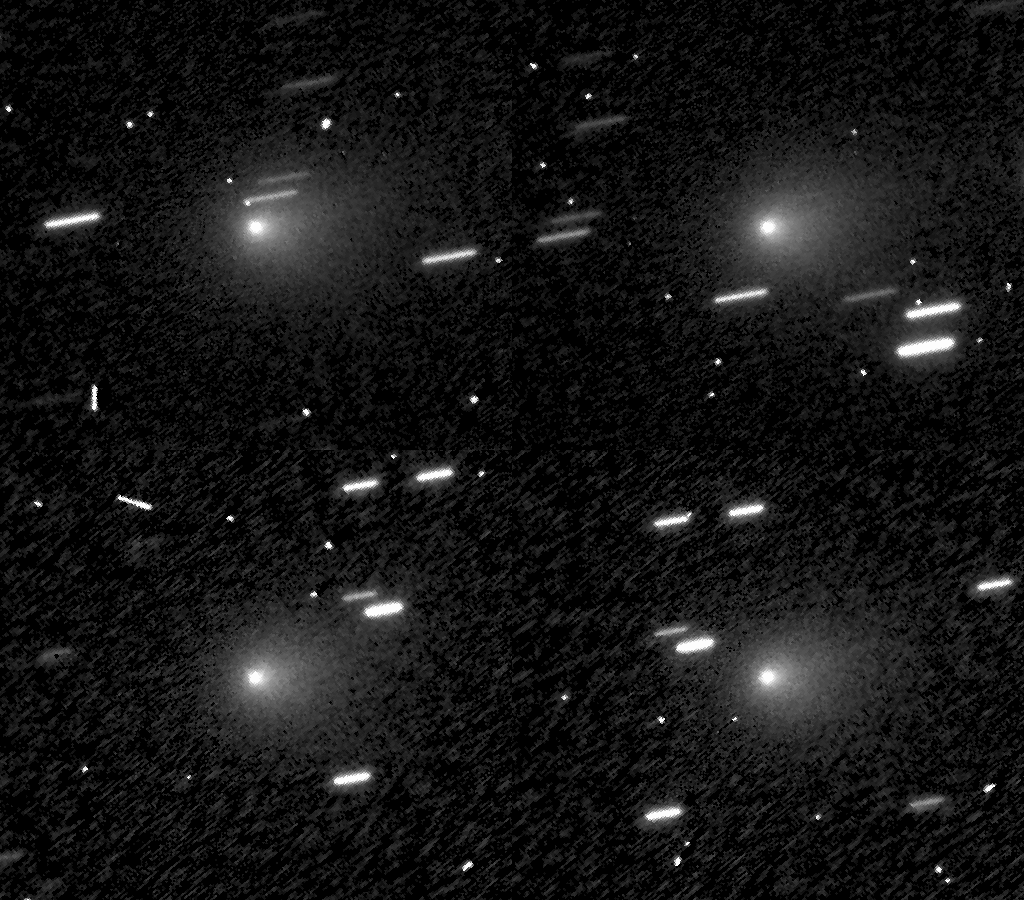
A grainy black and white image shows SPHEREx comet 3I/ATLAS gleaming at the center, surrounded by stars appearing as streaks due to long exposure. SPHEREx and JWST reveal what comet 3I/ATLAS is… and isn’t
Designed to map galaxies, the SPHEREx mission's first science result is instead about interstellar interloper 3I/ATLAS. No, it's not aliens.
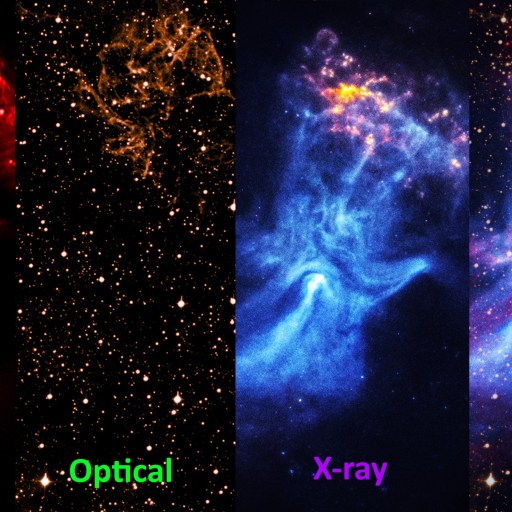
Four images of a nebula, sculpted by a dead star, are shown side by side in radio, optical, and X-ray wavelengths; the fourth composite image reveals the so-called "Hand of God." Each is labeled at the bottom. How a dead star carved the “Hand of God” in space
In our own Milky Way, a recently deceased star creates a ghostly, hand-like shape in X-rays some 150 light-years wide. Here's how it's made.
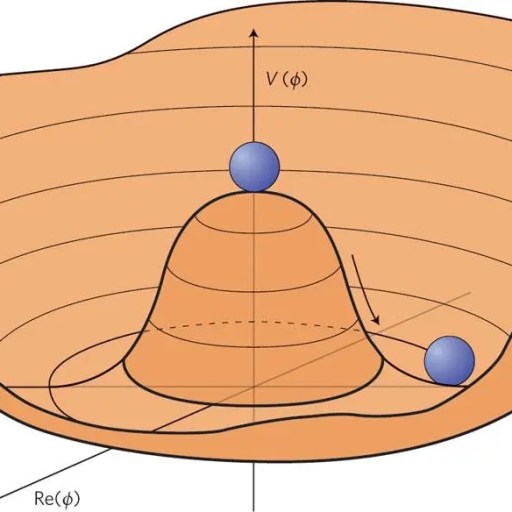
A 3D potential energy surface with a central peak and surrounding valley illustrates zero-point energy power; two blue spheres indicate positions atop the peak and within the valley. Axes labeled Re(φ), Im(φ), and V(φ). Ask Ethan: Can “zero-point energy” power the world?
Throughout history, "free energy" has been a scammer's game, such as perpetual motion. But with zero-point energy, is it actually possible?
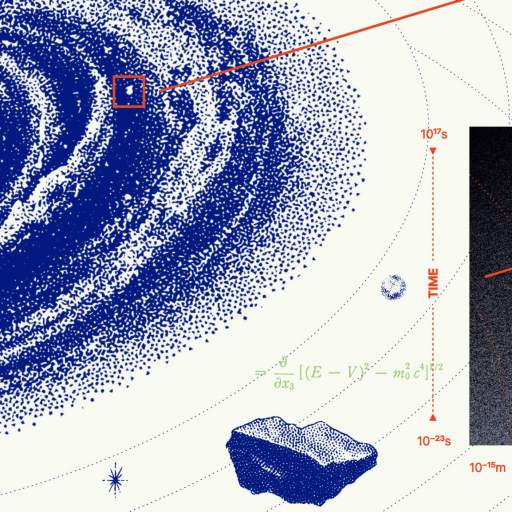
Diagram showing a galaxy, zooming in to highlight a small area labeled "Human Experience" within a grid mapping time and space on logarithmic scales. Mapped: The boundaries of human perception
Science helps us imagine the vastness of space and time — and our small but meaningful place within it.
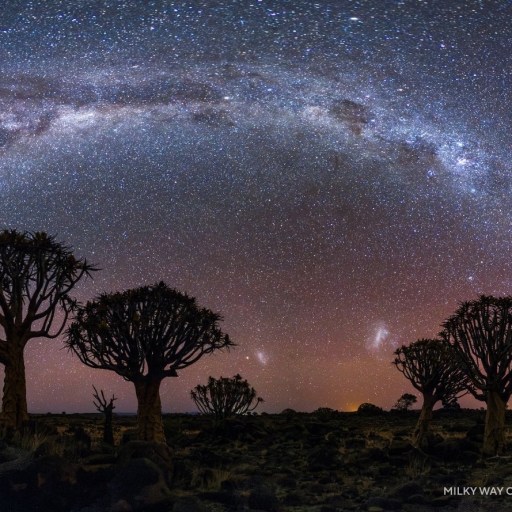
Silhouetted quiver trees under a starry night sky, with the Milky Way forming a bright arc above the horizon—perfect for fans of stunning 2025 night sky images. See the best night sky images from Capture the Dark 2025
Across planet Earth, dark and pristine night skies are an increasingly rare resource. These photos showcase the best of what we still have.
space expanding Does the Universe expand faster than the speed of light?
Just 13.8 billion years after the hot Big Bang, we can see 46.1 billion light-years away in all directions. Doesn't that violate...something?
An image of an ancient black hole At 36 billion solar masses, is the heaviest black hole too massive?
At the center of Hubble's famous "cosmic horseshoe," a very heavy supermassive black hole has been robustly measured. How is it possible?