


















Mars Exploration

Mars Exploration

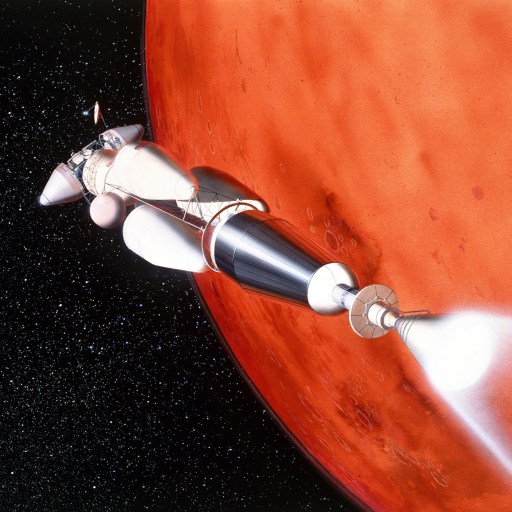
A spacecraft with bright engine exhaust approaches Mars, depicted with its reddish surface and a large crater visible.
"Think of it like a transcontinental railroad — not the fastest way to move a lot of mass, but certainly the most efficient,” Jared Isaacman said about nuclear electric propulsion.
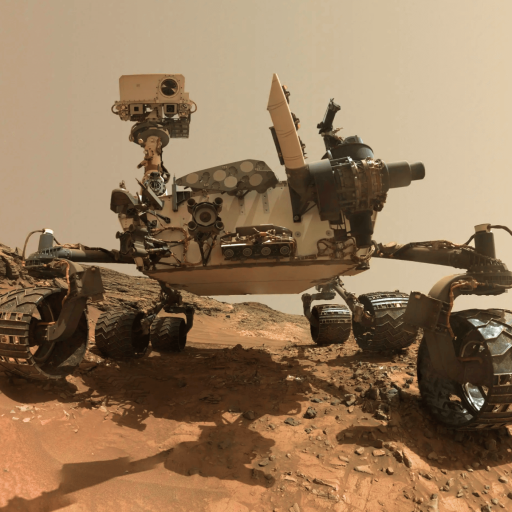
Mars rover on rocky terrain, showing its camera mast, equipment, and six wheels against a dusty, reddish Martian landscape.
Organic compounds can form through simple chemistry alone — making the search for true biosignatures trickier than it seems.
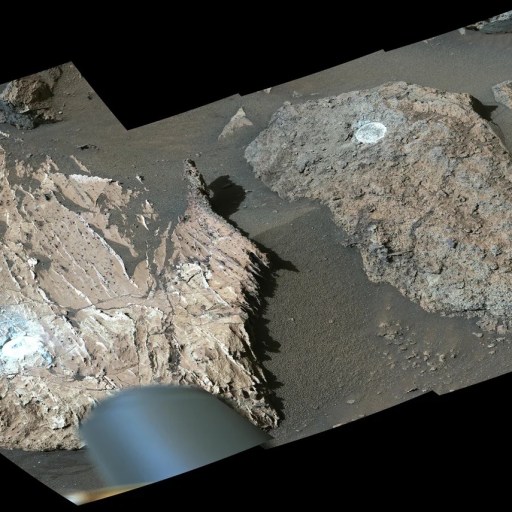
Two large Martian rocks with circular drill holes and light-colored dust are shown on a sandy, rocky surface. Part of a rover’s equipment, searching for traces of organics or signs of Mars life, is visible at the bottom of the image.
The red planet, Mars, may once have been teeming with life, just as Earth is today. Finding "organics" on Mars, however, doesn't mean life.
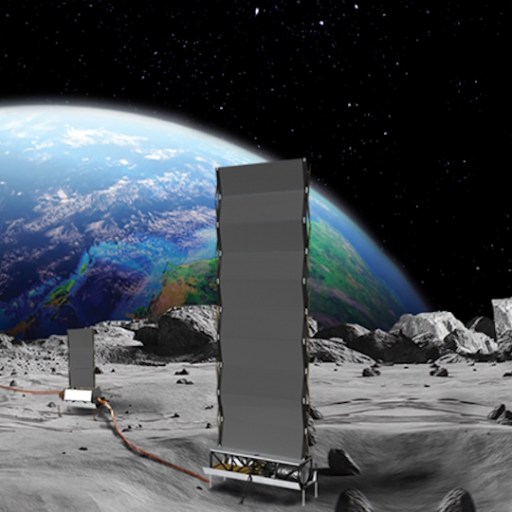
Two tall, rectangular scientific instruments, including a NASA nuclear reactor prototype, stand on the rocky lunar surface with Earth visible in the background against the blackness of space.
There are real concerns with long-term power generation on the Moon; nuclear could be the answer. But for NASA, will the cost be too high?