














Particle Physics

Particle Physics

DUNE neutrino detectors Neutrinos are still the most mysterious particle we know of
Nearly 100 years after being theorized, the strange behavior of the neutrino still mystifies us. They could be even stranger than we know.
a black background with circles and a star in the center. The “atom” lost its original meaning, and that’s good for science
Proposed over 2000 years ago by Democritus, the word atom literally means uncuttable. Revived in 1803, today's "atoms" can indeed be split.
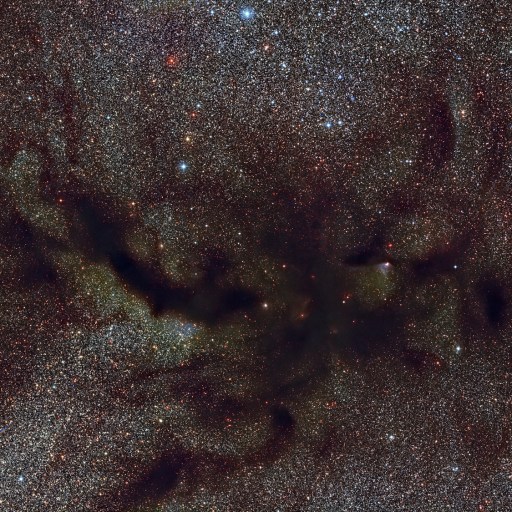
A dense star field with dark, irregular dust clouds—where cosmic dust come from—obscures parts of the glowing stars in the Milky Way. Ask Ethan: Where does cosmic dust come from?
Dust is ubiquitous in the modern Universe, appearing in nearly all galaxies. But our cosmos was born dust-free. So where does it originate?
Two identical, intricate, circular geometric patterns with symmetrical, multicolored lines and shapes are displayed side by side on a white background—each subtly reflecting the argument against theory of everything’s promise of perfect symmetry. The argument against the existence of a Theory of Everything
The Holy Grail of physics is a Theory of Everything: where a single equation describes the whole Universe. But maybe there simply isn't one?
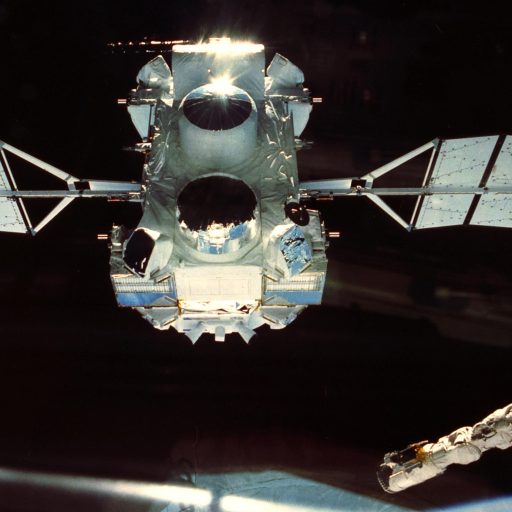
Compton gamma-ray observatory deployment The Sun is fainter than the Moon, at least in gamma-rays
Across all wavelengths of light, the Sun is brighter than the Moon. Until we went to the highest energies and saw a gamma-ray surprise.
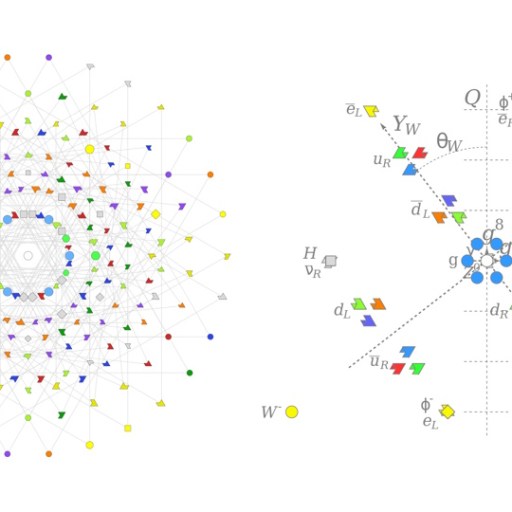
Two diagrams: the left shows a complex, circular, multicolored network; the right displays a theoretical physics diagram with labeled axes and colored particle symbols, capturing the intricate nature of physics hard concepts. No, theoretical physics isn’t broken; it’s just very hard
When you don't have enough clues to bring your detective story to a close, you should expect that your educated guesses will all be wrong.
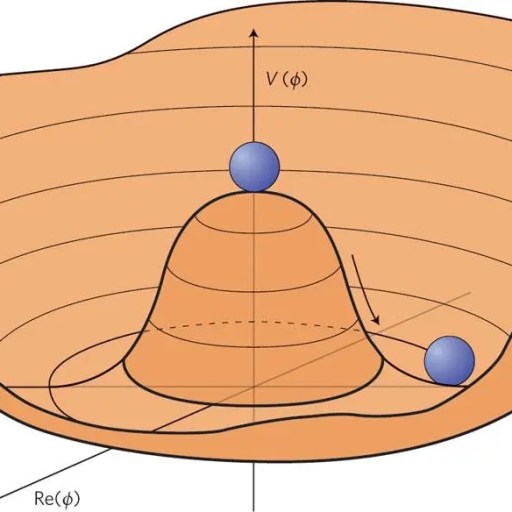
A 3D potential energy surface with a central peak and surrounding valley illustrates zero-point energy power; two blue spheres indicate positions atop the peak and within the valley. Axes labeled Re(φ), Im(φ), and V(φ). Ask Ethan: Can “zero-point energy” power the world?
Throughout history, "free energy" has been a scammer's game, such as perpetual motion. But with zero-point energy, is it actually possible?
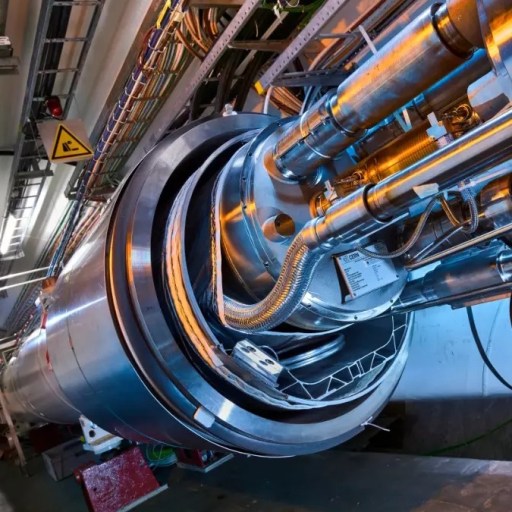
A person inspects a large, cylindrical section of a Higgs factory tunnel lined with metal pipes, cables, and equipment—a crucial site for particle physics research. The fastest, cheapest particle physics path to a Higgs factory
A next-generation collider is required for studying particle physics at the frontiers. Here's the fastest, cheapest way to get it done.
The ultimate energy limit that lasers will never surpass
Amplifying the energy within a laser, over and over, won't get you an infinite amount of energy. There's a fundamental limit due to physics.
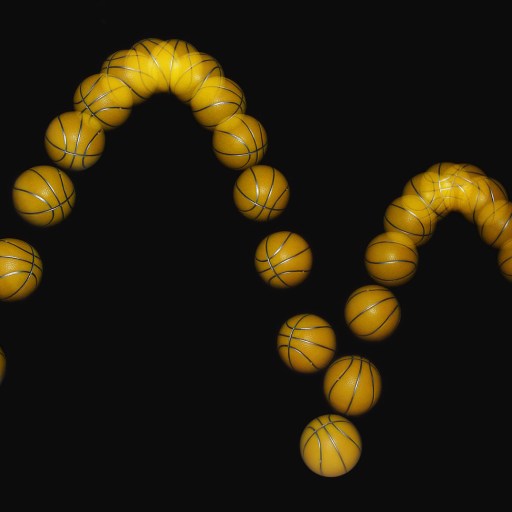
bounce ball The Universe is not the same forward and backward in time
Whether you run the clock forward or backward, most of us expect the laws of physics to be the same. A 2012 experiment showed otherwise.
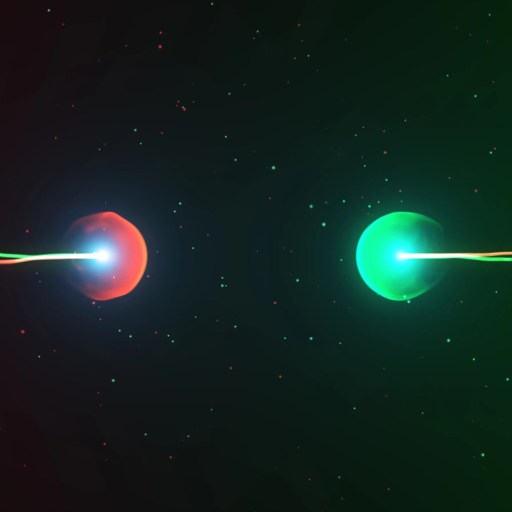
Two glowing spheres, one red and one green, face each other in space with a wavy line of light—like a particle physics collision—connecting them against a speckled dark background reminiscent of the last collider’s discoveries. How particle physics will continue after the last collider
Will we build a successor collider to the LHC? Someday, we'll reach the true limit of what experiments can probe. But that won't be the end.