




















Search
Philosophy

25mins
“We can use neuroscience and tools from psychology to learn how to take advantage of anxiety.” From Zen Buddhism to flow state, these 3 experts explain how to hack your brain.

4mins
Americans believe they can outthink suffering. Historian Kate Bowler explains how our obsession with self-help, optimization, and positivity became a kind of secular religion.

1hr 19mins
Theoretical physicist Jim Al-Khalili explores why our sense of time may be incredibly misleading, including the idea that past, present, and future might all exist at once.

23mins
Brian Cox examines why, despite billions of stars and trillions of planets, we have found no evidence of other intelligent life.

58mins
Alain de Botton argues that our romantic lives are shaped more by the emotional patterns we learned in childhood than by destiny.
3mins
Military satellite research brought us GPS. Astronomers influenced medical imaging tech. What would be invented after we discover alien life? Professor Sara Seager explains the consequences of such a groundbreaking discovery.

6mins
Happiness collapses the moment hardship arrives. Joy doesn’t. Historian Kate Bowler explains why joy can coexist with pain — and why that makes it a stronger, more fulfilling emotion.

22mins
"Rationalism is the idea that, in order to truly know something, you have to be able to describe it explicitly."

53mins
Members
“Our conscious awareness is everything. And the fact that it's still so mysterious to scientists and to all of humanity, the fact that it's still one of the great unsolved mysteries makes it something that everyone can be excited about and that inspires awe in everyone.”

8mins
"The thing that the nihilist recognizes is that the values he or she holds are not grounded in anything other than their own preferences."

7mins
Members
We tend to trust our intuitions about consciousness because they feel immediate and personal, but feeling convinced is not the same as being right. Annaka Harris explores what happens when […]

1hr 51mins
Stoicism has been flattened into slogans about toughness, detachment, and emotional silence, a version that’s easy to sell, but mostly wrong. Massimo Pigliucci returns Stoicism to its original purpose: a […]

22mins
"It's much better to try to understand how the world works and then act accordingly. Rather than trying to impose on the world the way we want to think or the way we preferred things to be."

25mins
"The big question then is why are most people resilient and why are some people not resilient?"

7mins
Members
“The problem with cognitive scripts is when we use them to make more important decisions in our lives, we let our choices be driven by those stories that we have internalized that tell us how we're supposed to behave in a certain situation.”

19mins
David S. Goyer explains how paying attention to mystery, and not brushing it aside, became the foundation for the way he builds stories, characters, and worlds.

47mins
“The problem is in our information. Humans, yes, we are generally good and wise, but if you give good people bad information, they make bad decisions.”

2hr 9mins
“Psychedelics crosscut so many interesting domains. They've been used for time immemorial by indigenous cultures. In our own Western cultural history, they really exploded on the scene in the 1960s, and were associated with radical changes to society.”

13mins
Everything ever seen — every star, mountain, and face — makes up less than 5 percent of the universe. Astrophysicist Janna Levin reminds us that the rest — dark matter and dark energy — is invisible, mysterious, and everywhere. We are the luminous exception in a universe of darkness.

57mins
“What's really interesting about neural networks is the way that they think or the way that they operate is a lot like human intuition”

1hr 26mins
Instead of treating belief as a private preference, philosopher Alex O’Connor examines how our moral positions shape institutions, obligations, and the ways we justify our choices.

10mins
Reflecting on the final moments she spent with her mother, and the weeks afterwards spent cataloging her life in objects and memories, Poet Laureate of the Ordinary Kelly Corrigan shares how important it is to attune, to behold, and to notice — even if it’s difficult or uncomfortable:
2mins
From science to philosophy, three perspectives explore why humans can’t stop asking “why.” Our search for purpose, they suggest, is less about finding answers and more about learning how to move forward.
Unlikely Collaborators

13mins
“People got skeptical, fearful, doubtful of the very idea of progress in the 20th century and we allowed that to slow down progress itself.”
3mins
The brain is an “illusion factory.” Here’s what that means for our perception of time.
Unlikely Collaborators

13mins
“Chance invents and natural selection propagates that chance invention.”
12mins
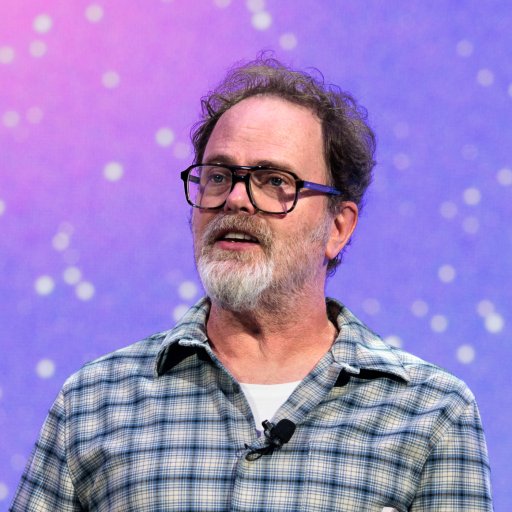
The hospital where Rainn Wilson’s wife and son nearly died became his own personal holy site. There, he discovered that the sacred can exist in places we least expect it.
During his talk at A Night of Awe and Wonder, he explained how the awe we feel in moments of courage and love is moral beauty — and following it might be the start of our spiritual revolution.

1hr 12mins
“Consciousness is fundamental. It's a fundamental property of the world that we inhabit, a fundamental property of the universe.”

16mins
“The messy reality of it is that all of these very smart people, including Isaac Newton, were talking to other people.”

10mins
“When you start to accept that you have profound influence on the world, but very limited control, you start to see the world differently.”