




















Search
Philosophy
2mins
“In most instances, ‘good enough’ is good enough.” A time management expert, a cognitive scientist, and a psychologist share their takes on productivity, perfectionism, and the harm of hustle culture.
Unlikely Collaborators

13mins
“Over the last 10 or 15 years, scientists have really started to understand the fundamental underlying biology of the aging process. And they broke this down into 12 hallmarks of aging.”

1hr 18mins
“Everyone's image of [Ancient Rome] is based on modern movies. In some ways, I think those were rather impressive, but they got some things terribly wrong.”
3mins
From neuroscience to philosophy, experts reveal why compassion may be the most important human skill we have.
Unlikely Collaborators

9mins
“There would be something very, very empty and meaningless about [a] sort of life with no problems.”

21mins
“The idea is that we move from a place of wanting the world to conform to what we like [towards] not needing other people to be different from who they are.”
3mins
Philosophy asks if free will is real. Neuroscience reveals why the answer is more complicated than we expected.
Unlikely Collaborators

15mins
"We're living in an extraordinary moment in history. We are at a moment here in 2025 where we have world historic game-changing technologies now starting to scale."

9mins
“The universe clicks along in perfect accord with the laws of physics forever.”

16mins
“As a reporter, you can look into the eyes of the people you're talking to and try to evaluate what they're thinking when they say what they say. But you are not really gonna get into their brain. There's only one artistic form that allows you to do that. “
3mins
Language is a huge part of human development, even the language we keep to ourselves. Three experts explain how words and beliefs can change our brains and our lives:
Unlikely Collaborators

2mins
When Jesus was crucified, it led to even more followers. When books are banned, people flock to read them. Humans are fascinated by the forbidden, which is why censorship – especially in the digital age – doesn’t work. Jacob Mchangama explains.

23mins
"Could black holes be the key to a quantum theory of gravity, a deeper theory of how reality, of how space and time works? Well, I think so."

8mins
"If you're interested in human performance, what you want is something that's reliable and repeatable, and thus you want neurobiology because neurobiology gives you mechanism."
7mins
How can the brain — a piece of matter — love? Physics and chemistry explain the material world, but they can’t explain why it feels like something to be alive. This is the mystery of consciousness, according to these experts.
Unlikely Collaborators
2mins
Free speech may be messy, but censorship is deadly. Founder of The Future of Free Speech Jacob Mchangama explains.
2mins
A physician, a psychologist, and a mindfulness teacher explain what stress does to your body and mind, and how to use it to get smarter and stronger.
Unlikely Collaborators

1hr 2mins
“There's research showing that people who are curious, who ask questions, are not just happier, they're not just more successful, they also live longer.”
6mins
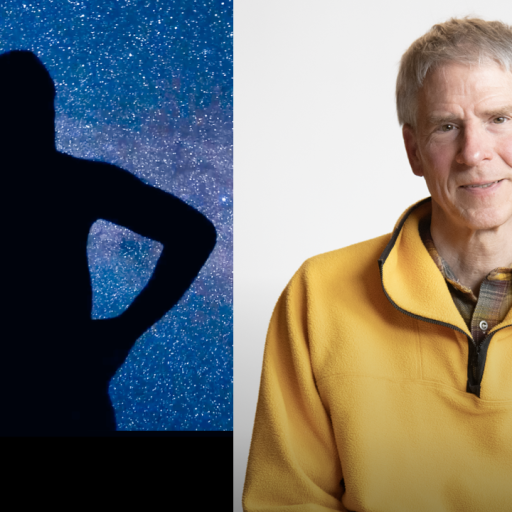
Everything you experience is filtered through your brain, and everyone’s brain is different. Neuroscientist Christof Koch explains how understanding this can deepen your connection to the world around you.
Unlikely Collaborators
3mins
Biologist Tyler Volk PhD, psychiatrist Bruce Greyson MD, and palliative care physician BJ Miller MD, reveal how confronting mortality can improve the way we live.
Unlikely Collaborators

7mins
“The idea of evolution by natural selection is, for me, probably the most beautiful idea in biology.”

9mins
“You can be aware of sadness from a point of view that is not merely sad, and you can be aware of fear from a point of view that's not merely afraid.”
3mins
Humans have always had religion. What does this say about our minds? Reza Aslan PhD, Lisa Miller PhD, and Rob Bell MDiv explain.
Unlikely Collaborators

2mins
Many of us rely on emotional advice that doesn’t actually work. Psychologist Ethan Kross offers a smarter, science-backed approach to managing emotions with flexibility and perspective.

7mins
“Because of the efficiency worship that we have developed in our industrial age, we are now seeing procrastination as a character flaw rather than what it is, a signal that is worth listening to.”

5mins
What happens when the boundaries of “you” disappear? James Fadiman, PhD, Jamie Wheal, and Matthew Johnson, PhD explore how supported experiences with psychoactive drugs can dissolve identity and reveal a deeper reality.
Unlikely Collaborators

6mins
“What did you win? You won awkward silence. You won their contempt. You won the first to apologize. When you win an argument, you will lose their confidence, you will lose their respect, you will lose the connection.”

17mins
"The sense that we are a solid entity, an unchanging entity that exists someplace in our body and takes ownership of our body, and even ownership of our brain rather than being identical to our brain, that is where the illusion lies."

7mins
“The simplest, most powerful way to reinforce work, not jobs, is to ask people to do something different.”

9mins
Today’s technologist archetypes share a blind spot. Brendan McCord, founder of the Cosmos Institute explains why “philosophy is essential” when building planetary-scale technology.
Cosmos Institute